
Client travel preference categories are the distinct segments that define how and why people travel, covering everything from solo adventure seekers to multi-generational family groups. Knowing which types of client travel preference categories apply to your trip is the fastest way to build an itinerary that actually fits. The hospitality industry uses 8–12 traveler segments based on motivation, booking windows, group size, and spending power. Planytera's AI trip planner maps directly to these segments, so your day-by-day plan reflects who you really are as a traveler, not just where you want to go.
What are the main types of client travel preference categories?
Travel preference categories split first into two broad buckets: business travel and leisure travel. Business travelers represent 20% of trip volume but generate up to 60% of air and lodging revenue. That gap exists because business travelers book differently, spend more per night, and prioritize efficiency over experience. Leisure travelers, by contrast, optimize for enjoyment, memory-making, and value.
Within leisure travel, motivation drives the category. Popular travel styles include Adventure, Culture and History, Beach and Resort, Food and Nightlife, and Family Vacation. Each style shapes what a traveler books, how far in advance they plan, and how much they spend per day.

The table below summarizes the core client travel styles and their key characteristics.
| Travel category | Typical duration | Booking window | Group size | Spending pattern |
|---|---|---|---|---|
| Business | 1–3 nights | 1–2 weeks ahead | 1–2 people | High, company-funded |
| Adventure | 5–10 nights | 1–3 months ahead | 1–4 people | Moderate to high |
| Family vacation | 3–7 nights | 2–6 months ahead | 3–6 people | Moderate, value-focused |
| Romantic getaway | 3–5 nights | 4–8 weeks ahead | 2 people | High, experience-focused |
| Cultural exploration | 7–14 nights | 2–4 months ahead | 1–4 people | Moderate |
| Group leisure | 4–7 nights | 2–5 months ahead | 6+ people | Varied, logistics-heavy |
1. Solo travelers
Solo travelers prioritize independence, safety, and self-directed pacing above everything else. They want flexible itineraries with no fixed group commitments and easy access to local experiences. Safety research before arrival is a consistent behavior in this segment, especially for first-time solo travelers in unfamiliar regions.
Solo travelers also tend to book accommodations with social spaces, like hostel common rooms or boutique hotels with communal dining, because connection matters even when traveling alone. Their spending is moderate and highly personal. They will pay a premium for a unique local experience but cut costs on transportation without hesitation.
2. Family travelers
Family travelers have the longest booking windows of any leisure segment. Families book 2–6 months in advance for stays averaging 3–7 nights. That lead time reflects the complexity of coordinating school schedules, dietary needs, and multi-generational preferences.
Kid-friendly activities, accessible accommodations, and predictable daily pacing are non-negotiable for this group. The pace of the itinerary must account for the youngest or least mobile member of the group. Families also prioritize value: they look for bundled packages, family room rates, and included meals to keep costs manageable.
3. Romantic travelers
Romantic travelers book for two and prioritize intimacy, quality, and memorable experiences over sightseeing volume. They choose fewer destinations per trip and spend more time in each place. Luxury dining, private tours, and scenic accommodations rank higher than museum counts or activity variety.
This segment responds strongly to personalization. A room upgrade, a surprise dinner reservation, or a curated local experience carries more weight than a packed schedule. Romantic travelers also tend to book closer to their travel dates than families do, often 4–8 weeks out, which means flexibility in the itinerary is a real asset.
4. Group travelers
Group travel is the most logistically complex of all client travel styles. Group failures most often come from failing to plan for crowd sensitivity and mobility constraints, not just misaligned interests. A group of ten people includes a wide range of energy levels, budgets, and tolerance for noise or crowds.
Successful group itineraries build in structured shared moments alongside free time for individuals. The logistics layer, covering transportation, dining reservations, and accommodation blocks, requires more lead time than any other travel category. Groups also need a clear decision-maker or coordinator to prevent planning paralysis.
5. Adventure travelers
Adventure travelers define a good trip by physical challenge, novelty, and access to nature. They book activities first and accommodations second. Hiking, diving, climbing, cycling, and wildlife tracking are the core draws for this segment.
This group accepts basic or remote lodging without complaint as long as the activity access is strong. They research destinations deeply before booking and often have specific gear requirements. Adventure travelers are also more likely to adjust itineraries mid-trip based on weather or local conditions, so flexibility is built into their expectations from the start.
6. Cultural and history travelers
Cultural travelers want depth over breadth. They prefer one city explored thoroughly over five cities visited briefly. Museums, local food markets, historical sites, and guided walking tours are the building blocks of their ideal itinerary.
This segment books longer trips, often 7–14 nights, and spends a meaningful portion of their budget on guided experiences and entrance fees. They read destination guides before arriving and arrive with specific sites already on their list. Matching this traveler to a rushed, highlights-only itinerary is a reliable way to disappoint them.
7. How communication style shapes every travel category
Four client communication styles cut across every travel preference category: Director, Processor, Feeler, and Delegator. Recognizing which style applies to you or your travel group prevents planning failures before they happen.
Directors want brief, decisive recommendations. Give them two options, not ten. Processors want full details, including backup plans and contingencies. Feelers respond to the emotional story of a destination. Delegators want someone else to handle the details and trust the plan completely.
Confusing travel style with communication style is a common planning mistake. You can match a traveler perfectly to an adventure itinerary and still lose their confidence if you present it the wrong way. A Processor adventure traveler needs the full logistics breakdown. A Feeler adventure traveler needs to hear why this particular trail will move them.
Pro Tip: Before finalizing any itinerary, identify both the travel category and the communication style. The category tells you what to plan. The communication style tells you how to present it.
8. How to build itineraries around mixed travel preference categories
Mixed-preference groups are the norm, not the exception. A family trip often includes a Director parent, a Feeler teenager, and a Delegator grandparent. Translating stated desires into the correct travel style is the most critical step in building an itinerary that satisfies everyone.
Hub-and-spoke destination planning solves the mixed-group problem directly. You choose a central base, like a city or resort, and let different travelers pursue different activities during the day. The group reunites for shared meals or evening experiences. Destinations like Park City and Las Vegas work well for this model because they offer high-energy and low-key options within the same location.
Here are the key principles for building itineraries that work across multiple travel preference categories:
- Anchor on shared moments. Identify two or three experiences the whole group agrees on, then build free time around them.
- Match pace to the least mobile member. Overestimating group energy is the most common itinerary mistake.
- Build in buffer time. Every day with back-to-back activities creates friction in mixed groups.
- Separate activity tracks. Give different sub-groups their own morning or afternoon options before regrouping.
- Confirm dietary and accessibility needs early. These constraints shape restaurant and venue choices more than any other factor.
Behavioral travel segments show that convenience-oriented travelers prioritize bundled experiences to reduce complexity. That insight applies directly to mixed groups: the easier you make the logistics, the more everyone enjoys the trip.
Pro Tip: Use the hub-and-spoke model for any group of four or more with different energy levels. Pick one base, plan one shared activity per day, and let the rest be flexible.
Key takeaways
Matching travel preference categories to both motivation and communication style is the single most reliable way to build itineraries that satisfy every type of traveler.
| Point | Details |
|---|---|
| Categories drive itinerary structure | Knowing the travel category shapes duration, pace, and activity choices from day one. |
| Communication style is separate from travel style | A traveler's planning persona affects how you present the itinerary, not just what goes in it. |
| Group trips need hub-and-spoke planning | A central base with flexible daily tracks keeps mixed-preference groups happy. |
| Booking windows vary widely | Families book 2–6 months out; business travelers book 1–2 weeks ahead. Plan accordingly. |
| Crowd and mobility sensitivity matter most | Group trip failures trace back to these two factors more than any other preference mismatch. |
Why I think most travelers skip the most useful step
Most travelers spend hours researching destinations and almost no time identifying their own travel category. That is the wrong order. I have seen well-researched itineraries fall apart because a self-described "adventure traveler" turned out to be a comfort-first Delegator who wanted someone else to handle every detail. The adventure label was aspirational. The actual preference was ease.
The communication style piece is even more overlooked. Knowing that you are a Processor traveler, someone who needs the full plan in writing before feeling confident, changes how you should use any planning tool. It tells you to ask for more detail upfront, not to wing it and adjust later.
Crowd sensitivity is the factor I see ignored most often in group planning. One person with low noise tolerance or mobility limits can reshape the entire trip if you do not account for them early. The best itineraries I have seen for multi-generational groups always start with the constraints, not the wish list. Build around what limits the group, then add the exciting parts on top.
— Dom
Planytera builds your itinerary around your travel category
Every traveler fits somewhere in the preference category map. Planytera's AI trip planner reads your travel style, group size, pace, dietary needs, and budget, then generates a day-by-day itinerary that fits. No spreadsheets. No hours of research.
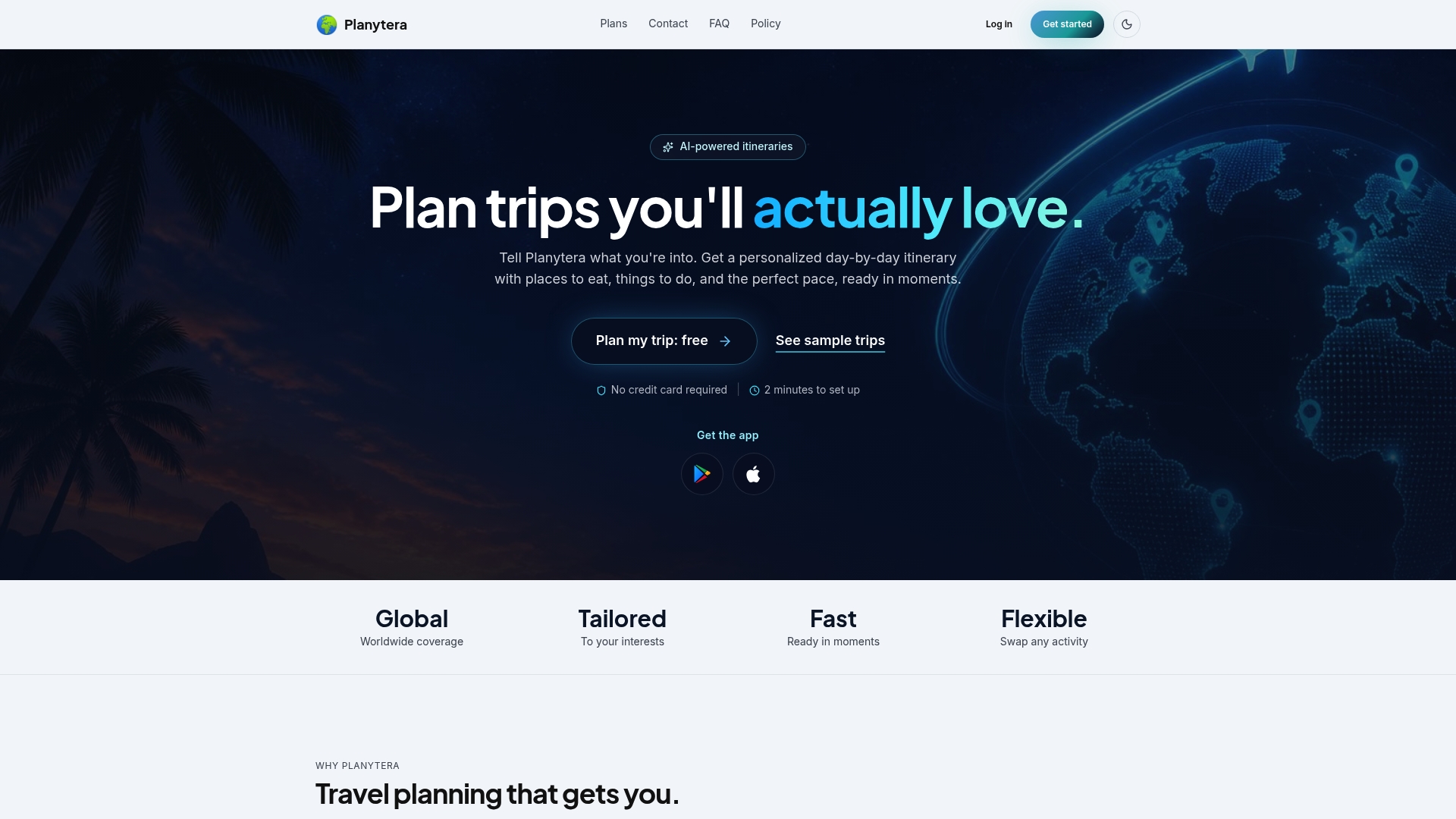
Whether you are planning a solo adventure, a family vacation, a romantic getaway, or a group trip, Planytera handles the heavy lifting. You can see real itinerary examples before you commit, or go straight to the Planytera AI trip planner and have your personalized plan ready in minutes. The itinerary adjusts as your trip evolves, so you stay in control without the stress.
FAQ
What are the main client travel preference categories?
The main categories are solo, family, romantic, group, adventure, cultural, and business travel. Each differs in booking window, group size, pace, and spending behavior.
How do I identify my travel preference category?
Start with your primary motivation: independence, connection, challenge, or relaxation. Then factor in group size and how much planning you want to do yourself.
Why does communication style matter in travel planning?
Communication style determines how you process and respond to itinerary information. A mismatch between planning style and presentation style causes friction even when the itinerary itself is a good fit.
What is hub-and-spoke travel planning?
Hub-and-spoke planning uses one central destination as a base while different travelers pursue separate activities during the day. The group reunites for shared meals or experiences, which works well for mixed-preference groups.
How far in advance should different traveler types book?
Family travelers book 2–6 months ahead. Business travelers book 1–2 weeks out. Romantic and adventure travelers typically fall in the 4–8 week range depending on destination complexity.