
Couples travel budgeting is defined as the shared financial planning process partners use to set spending limits, split costs fairly, and protect their trip from money-related conflict. The best practices for couples travel budgeting start with one non-negotiable step: agreeing on a daily spending cap before you board the plane. Couples who hold a formal budget meeting 6–8 weeks before departure report significantly fewer financial conflicts on the road. That single conversation does more for your trip than any discount code or points hack. Get the framework right first, and the rest of the planning falls into place.
1. How should couples create a shared travel budget?
A shared travel budget works best when both partners build it together from scratch. Schedule a dedicated budget meeting 6–8 weeks before your departure date. Treat it like a real planning session, not a quick chat over dinner.
Walk through every major cost category together:
- Flights and ground transport
- Accommodation
- Food and dining
- Activities and experiences
- Shopping and souvenirs
- Emergency and contingency funds
Daily spending caps typically range between $150 and $300 per person for mid-range travel. That range gives you a realistic anchor before you start booking anything. Build in a 10–15% contingency buffer on top of your total to cover unexpected costs like a missed connection or a surprise entry fee.
One often-overlooked element is the personal "no-discussion" allowance. Each partner gets a fixed daily amount to spend however they want, no questions asked. This single rule eliminates the majority of petty spending arguments before they start.
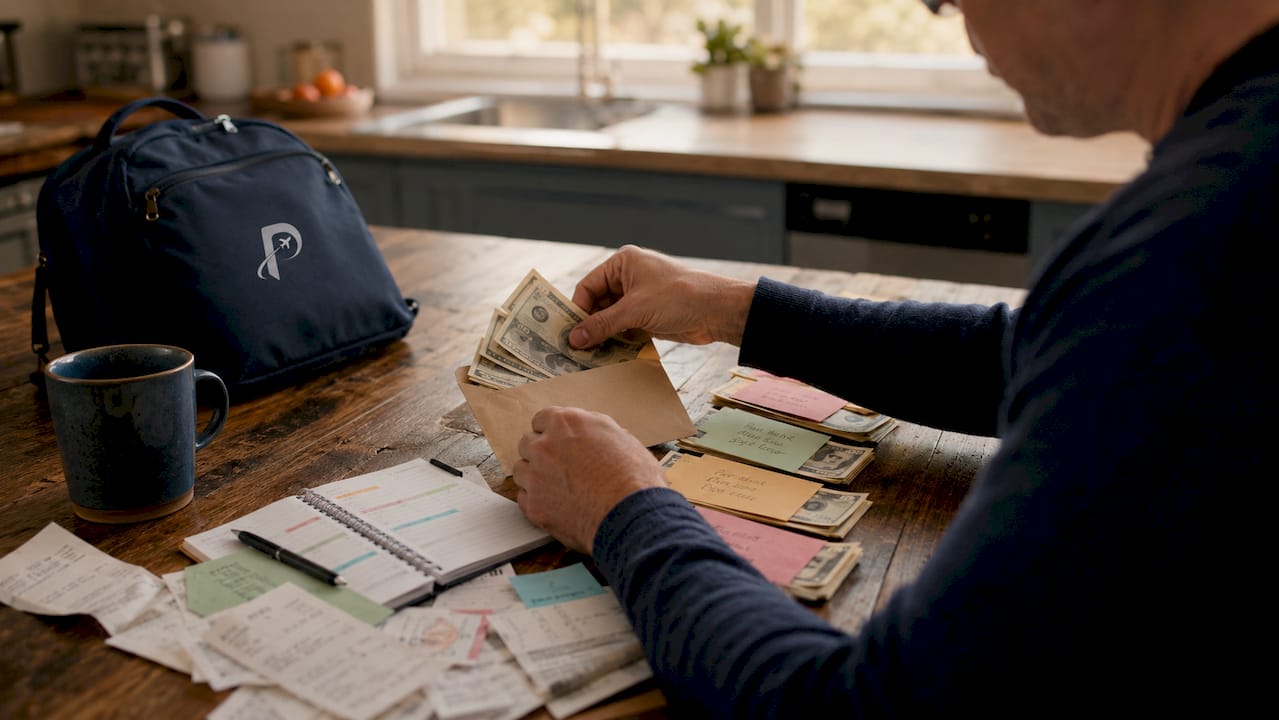
Pro Tip: Set your contingency fund in a separate account or digital wallet. When you can see it clearly labeled as "emergency only," neither partner is tempted to dip into it for an extra round of cocktails.
2. What are fair methods for splitting travel expenses?
Cost splitting is where most couples either build trust or create resentment. The method you choose matters as much as the budget itself.
Three main models work well for couples:
- Equal 50/50 split. Simple and transparent. Works best when both partners earn similar incomes. Can feel unfair when there is a significant income gap.
- Proportional income split. Each partner covers a percentage of shared costs that matches their share of combined household income. Proportional splitting based on income is more sustainable and prevents one partner from carrying financial stress. This model moves budgeting from scorekeeping to a cooperative framework.
- Category-based split. One partner covers flights, the other covers accommodation. Works well when partners have strong preferences or loyalty points in specific categories.
Handling upgrades is straightforward with any model. If one partner wants a business-class seat or a nicer hotel room, that upgrade comes out of their personal allowance, not the shared budget. This keeps the shared pool fair and removes the pressure to justify personal preferences.
Pro Tip: Agree on your splitting model before you book anything. Changing the rules mid-trip is a reliable source of conflict.
3. How strategic timing and destination choices save money
Timing is one of the most powerful levers in travel budget planning for couples. Booking flights on Tuesdays and choosing secondary airports can reduce airfare by 20–40%. That is real money that goes directly toward better experiences.
Off-season travel in the U.S. typically runs from november through march. Hotel rates drop, crowds thin out, and restaurants are easier to book. The romantic atmosphere at a beach town in late october often beats the same destination in july, at a fraction of the cost.
| Strategy | Potential savings | Romantic trade-off |
|---|---|---|
| Off-season travel | High | Fewer crowds, quieter atmosphere |
| Secondary airports | 20–40% on airfare | Slightly longer ground transfer |
| Hotel with free breakfast | Up to $20 daily per couple | Relaxed morning routine together |
| Staying near attractions | Reduces transport costs | More walkable, intimate experience |
Sharing major expenses like accommodation and transport saves couples 10–25% per person compared to solo travel rates. Choosing a hotel that includes breakfast compounds those savings further. Using local markets for picnic meals saves up to $20 daily on top of that.
Hidden costs like baggage fees and transit times affect overall vacation value more than most couples realize. Factor those in during planning, not at the airport.
4. What tools and routines keep your budget on track daily?
The daily spending limit matters more than the total trip budget for avoiding mid-trip friction. A well-planned total budget means nothing if you have no system for tracking it day by day.
These routines work consistently well:
- Use a shared budgeting app to log expenses in real time. Both partners can see the running total without asking each other. Real-time transparency reduces awkward financial conversations during travel.
- Preload a joint travel card for all shared costs: meals, transport, entry fees. Keep separate personal cards for individual allowances. This one system eliminates most daily purchasing disputes.
- Tag expenses by payer inside your app. You will always know who paid what, which makes settling up at the end of the trip effortless.
- Run a nightly money check-in. Spend five minutes reviewing the day's spending before bed. Daily budget syncs prevent end-of-trip surprises and encourage flexible, mindful spending.
Pro Tip: Set a soft alert in your budgeting app at 80% of your daily limit. That early warning gives you time to adjust plans before you actually overspend.
Decision fatigue causes many travel arguments. Pre-agreed daily limits and individual allowances reduce constant financial negotiations. You spend less mental energy on money and more on actually enjoying the trip.
5. How does budgeting improve your relationship on the road?
Financial harmony during travel directly improves relationship quality. The connection is not subtle. Self-expanding activities during travel, meaning novel and exciting shared experiences, predict higher post-trip relationship satisfaction. A cooking class in a new city does more for your bond than a five-star hotel room.
Budget-friendly trips that focus on novel, shared activities strengthen romantic bonds. Meaningful experiences consistently outperform luxury spending when it comes to relationship satisfaction. The quality of what you do together matters far more than how much you spend doing it.
Managing money fairly prevents the kind of low-grade resentment that builds when one partner feels financially squeezed. When both of you feel the budget is fair, you relax. You stop mentally tracking who spent what and start actually being present with each other.
Framing the budget for shared enjoyment rather than scorekeeping improves couple satisfaction. That reframe is simple but powerful. You are not auditing each other. You are building something together.
6. How to balance splurges and savings without fighting
Not every line item deserves equal scrutiny. The couples who travel best together pick one or two categories to spend generously on and cut costs everywhere else. This is sometimes called the "splurge and save" framework in personal finance, and it applies directly to travel.
Decide together which category matters most to you both. For some couples, it is accommodation. For others, it is food or a single bucket-list experience. Once you agree on your splurge category, you both feel good about spending there. Savings in other areas feel like smart choices, not sacrifices.
For example, you might book a beautiful boutique hotel but eat at local spots and skip the tourist-trap dinner cruise. Or you fly economy and spend the savings on a private guided tour. The key is that both partners agree on the priority before the trip, not in the moment when emotions run high.
Saving money while traveling together does not mean cutting the romance. It means directing your money toward what actually creates memories for both of you. A well-shaped travel itinerary makes those priorities visible from day one.
7. What to do when budgets and preferences conflict
Budget conflicts between partners almost always trace back to one of two problems: different risk tolerances around money, or different ideas about what makes a trip worthwhile. Neither is wrong. Both need a solution before you leave home.
The most effective fix is the pre-trip preference conversation. Each partner lists their top three non-negotiables for the trip. Then you compare lists. Overlap is easy. Conflicts get negotiated before any money changes hands.
When one partner consistently wants pricier options, the personal allowance system handles it cleanly. That partner uses their individual fund for upgrades. The shared budget stays intact. No one feels controlled, and no one feels taken advantage of.
Couples travel pace preferences also affect spending more than most people expect. A partner who wants a slower, more relaxed pace will naturally spend less on activities but more on longer stays. Knowing this in advance lets you build a budget that fits how you both actually travel, not how you imagine you will.
Key Takeaways
The most effective couples vacation budgeting strategy combines a pre-trip budget meeting, a daily spending cap, a fair cost-splitting model, and a nightly check-in to stay aligned throughout the trip.
| Point | Details |
|---|---|
| Hold a budget meeting early | Schedule it 6–8 weeks before departure to agree on caps and categories. |
| Set a daily spending cap | Mid-range trips work well with $150–$300 per person per day, plus a 10–15% buffer. |
| Choose a fair splitting model | Proportional income splits reduce financial stress and build cooperative trust. |
| Use a joint card and personal allowances | Shared costs go on one card; personal spending stays separate to avoid disputes. |
| Prioritize experiences over luxury | Novel, shared activities build stronger bonds than high-end spending. |
What I have learned about budgeting as a couple on the road
The couples I have seen travel most happily together are not the ones with the biggest budgets. They are the ones who talked about money before they packed a bag.
The single most underrated move in couples travel finance is the nightly check-in. Five minutes. You look at what you spent, you note where you are relative to the day's limit, and you adjust tomorrow's plans if needed. That tiny habit prevents the end-of-trip shock that turns a great vacation into a financial argument on the flight home.
What I have also noticed is that the 50/50 split is the default for most couples, but it is rarely the best option. When there is any income difference between partners, the lower earner quietly absorbs stress that the higher earner does not see. Proportional splitting feels awkward to bring up, but every couple I know who has tried it says the same thing: it made the whole trip feel more like a team effort.
The personal allowance rule changed how I think about travel entirely. When you each have a fixed daily amount that is yours to spend without explanation, the small disagreements about a $15 souvenir or a second dessert just disappear. You stop negotiating and start enjoying.
My honest advice: treat the budget conversation as part of the trip itself. It is not a chore you do before the fun starts. It is the first shared decision you make together, and getting it right sets the tone for everything that follows.
— Dom
Plan your next trip with Planytera
Budgeting for a romantic trip is much easier when your itinerary is built around your actual spending limits from the start.

Planytera's AI trip planner generates personalized, day-by-day itineraries that factor in your budget, pace, and preferences from the first prompt. You set the financial parameters, and Planytera builds a plan that fits them. No spreadsheets, no back-and-forth research. You can browse sample itineraries to see exactly how budget constraints shape a real travel plan before you commit. For couples who want a tailored experience without the planning overhead, subscription options are available to match different travel styles and budgets.
FAQ
How far in advance should couples plan their travel budget?
Start your budget planning 6–8 weeks before departure. That window gives you time to compare prices, agree on spending caps, and book flights and accommodation at better rates.
What is the best way to split travel costs as a couple?
Proportional income splitting is the most sustainable method. Each partner covers a share of shared costs that reflects their share of combined income, which prevents financial stress and builds a fairer dynamic.
How much should couples budget per day for mid-range travel?
A daily per-person spending cap of $150–$300 covers mid-range travel comfortably. Add a 10–15% contingency buffer on top of your total to handle unexpected expenses without stress.
Do budget trips actually improve relationship satisfaction?
Research shows that self-expanding activities, meaning novel and exciting shared experiences, predict higher post-trip relationship satisfaction. The quality of shared experiences matters more than the size of the budget.
What is the easiest way to track expenses together on a trip?
Use a shared budgeting app with real-time logging and a joint travel card for shared costs. A brief nightly check-in to review the day's spending keeps both partners aligned and prevents end-of-trip surprises.