
Managing trip plans across preferences, budget, and group workflows is harder than it should be with most tools. Most trip planner software limits offline access, forces annual billing, or skips fast, AI-powered personalization for families and agencies. This comparison lists features, pricing, and workflows for five alternatives so you can match the right tool to your trip planning style.
Table of Contents
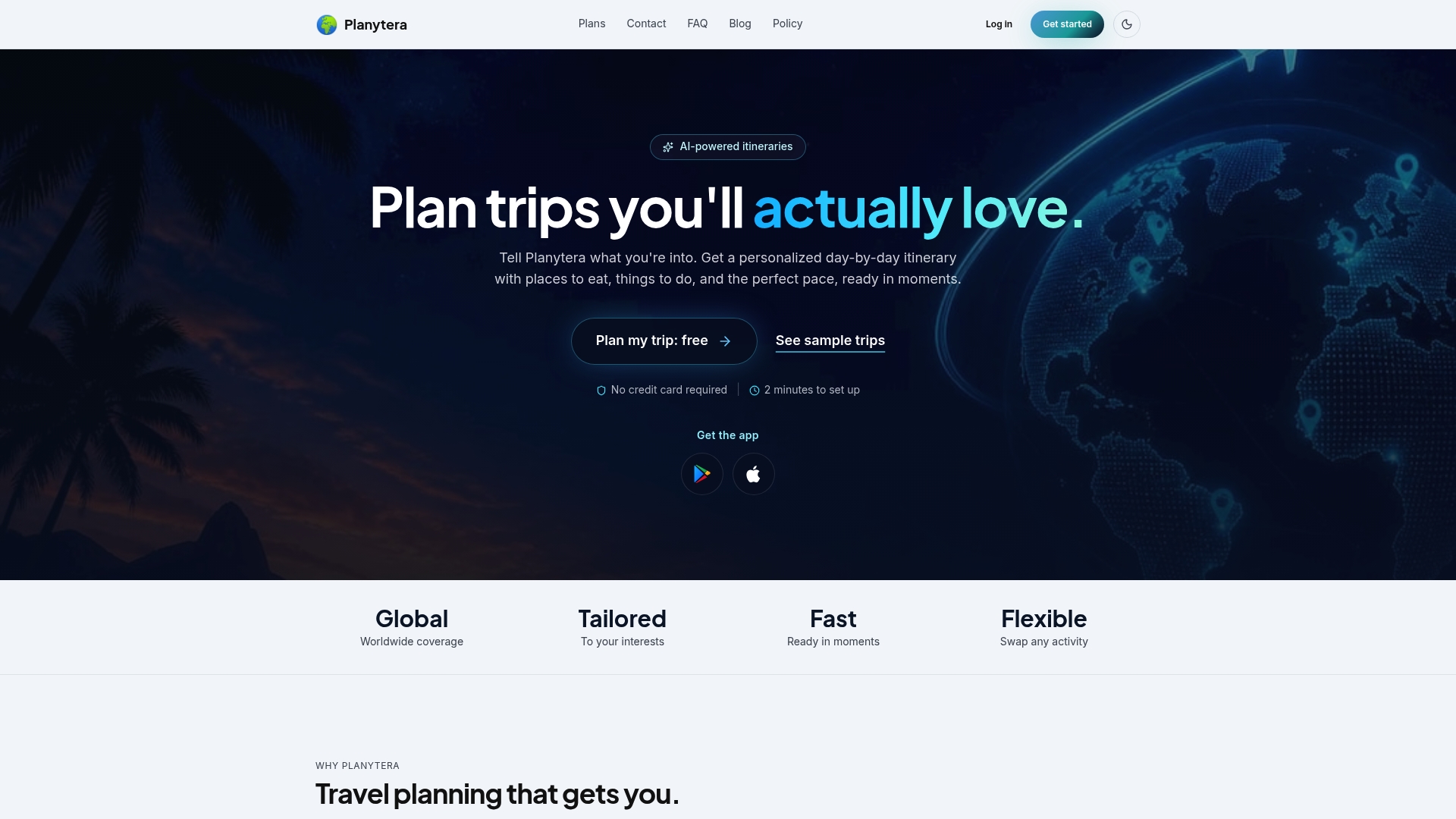
Planytera
At a Glance
A dedicated Agency tier adds branding and team collaboration for travel professionals. Planytera creates AI powered, day by day itineraries that include dietary preferences, pace, and budget considerations. The service works on web, iOS, and Android and supports offline access and trip journaling.
Core Features
Planytera builds AI generated personalized itineraries and lets you edit plans with activity swapping and shared voting for group decisions. The platform pairs those itineraries with maps and live travel guidance and supports multiple languages. It also saves offline maps, notes, and the itinerary so you can use it without a network connection.
Key Differentiator
Uses AI to generate personalized itineraries quickly tailored to user preferences and travel style. That core capability feeds itinerary creation that adapts to dietary needs, trip pace, and budget constraints. The rapid generation makes iterative planning practical when you need several route options or group variants.
Pros
Planytera produces highly personalized trip plans and makes group collaboration straightforward. The vendor advertises plans ready in moments, which helps when you need a fast starting itinerary. Offline mode and map integration support real time adjustments while traveling, and the platform includes dedicated individual and agency tiers for different workflows.
Cons
- AI generated content may contain inaccuracies or outdated venue details. Verify addresses, opening hours, and costs independently before booking.
Who It's For
You should consider Planytera if you want quick, tailored itineraries and shared planning with friends or clients. It suits solo travelers, families, couples, and travel agencies that manage multiple trips. You will get the most value if you plan trips regularly or need collaborative workflows.
Unique Value Proposition
One time credits are available for AI generation and activity swaps, letting occasional planners buy extra generations without moving to a higher subscription. That option works well for people who mix infrequent trips with occasional heavy planning needs. Agencies can combine those credits with subscription tiers and branded collaboration for client work.
Real World Use Case
A family uses Planytera to plan a week-long European tour, adding restaurant options for dietary needs and sharing the plan with each member. They adjust activities on the go with map guidance and rely on offline access during long train rides.
Pricing
A Free plan covers basic features, while paid plans range from $9.99/month to $299.99/month. Custom enterprise and Agency plans are available for branded team work. Additional one time credits are offered for extra AI generations and activity swaps.
Website: https://planytera.com
Layla.ai
At a Glance
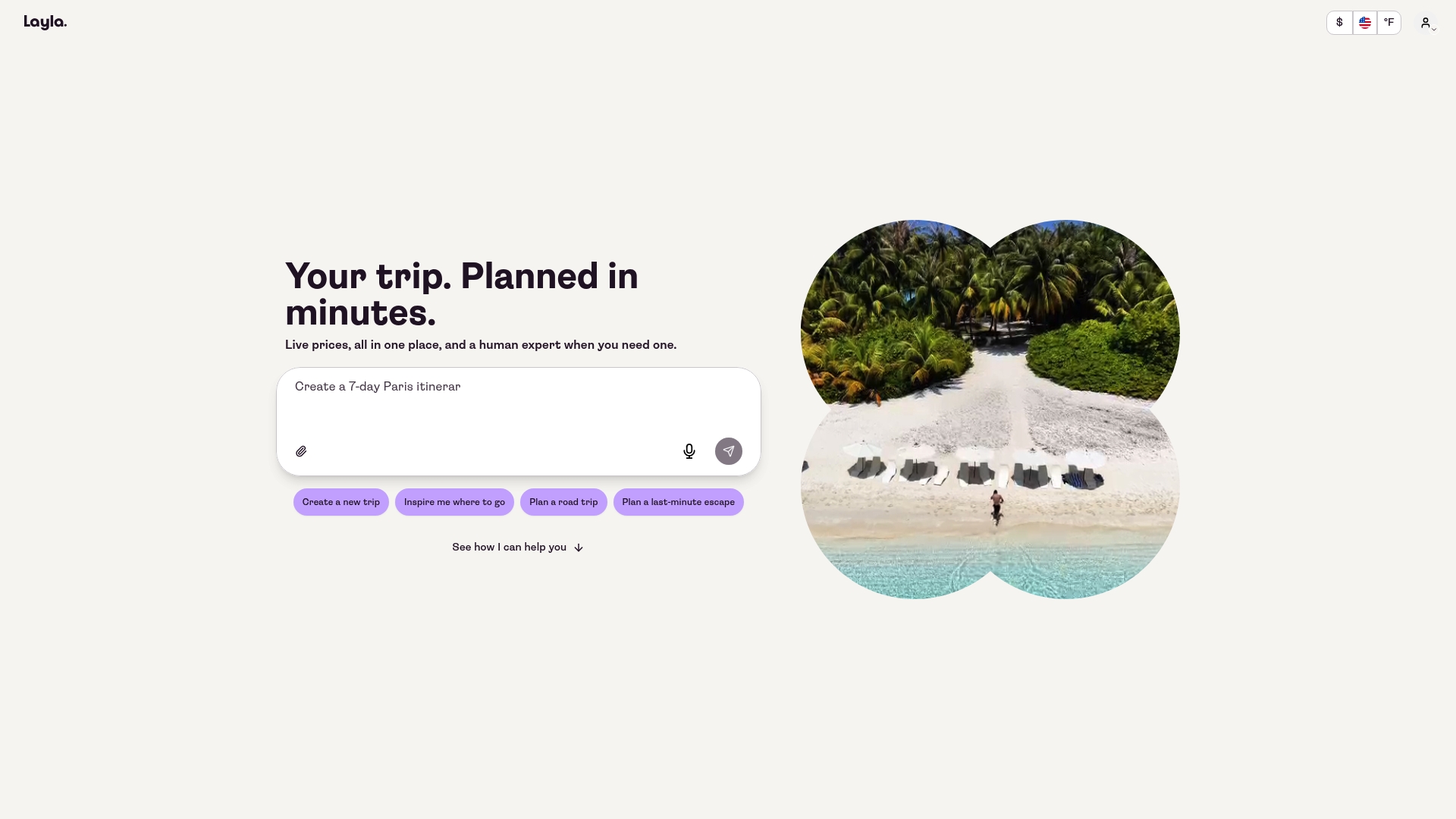
Layla.ai reports being trusted by millions worldwide. It pairs AI generated itineraries with live price comparison for flights, hotels, activities, and dining. The service blends algorithmic planning with on demand human support for complex trips.
Core Features
Layla.ai creates personalized day by day plans that reflect your travel style and preferences and adapts suggestions when you change dates or priorities. The platform runs real time price comparison across flights, hotels, and activities and highlights deals alongside local and off the beaten path recommendations. Expert concierge support helps with special requests and booking questions when automations hit a limit.
Key Differentiator
Layla.ai combines algorithmic itinerary generation with live price checks and human guidance. That mix lets the system propose fast, tailored plans while a human can step in for bookings or unusual constraints. This makes it a hybrid option between pure self serve apps and a full travel agent.
Pros
Instantly generated itineraries save you the time of assembling flights, hotels, and activities manually and present multiple route and timing options in minutes. The platform helps you spot lower cost options by comparing live fares across partners, and the human support line covers complex needs like family friendly adjustments or multi city routing. The interface is easy to read, which shortens planning time for travelers who want clear day by day plans.
Cons
- Some users report occasional inaccuracies in live pricing or availability, which can require manual checking.
- Offline access is limited, so you may need screenshots or a local copy for places with poor service.
- Premium features require an annual subscription, adding recurring cost for heavy planners.
- Very complex itineraries may still benefit from a dedicated travel agent rather than the platform alone.
When It May Not Fit
If you need full offline functionality for remote travel, Layla.ai may not be the right choice. If you prefer one off bookings without any subscription, the annual model could add cost. Travelers who require continuous, hands on agent management for enterprise groups will find the hybrid model less suitable.
Notable Integrations
Layla.ai connects with Skyscanner for airfare searches and Booking.com for hotel results. It uses GetYourGuide and Viator for activity and tour inventory. These integrations let the itinerary tie live pricing to concrete booking options.
Who It's For
This product fits travelers who want fast, tailored itineraries without building plans from scratch. It suits families, couples, solo travelers, and road trippers who value live price visibility and occasional concierge help. It works best for people comfortable with an app driven workflow plus optional human support.
Real World Use Case
A family used Layla.ai to plan a 10 day European trip. The tool produced flights, hotels, and kid friendly activities with alternate budget options for each city. When one evening needed a reservation, the concierge arranged a suitable restaurant and confirmed the booking.
Pricing
Layla.ai offers a free tier with basic planning. Paid upgrades start at $49/year to unlock unlimited premium features and expanded concierge access. The annual model suits repeat travelers who plan multiple trips per year.
Website: https://layla.ai
Mindtrip
At a Glance
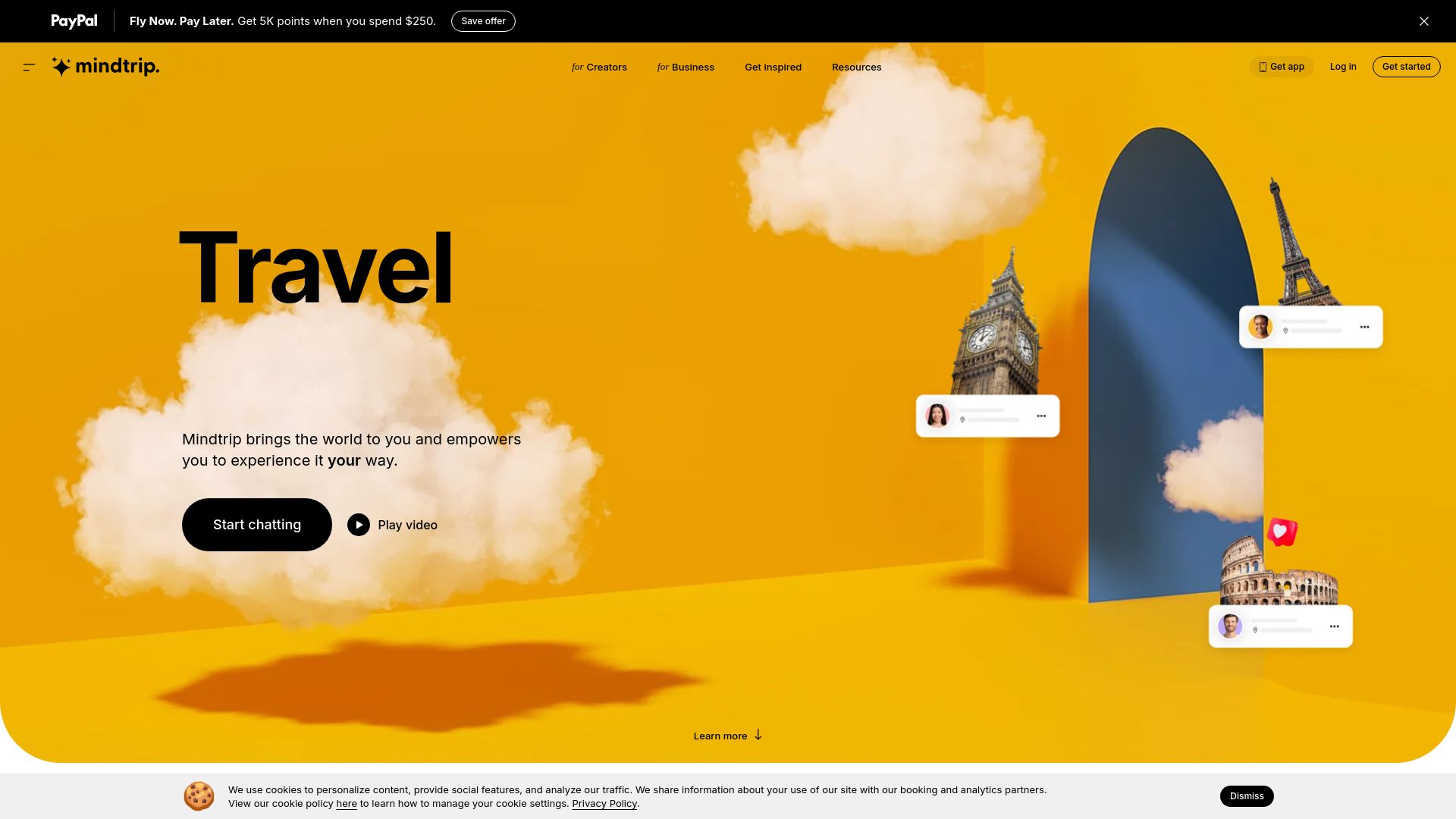
Mindtrip lets content creators and destinations build and monetize travel guides while delivering personalized planning. As one of the Packyai.com alternatives, it pairs conversational AI with a large point of interest index. The product runs on web and iOS and is highlighted by major media outlets for its AI approach.
Core Features
Mindtrip uses conversational AI to generate tailored travel suggestions and offers Customizable itineraries that you can share with a group. The platform brings vibrant photos, interactive maps, and reviews into each plan so recommendations feel usable. It also provides AI powered chat for live planning and includes content indexing that embeds guides on websites and apps.
Key Differentiator
Mindtrip combines large language models with an extensive travel database to produce conversational guides that match a brand voice. That setup aims to keep suggestions accurate to local details while preserving the style a destination or creator prefers. The result is a chat driven experience you can adapt for a tourism site or a hospitality app.
Pros
Personalization shows up in how the system filters suggestions by preferences and trip context. Collaboration features let travelers share and edit a single itinerary with friends or family. The POI database pairs clear photos, maps, and reviews so suggestions lead to immediate choices rather than vague ideas. Businesses and destinations can embed guides to engage visitors and capture leads. Multiple service tiers let teams pick a level that aligns with their technical needs and budget.
Cons
-
Setup and integration require effort. Buyer feedback indicates initial configuration and embedding can demand developer time.
-
AI accuracy in complex scenarios is not fully specified. Results may vary depending on how the vendor configures the models.
-
Pricing is not publicly listed. You must contact Mindtrip for a tailored quote and feature negotiation.
When It May Not Fit
If you need an out of the box planner with no integration work, this product may not match your needs. Organizations without developer resources will find embedding and customization time consuming. Small teams that require fixed public pricing will need a different vendor since Mindtrip asks prospects to negotiate custom plans.
Who It's For
Travelers who want a conversational planning experience and creators who want to monetize guides will get the most value. Tourism boards, hotels, and local partners can use it to surface tailored recommendations on their sites. Teams with at least some technical capacity will benefit most from this platform.
Real World Use Case
A tourism board embeds Mindtrip on its visitor site and adds localized guides for neighborhoods, restaurants, and events. The board uses the chat interface to guide visitors through itineraries while collecting business leads. Local businesses gain exposure through featured POIs and partnership listings.
Pricing
Mindtrip lists pricing as Contact for pricing. The vendor requires direct negotiation for tiers and custom features, so expect a quote rather than published rates. Smaller teams should budget for integration and setup costs when requesting a proposal.
Website: https://mindtrip.ai
Airial
At a Glance
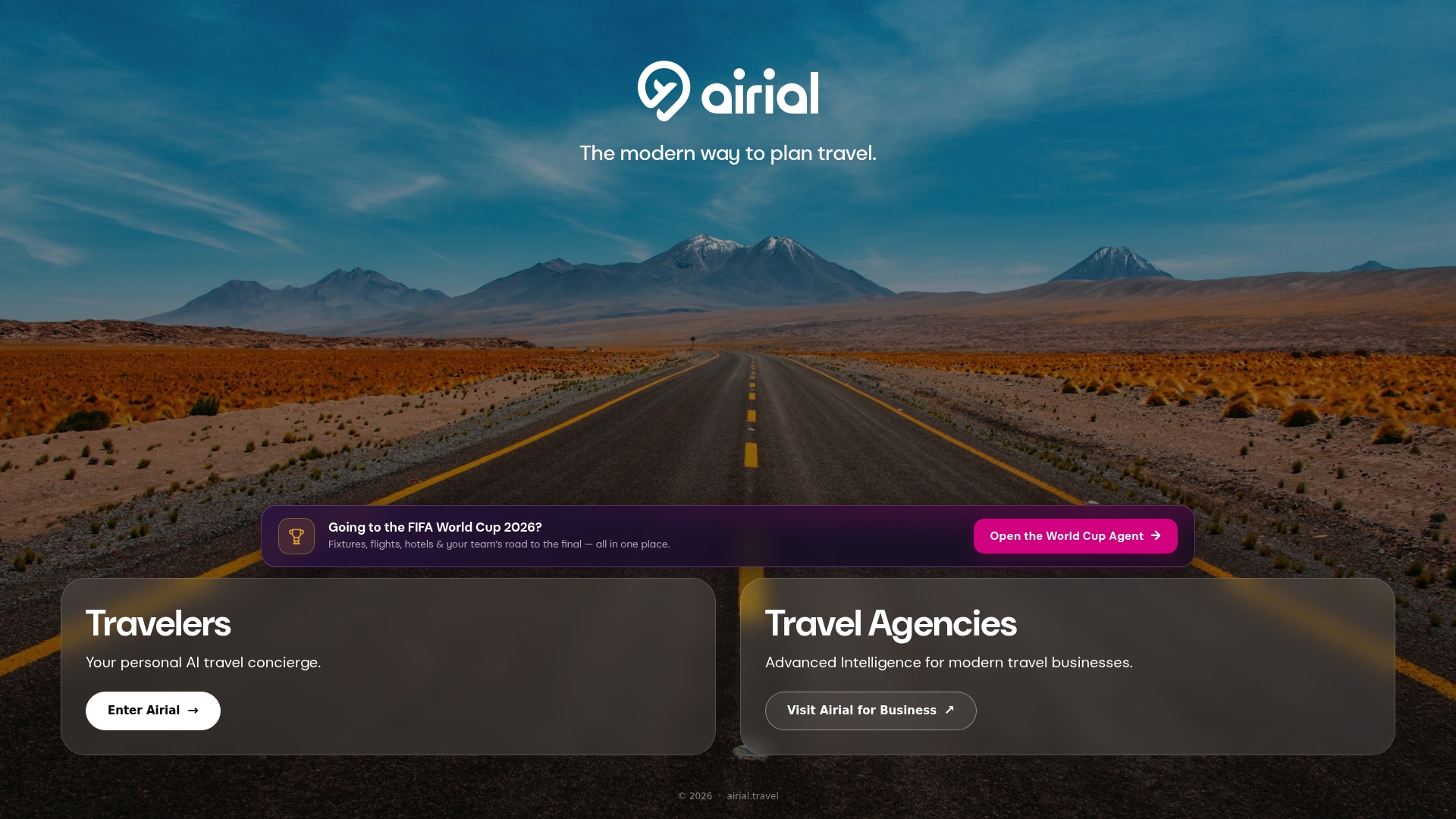
Consolidates fixtures, flights, hotels, and team roadmaps for major events like FIFA World Cup 2026 in one place. That event focus makes it useful for travel agencies and fan groups handling complex itineraries. Publicly available product details and pricing are limited, so you will likely need a demo to confirm exact capabilities.
Core Features
Airial combines a personal AI travel concierge for travelers with tools for agencies that manage bookings and timelines. The platform centralizes fixtures, flights, hotels, and team roadmaps into a one stop platform for event planning. It also adds agency intelligence to coordinate schedules and client deliveries across multiple travelers.
Key Differentiator
Airial centers on AI driven consolidation for large events. It blends traveler facing assistance with backend tools for agencies managing many clients at once. Planytera focuses on adjustable day by day itineraries and offline guidance, while Airial narrows its scope to event logistics and agency workflows.
Pros
Airial integrates multiple travel components so agencies can reduce manual coordination between bookings and schedules. The AI concierge aims to speed responses to traveler requests while agency tools help keep fixture updates and timelines in sync. The platform targets high attendance events, which simplifies mass coordination for clients and staff.
Cons
- Limited publicly available information on detailed features and customization.
- Unclear whether the AI concierge provides truly personalized recommendations or mainly automates routine tasks.
- Potentially limited to specific events or travel types such as large scale sporting events.
- No publicly listed pricing or subscription tier details.
When It May Not Fit
If you need a general purpose itinerary builder for everyday trips, Airial may be narrow in scope. Solo travelers who value offline access and flexible day by day plans may prefer a different tool. Agencies that require deep custom workflows or broad international support should verify feature coverage before committing.
Who It's For
Agencies organizing travel for tournaments, conferences, or other high attendance events will find Airial relevant. Travelers attending major events who want consolidated fixture and booking data may benefit from the concierge. Operations teams that manage groups and tight schedules will see the clearest value.
Real World Use Case
A travel agency uses Airial to coordinate flights, hotel blocks, and fixture updates for clients attending FIFA World Cup 2026. The agency routes bookings into shared roadmaps and pushes schedule changes to travelers through the concierge. That keeps clients informed and reduces the agency's manual updating workload.
Pricing
Airial does not list public pricing or a free tier. Pricing appears to require direct contact or a tailored quote for agencies and event programs. Request a demo and a written pricing proposal before evaluating it for large scale deployments.
Website: https://airial.travel
Wanderlog
At a Glance
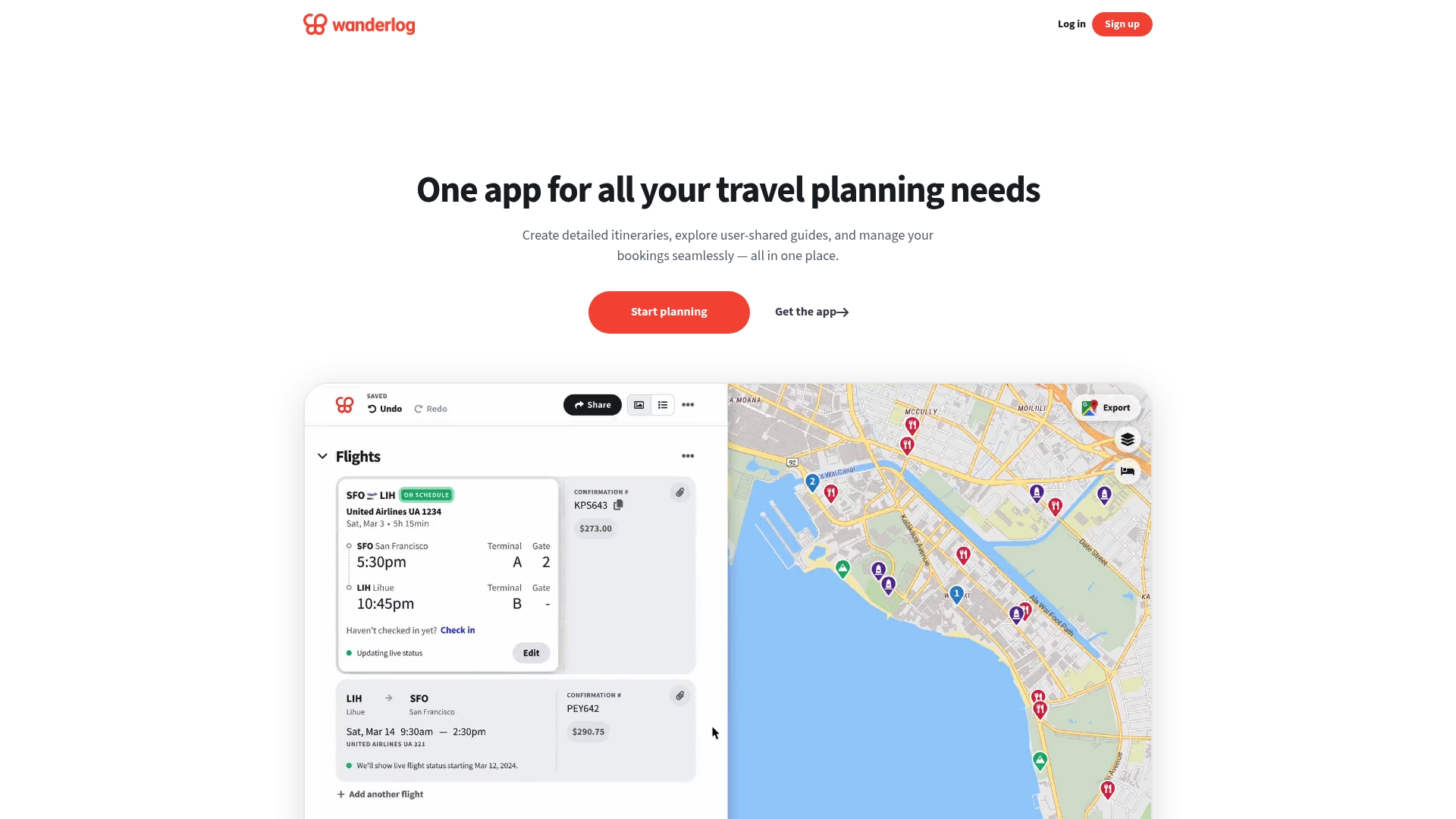
Wanderlog reports more than 8 million trips planned. The app combines itinerary building, booking management, and collaborative tools in one place. It also offers AI-powered route optimization and expense splitting to keep group planning organized.
Core Features
Wanderlog lets you create detailed day by day itineraries with attractions, accommodations, and transport entries. You can forward booking confirmation emails to consolidate reservations and view everything on an interactive map. The app tracks expenses, splits costs with companions, and uses AI to suggest optimized routes and visit orders.
Key Differentiator
The product stands out because it pairs AI-powered route optimization with direct booking consolidation inside a single app. That mix reduces the manual work of rearranging plans when travel dates change. Teams and groups benefit from having maps, bookings, and expense tracking all visible in one interface.
Pros
Wanderlog replaces spreadsheets, notes, and separate mapping tools with a single planning workspace. Collaboration works in real time so group edits appear instantly across devices. The combination of booking import, map visualization, and expense splitting keeps logistics together. The vendor reports heavy usage with millions of planned trips, and that figure suggests the app handles common trip sizes and group workflows well.
Cons
- Lag issues reported, particularly when importing complex booking packages. This can slow plan updates.
- Occasional bugs like double counting expenses or incorrect currency displays appear for some travelers. These require manual fixes.
- Pro features require an annual subscription only, with no monthly billing alternatives. That limits flexibility for short term users.
- Search and discovery sometimes miss smaller towns or niche activities in less-traveled regions.
When It May Not Fit
If you need minute by minute live guidance for fast paced itineraries, this app may feel heavy for that use. Teams needing monthly billing or trial month options will find the paid model restrictive. If your trip focuses on very remote locations or obscure activities, search limitations might leave gaps in suggested attractions.
Who It's For
Travelers who want an all-in-one planner for groups, families, or solo trips will like Wanderlog. People who forward booking emails and prefer visual route planning gain the most. Those who value real time collaboration and shared expense tracking will find the app practical.
Real World Use Case
A group of friends can plan a multi-country European trip by forwarding hotel and flight confirmations into the app. They build a shared itinerary, split costs for lodging and transport, and let the AI reorder routes for efficient travel days. The group edits and comments in real time while traveling.
Pricing
Wanderlog is free to use with optional Pro features behind an annual subscription. The product data lists only yearly billing for the Pro tier. No per month billing option is publicly listed for Pro.
Website: https://wanderlog.com
Comparison of alternatives
When comparing available travel planning tools, several options stand out for their unique features and benefits tailored to different types of travelers.
Tailored itinerary content creation
Planytera focuses on providing AI-assisted itinerary creation tailored to dietary preferences, travel pacing, and budgetary constraints. It uniquely incorporates offline mapping functionality, supporting users in areas with limited connectivity. Conversely, Layla.ai offers real-time price comparisons for accommodations and travel activities, assisting budget-conscious planners who prioritize financial visibility and deal finding during itinerary building.
Collaborative and technical functionalities
Mindtrip differentiates itself by providing means to integrate interactive and localized travel guides directly into partner applications, administrators being able to earn revenue via this integration. For users requiring collaboration without additional integration effort, options like Wanderlog, with real-time trip updates synchronized among devices, become a highly suitable choice. Airial, while catering mostly to organized events, might serve the right agency functions adeptly, but its narrow use cases limit extensive versatility.
Best fit
- Travelers requiring collaborative and editable itineraries complemented by offline usability will benefit from Planytera, delivering dependable operation under various planning scenarios.
- Budget-oriented travelers who prefer live comparisons among activity and accommodation costs will find Layla.ai especially effective.
- Organizations seeking advanced customization and integration of travel guides into bespoke applications should consider Mindtrip due to its embedded platform capabilities.
- Event organizers coordinating travel logistics for large-scale gatherings will leverage the centralized features of Airial to enhance itinerary consolidation.
- Groups aiming for a cost-tracking, interactive planning experience will appreciate Wanderlog for its thoughtful inclusion of route optimization and budget management.
Our pick
Planytera excels in providing personalized itineraries emphasizing offline access and user collaboration. While it may lack some integration functionalities specialized for event coordination or systemized cost analysis, its customized itineraries and practical offline utility present it as an choice. However, budget-conscious users or event-based planners might explore Layla.ai or Airial respectively for more pertinent solutions.
Consider these platforms for creating tailored and efficient trip plans, leveraging their key features and pricing structures.
| Platform | Core Feature | Key Differentiator | Pricing | Limitation |
|---|---|---|---|---|
| Planytera | AI-powered personalized itineraries | Tailored plans including dietary needs | Free to $299.99/month | Verify venue details for accuracy |
| Layla.ai | Itinerary with live price comparison | Combines automation with human support | Free to $49/year | Limited offline functionality |
| Mindtrip | Conversational planning with POIs | Integrates guides for destinations | Price not published | Setup requires developer resources |
| Airial | Event-focused itinerary management | Centralized event booking tools | Price not published | Limited information on customization options |
| Wanderlog | Collaborative itinerary and expense tracking | Includes booking imports and AI optimization | Free, annual Pro subscription | Occasional lag with complex plans |
Challenges of Finding the Right Packyai.com Alternative for Your Travel Plans
Planning trips with diverse needs can get complicated quickly. You want personalized, fast itineraries that fit dietary preferences, budgets, and travel pace without juggling spreadsheets or endless research. Planytera meets these challenges by generating AI-powered, day-by-day itineraries tailored just for you and your group. It supports real-time editing and offline access so your plans stay flexible on the go.
Whether you are a solo traveler, family, couple, or agency handling batch trip jobs, Planytera simplifies collaboration and keeps your travel details one click away. See how Planytera transforms trip planning with easy shared voting and live guidance by visiting Planytera. Take control of your customized itinerary and start with a ready plan in moments.
FAQ
How does Planytera generate personalized itineraries?
Planytera creates personalized itineraries using AI technology. It incorporates dietary preferences, pace, and budget considerations into its day-by-day plans. This allows you to have a tailored trip that suits your unique travel style.
What is the difference between Planytera and Layla.ai?
Layla.ai excels in combining AI-generated itineraries with live price comparison for flights, hotels, and activities. While Layla.ai is great for real-time price checks, Planytera focuses on creating highly personalized itineraries quickly for tailored travel experiences.
Which platform supports offline access for trip planning?
Planytera supports offline access, enabling users to utilize their itineraries even without an internet connection. This feature allows for real-time adjustments while traveling without needing a network, ensuring a seamless experience.
Can I collaborate with others while using Planytera?
Yes, Planytera allows for shared voting on activity selections, making group collaboration straightforward. This feature is particularly useful for family trips or planning with friends, enabling collective decision-making.
What pricing tiers are available for Planytera?
Planytera offers a Free plan covering basic features, with paid options ranging from $9.99/month to $299.99/month. These tiers cater to different levels of use, including options for agencies requiring branding and team collaboration.