
Solo travel preference profiling is defined as a behavioral intelligence method that maps your individual travel traits across multiple dimensions to generate personalized itineraries and compatible companion matches. This goes far beyond booking history or age brackets. Modern profiling systems track real-time signals like browsing behavior, content engagement, and trip pacing to build what researchers now call a "Traveler DNA" profile. Understanding solo travel preference profiling gives you a real advantage: you stop settling for generic plans and start traveling in a way that actually fits who you are. Planytera uses this same logic to build day-by-day itineraries tailored to your pace, budget, and interests.
How does modern solo travel preference profiling work?
Behavioral profiling is the engine behind today's most accurate travel recommendations. Traditional systems relied on demographics like age, gender, and past bookings. Modern systems go deeper, and the gap in results is significant.
Traveler DNA profiles use up to 30 behavioral markers to capture how you actually travel, not just where you have been. These markers include motivations, risk tolerance, preferred activity intensity, social preferences, and decision-making style. Behavioral profiling built on these markers improves booking conversion rates by 20–35% compared to demographic models. That improvement reflects how much more accurately the system predicts what you will actually enjoy.

Real-time data collection is what separates modern profiling from older approaches. Capturing real-time signals like how long you browse a destination page, which inspiration types you engage with, and how quickly you respond to suggestions gives the system a live picture of your intent. Past transactions alone give an incomplete picture of what you want next.
The technology behind the best systems uses hybrid AI models. Hybrid models combining collaborative and content-based filtering deliver personalized results even when you are new to a platform and have limited history. Collaborative filtering learns from travelers with similar profiles. Content-based filtering matches your stated preferences to destination attributes. Together, they cover each other's blind spots.
Key inputs that sharpen your profile include:
- Activity intensity: Do you prefer light sightseeing or full-day hikes?
- Dietary needs: Vegetarian, halal, gluten-free, and similar requirements filter accommodation and restaurant options.
- Trip pacing: Fast-paced city hopping versus slow, immersive stays in one location.
- Budget range: Affects accommodation tier, transport mode, and dining options.
- Risk tolerance: Willingness to try unfamiliar destinations or off-the-beaten-path experiences.
Pro Tip: Rate destinations and activities after each trip on any platform you use. Even simple thumbs-up or thumbs-down feedback updates your profile faster than any algorithm can infer on its own.
What key factors shape solo travel preferences and companion matching?
Safety, travel pace, and budget are the three dominant factors in effective travel preference analysis. A study using a safety-enhanced recommendation framework found that safety ranked as a priority for 69.2% of solo travelers, travel pace for 76.9%, and budget for 73.1%. The same hybrid algorithm built on these factors achieved an 84.6% acceptance rate for recommended travel plans. That acceptance rate tells you something important: when profiling captures the right variables, travelers trust the output.
Companion matching adds another layer to preference profiling. Research analyzing over 1,000 social networking interactions among travel partner seekers identified four attributes for precise companionship:
- Emotional intelligence: The ability to read and respond to a travel partner's needs without friction.
- Travel experience: Shared or complementary experience levels reduce planning conflict.
- Congruence: Alignment on core values like sustainability, spending habits, and daily rhythm.
- Conscientiousness: Reliability in keeping commitments, from booking deadlines to meeting times.
Your personal values determine how much weight each attribute carries. A traveler who prioritizes spontaneity will rank congruence on daily rhythm lower than one who plans every meal in advance. A first-time solo traveler may weight travel experience in a companion more heavily than someone with ten countries under their belt.
Compatibility scoring based on these attributes improves planning acceptance significantly. When a platform understands not just where you want to go but who you travel well with, the resulting itinerary reflects a fuller picture of your needs. This is what separates interest matching in travel from simple destination filtering.
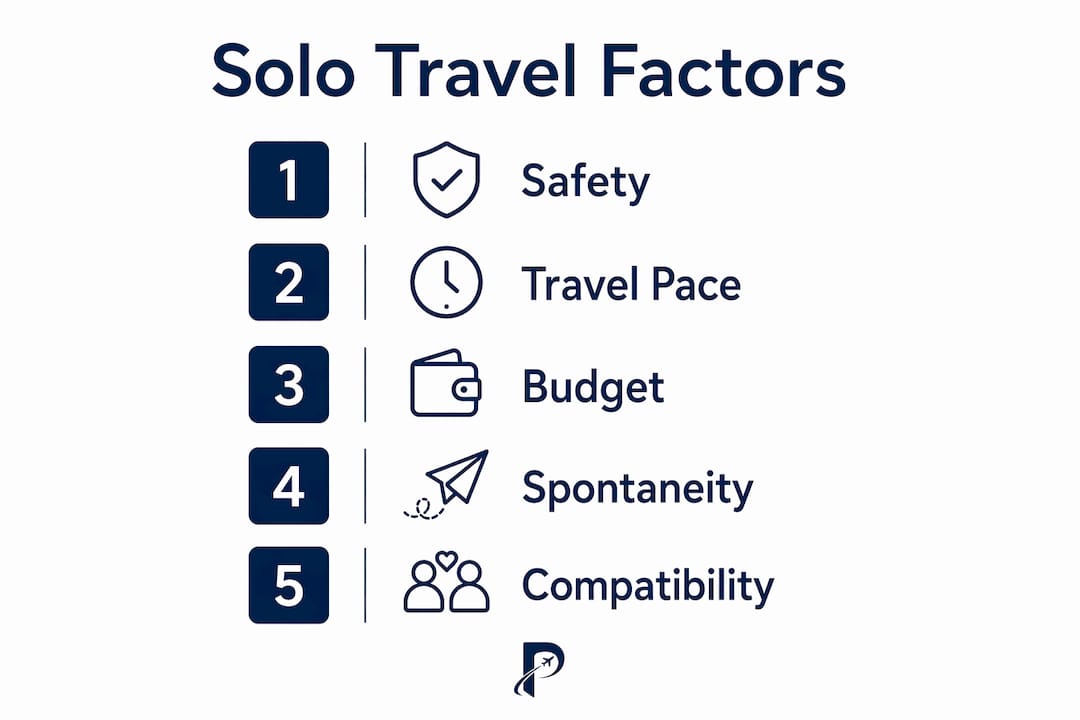
Pro Tip: Before using any profiling platform, write down your top three non-negotiables for a trip. Budget, safety level, and daily pace are good starting points. Feeding these into the system upfront cuts the time the algorithm needs to learn your preferences.
How do solo traveler archetypes influence itinerary design?
Solo travelers commonly self-identify as either methodical planners or spontaneous thrill-seekers. Recognizing your type directly affects how you should structure your itinerary and how much flexibility to build in. Most travelers fall somewhere on a spectrum between these two poles, but knowing your lean changes everything about how you plan.
Behavioral psychologists point to dispositional autonomy as the real driver of solo travel preference. Most solo travelers are not introverted. They act in line with personal values rather than social expectations. This distinction matters for profiling because it means the system needs to capture your values, not just your personality type.
Here is how the major archetypes translate into itinerary design:
- The methodical planner wants a detailed day-by-day schedule with confirmed bookings, clear transport links, and backup options. Profiling for this type should weight reliability of recommendations over novelty.
- The spontaneous thrill-seeker needs a loose framework with open time blocks and a shortlist of options rather than fixed plans. Forced structure actively reduces satisfaction for this archetype.
- The cultural immersionist prioritizes local experiences, language exposure, and neighborhood-level exploration over tourist landmarks. Profiling should surface local restaurants, community events, and off-peak timing.
- The comfort-first traveler values familiar accommodation standards, known cuisine options, and predictable logistics. This archetype benefits most from profiling that filters out high-variance recommendations.
Pitfalls appear when profiling systems ignore archetype. A spontaneous traveler handed a rigid 12-item daily schedule will abandon the plan by day two. A methodical planner given only a destination and a budget will feel anxious without structure. Matching itinerary format to archetype is as important as matching destination to interest.
Pro Tip: Take a solo travel personality quiz before your next trip. Knowing your archetype before you input preferences into any planning tool gives the system a head start and saves you from itineraries that technically match your interests but feel wrong in practice.
What are the challenges and best practices in AI-powered profiling?
The cold-start problem is the most common limitation in AI travel profiling. When you are new to a platform, the system has no behavioral data to work from. Hybrid recommendation models solve this by combining collaborative filtering (learning from similar travelers) with content-based filtering (matching your stated preferences to destination attributes). The result is useful personalization from your very first interaction.
Filter bubbles are a subtler problem. AI travel systems can fall into patterns that only suggest destinations and activities matching your past behavior. You end up in a loop of familiar options. The system gets better at predicting what you already like, but worse at helping you grow as a traveler.
Best practices for getting the most from AI profiling:
- Give structured input. Specific inputs like activity intensity and dietary needs produce far more accurate itineraries than vague prompts like "I like adventure." The more specific your input, the better the output.
- Update your profile after every trip. Rate what worked and flag what did not. This keeps your profile current and prevents the system from recommending last year's version of you.
- Manually explore outside your comfort zone. Deliberately search for a destination type you have never tried. This retrains your profile and breaks the filter bubble before it calculates your preferences too narrowly.
- Separate short-trip and long-trip preferences. A weekend city break and a three-week backpacking trip call for different pacing, budgets, and risk tolerance. Treat them as separate profiles if the platform allows it.
Pro Tip: Once a year, reset your activity and destination filters and browse with no constraints. Save anything that genuinely interests you, even if it surprises you. This single habit keeps your profile from going stale.
Key Takeaways
Accurate solo travel preference profiling requires behavioral data, structured input, and regular profile updates to produce itineraries that genuinely match how you travel.
| Point | Details |
|---|---|
| Behavioral markers beat demographics | Profiles built on 30+ behavioral signals improve booking conversion by 20–35% over demographic models. |
| Three factors dominate companion matching | Safety, travel pace, and budget together drove an 84.6% acceptance rate in hybrid recommendation systems. |
| Archetype shapes itinerary format | Matching itinerary structure to your planner or spontaneous archetype matters as much as matching destination to interest. |
| Structured input improves accuracy | Specific inputs like activity intensity and dietary needs produce significantly better personalization than vague prompts. |
| Manual exploration prevents filter bubbles | Deliberately browsing outside past preferences retrains your profile and keeps recommendations fresh. |
Why I think most solo travelers underuse profiling tools
Most solo travelers I talk to treat profiling as a one-time setup. They fill in a preferences form when they sign up for a planning tool, then never touch it again. That is the single biggest mistake you can make with this technology.
Profiling is not a static snapshot. Your travel preferences shift after every trip. The traveler who spent a week in Tokyo and loved the density will have different preferences six months later after a slow month in rural Portugal. A profile that does not update misses that evolution entirely.
The other thing I see constantly is over-trust in AI output without any manual correction. The algorithm is good, but it is working from signals you gave it, consciously or not. If you spent three hours browsing luxury resorts during a stressful week at work, the system may start weighting upscale accommodation more heavily than you actually want. You have to stay in the loop.
The travelers who get the most from preference profiling treat it like a conversation, not a form. They push back on recommendations that feel off. They explore options outside their usual range. They use tools like Planytera's AI itinerary builder as a starting point, then adjust from there. That combination of AI efficiency and personal judgment produces the best trips I have ever seen planned.
— Dom
Planytera makes solo travel personalization practical
Planytera's AI trip planner takes the concepts behind preference profiling and puts them to work immediately. You input your pace, budget, dietary needs, and activity preferences, and Planytera generates a complete day-by-day itinerary in moments.
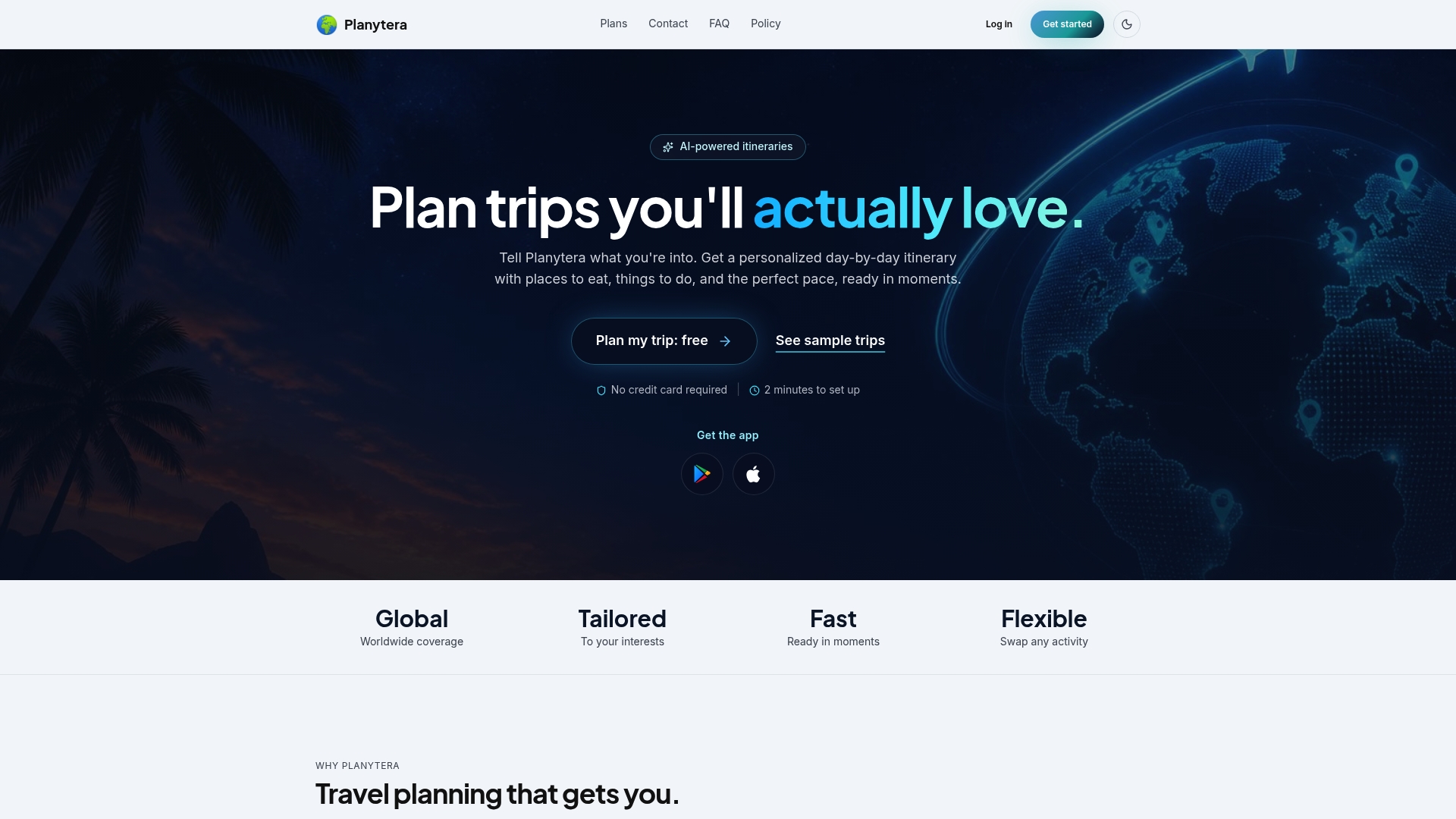
You can adjust any part of the plan on the fly, which means your itinerary evolves as your trip does. Planytera also includes offline access and a built-in journal, so your preferences and memories travel with you. Solo travelers who want to see what a fully personalized plan looks like before committing can browse sample itineraries built with real traveler profiles. Ready to build a trip that actually fits you? Visit Planytera and let the AI do the heavy lifting.
FAQ
What is solo travel preference profiling?
Solo travel preference profiling is a behavioral intelligence method that maps your travel traits across up to 30 markers to generate personalized itineraries and companion matches. It updates in real time based on your browsing behavior, engagement signals, and trip feedback.
What is travel preference matching?
Travel preference matching is the process of aligning a traveler's stated and behavioral preferences with destinations, activities, and companions that fit their profile. Hybrid AI models combining collaborative and content-based filtering produce the most accurate matches.
What are the most important factors in solo traveler profiling?
Safety, travel pace, and budget are the three dominant factors. Research shows these variables, when combined in a hybrid algorithm, achieved an 84.6% acceptance rate for recommended travel plans among solo travelers.
How do I avoid filter bubbles in AI travel recommendations?
Manually browse destination types outside your usual preferences at least once per planning cycle. This retrains your profile and prevents the AI from narrowing its suggestions to only what you have already experienced.
How does knowing my solo travel archetype help with planning?
Knowing whether you are a methodical planner or a spontaneous traveler tells you what itinerary format will actually work for you. Forced structure reduces satisfaction for spontaneous travelers, while loose plans create anxiety for planners.