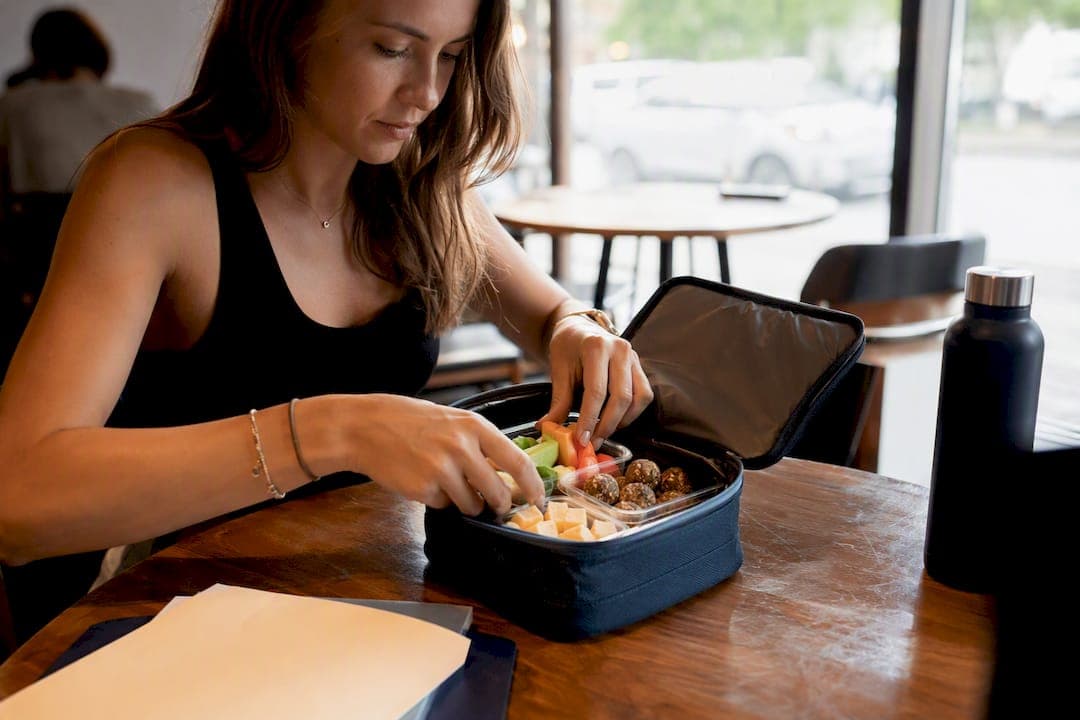
You can stay diet-friendly while traveling by anchoring meals on protein and produce, packing smart snacks, and running a short pre-trip checklist. That's the whole system.
Here's your instant action list:
- Pack a small cooler or insulated bag with protein-forward snacks before you leave.
- Pre-order meals on flights or at hotels whenever that option exists.
- Anchor every meal on protein plus vegetables first, carbs second.
- Drink water steadily and walk when you can, even short distances.
If you manage allergies or a medical diet, bring your medication, original pharmacy labels, and any physician documentation. That's non-negotiable, not optional gear.
Key Takeaways
Diet-friendly travel comes down to anchoring meals on protein and produce, packing measured snacks in advance, and preparing documentation for any medical dietary needs before departure.
| Point | Details |
|---|---|
| Pack smart, not much | Portion shelf-stable and cooler snacks into single-serve bags before you leave home. |
| Choose grocery stores over gas stations | Deli counters and refrigerated cases beat convenience store snack aisles almost every time. |
| Prepare allergy documentation early | Carry a physician's letter, double medication, and a translated chef card for serious dietary needs. |
| Build every plate the same way | Anchor meals on a palm-size protein and a fist-size vegetable portion, wherever you're eating. |
| Use Planytera to store dietary notes | Add allergy and diet preferences to your itinerary so restaurant and grocery suggestions match your needs automatically. |
Table of Contents
- Why Diet-Friendly Travel Planning Prevents Most Slip-Ups
- What to Pack: Snacks and Cooler Contents That Travel Well
- Making Better Choices at Airports and Convenience Stops
- Managing Food Allergies and Special Diets While Traveling
- Easy Plate Rules That Work in Any Restaurant
- Your 72-Hour Pre-Trip Checklist for Diet-Friendly Travel
- Common Diet Mistakes While Traveling and Quick Fixes
- A Realistic Take on Eating Well on the Road
- Let a Trip Planner Handle Your Dietary Notes
- Frequently Asked Questions
- Sources
Why Diet-Friendly Travel Planning Prevents Most Slip-Ups
A little planning stops most travel diet disasters before they start. Skipped meals and vending-machine grazing are the two biggest failure points, and both stem from the same problem: no plan for what to eat when hunger hits at hour six of a layover. Nutritionists point to a simple fix: pre-planning grab-and-go snacks reduces skipped meals and the overeating that follows. Once snacks are handled, the rest gets easier. You're not scrambling at a gas station; you're choosing between what's already in your bag and what's on the menu, with protein-first decisions guiding both.
What to Pack: Snacks and Cooler Contents That Travel Well
Smart packing splits into three categories, and knowing the difference saves you from either starving at security or tossing out spoiled food two days in.
Shelf-stable (good for weeks in a bag):
- Raw nuts and seeds
- Beef or turkey jerky
- Protein bars with minimal added sugar
- Whole-grain crackers
TSA-friendly fresh options (fine through security):
- Whole fruit like apples or oranges
- Sealed hard cheese
- Single-serve nut butter packets
Cooler or insulated bag contents (road trips, short flights):
- Hard-boiled eggs
- Cut vegetables (carrots, bell peppers, celery)
- Rotisserie chicken, portioned into containers
Choosing whole foods over ultra-processed snacks cuts down on the added sugars and unhealthy fats hiding in most pre-packaged travel food. Portion everything into single-serve bags before you leave. A soft insulated bag works for day trips; a hard cooler earns its space on multi-day road trips. If your hotel room has a mini-fridge, use it immediately and finish perishables within a couple of days. Traveling internationally? Eat perishable items before you reach customs. Most countries restrict bringing fresh produce or meat across borders.
Making Better Choices at Airports and Convenience Stops
Seek out grilled or roasted proteins, add a vegetable side wherever one exists, and skip the fried default. Grocery stores beat gas stations almost every time. A supermarket deli counter gives you rotisserie chicken and pre-cut vegetables that a convenience store simply can't match.
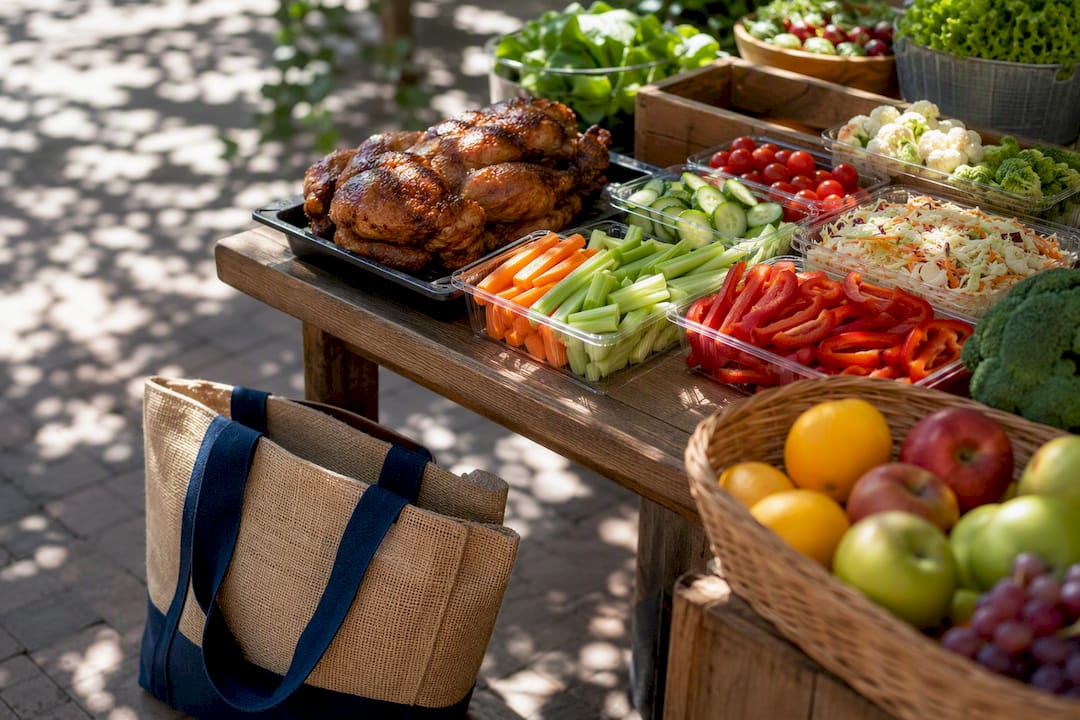
At an airport gate, scan for a grilled chicken wrap, a protein box with hard-boiled eggs and cheese, or a salad with a protein add-on. At a convenience store, head straight for the refrigerated case, not the snack aisle. At a hotel breakfast buffet, swap the pastry basket for eggs, fruit, and yogurt.
Pro Tip: When you're stuck in an unfamiliar town, pull up a grocery store on your map before you search for restaurants. A ten-minute stop for a rotisserie chicken and a bagged salad beats scrolling through fast-food options for twenty minutes.
Managing Food Allergies and Special Diets While Traveling
Start with a checklist: a physician's letter describing your condition, double the medication you think you'll need, original pharmacy labels on every bottle, and a translated chef card listing what you can't eat. Food Allergy Research & Education recommends building a full travel kit with an emergency care plan, not just a stash of pills.
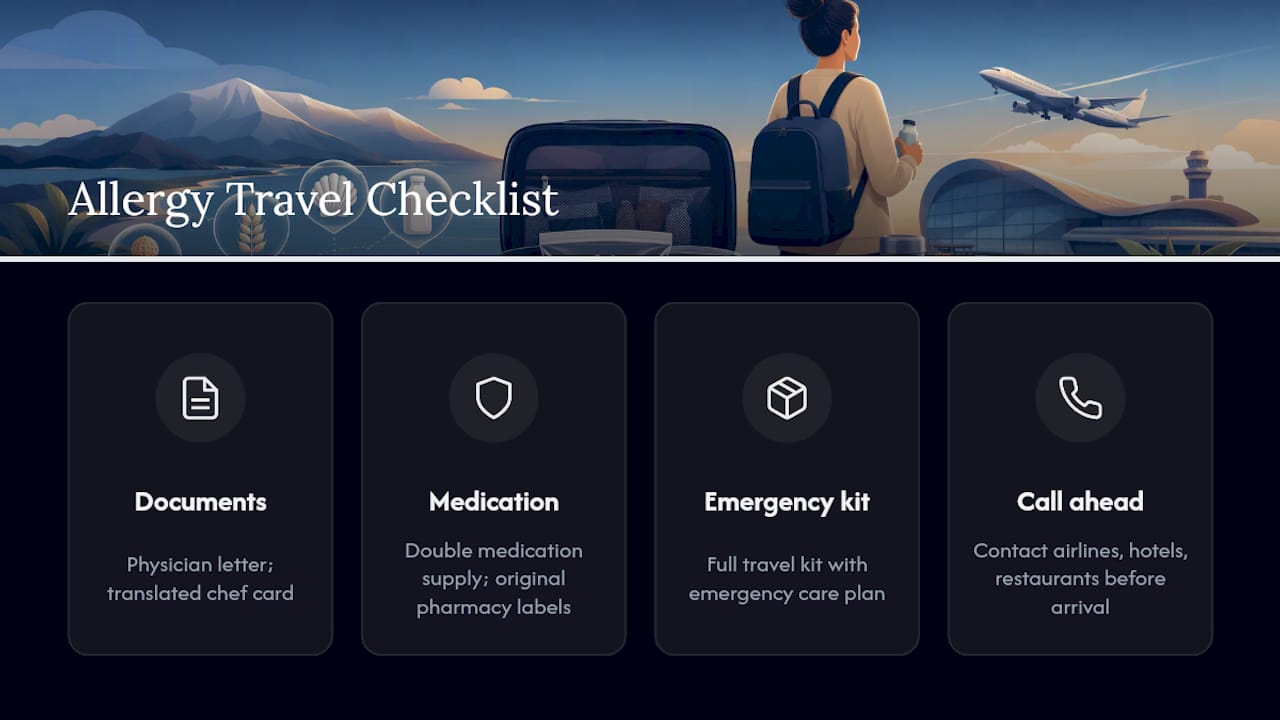
Call ahead. Airlines, hotels, and restaurants can tell you what buffer zones or substitution options exist, but only if you ask before you arrive. Ask airlines about their allergy policy directly, including whether they'll announce a peanut-free zone or let you board early to wipe down your seat. Note your allergy on hotel and restaurant reservations too, not just at check-in.
Pro Tip: Never treat an airline's special meal as your only safety net. Pack roughly twice the food and medication you expect to need, and keep it in your carry-on, not checked luggage, where you can't reach it if something goes wrong.
Easy Plate Rules That Work in Any Restaurant
Every meal gets the same two anchors: protein and vegetables. Build the rest around them. A useful shortcut is sizing portions by hand: a palm-size piece of protein, a fist-size portion of vegetables, and a quarter-cup of carbs if you want them. This build-your-own plate approach works whether you're at an airport sit-down restaurant, eating in a hotel room, or grabbing food at a road-stop deli.
At a sit-down restaurant, order a grilled protein and ask for a side salad instead of fries. In a hotel room with no kitchen, pair deli meat or a rotisserie chicken breast with pre-washed greens. At a road-stop deli, skip the combo meal and build your own plate from the counter.
- Order the appetizer as your protein source when portions run large.
- Ask for dressing and sauce on the side, always.
- Swap starchy sides for a vegetable option without asking twice.
Your 72-Hour Pre-Trip Checklist for Diet-Friendly Travel
Three days out, you still have time to set up a smooth trip. Use this timeline:
- 72 hours out: Build your grocery list, buy shelf-stable snacks, and check whether your destination restaurants or hotels take dietary notes on reservations.
- 48 hours out: Reserve meals where possible, confirm your airline's allergy policy if you have one, and print or save a translated chef card.
- 24 hours out: Pack your cooler or insulated bag, pack double the medication you expect to need, and download offline maps for grocery stores near your destination.
Copy this into your notes app or trip planner: pack protein, book a hotel with a mini-fridge, save chef cards, confirm airline policy.
Pro Tip: A trip planner that stores dietary notes alongside your itinerary saves you from re-explaining your restrictions at every stop. Locking in restaurant choices ahead of time means fewer decisions made hungry, which is when most diet plans fall apart.
Common Diet Mistakes While Traveling and Quick Fixes
The same mistakes repeat on almost every trip. Here's how to catch and fix them fast:
- Skipping meals to "save calories": Eat something small every four hours instead; skipping backfires into overeating later.
- Over-relying on snacks as meals: Treat snacks as bridges, not dinner substitutes.
- Assuming airline meals are automatically safe: Bring your own backup, always.
- Forgetting extra medication: Pack double, store it in your carry-on.
- Craving hits mid-afternoon: Reach for a protein shake or a deli protein pack instead of the vending machine.
A Realistic Take on Eating Well on the Road
Rigid diets don't survive real travel, and honestly, they shouldn't have to. The travelers who stay on track are the ones who anchor most meals on protein and vegetables and then let themselves enjoy one genuinely great local dish without guilt. That's not a compromise. That's the actual strategy that holds up across a full trip, not just the first day of good intentions.
Let a Trip Planner Handle Your Dietary Notes
Planytera builds your dietary preferences directly into your itinerary instead of leaving them stuck in a notes app you'll forget to check. Tell it about allergies, macros, or a diet you're following, and it factors that into restaurant suggestions, grocery stops, and meal timing for every day of your trip.
That matters most on group trips, where everyone's dietary needs tend to clash. Planytera keeps the plan shared and editable, so nobody's scrambling to explain their restrictions at the restaurant table again. It also flags accommodations with a kitchenette or mini-fridge when self-catering makes more sense than eating out for every meal, and it works offline, so your plan doesn't disappear the moment you lose signal.
Start building your personalized itinerary and add your dietary preferences before your next trip.
Frequently Asked Questions
What counts as diet-friendly travel? Diet-friendly travel means planning meals, snacks, and accommodations so you can maintain your eating habits, whether that's general healthy eating, a medical diet, or an allergy protocol, without constant improvising.
How do I handle a food allergy on a flight? Contact the airline before your flight to ask about their allergy policy, carry your medication and physician's letter in your carry-on, and pack backup food rather than relying solely on the airline's meal service.
What snacks travel best for road trips? Hard-boiled eggs, cut vegetables, cheese cubes, and rotisserie chicken hold up well in a cooler, while nuts, jerky, and protein bars work for the shelf-stable portion of your bag.
How do I stick to healthy eating when time zones shift my meal schedule?
Can a travel planning app help with dietary restrictions? Yes. A tool like Planytera can store your dietary preferences and factor them into restaurant and grocery suggestions across your entire itinerary, reducing the need to re-explain your needs at every stop.
Sources
- Tips for eating healthy while traveling — Houston Methodist
- Traveling — Food Allergy Research & Education (FARE)
- Build your own travel plate — Vibrance Nutrition and Fitness