Kid-friendly travel planning is the process of designing vacation itineraries that intentionally center children's developmental, emotional, and energy needs while keeping the whole family happy. This approach, also called child-friendly itinerary design by family travel specialists, goes far beyond picking a destination with a pool. 92% of US families plan family trips, with 84% prioritizing meaningful, playful experiences over material gifts. That data tells you something important: parents are not just booking vacations. They are building memories, and the planning method determines whether those memories are joyful or exhausting.
What is kid-friendly travel planning, and why does it matter?
Kid-friendly travel planning is defined by one core principle: children's needs shape the itinerary, not the other way around. A standard adult travel plan packs in attractions, restaurants, and sightseeing from morning to night. A child-friendly itinerary design works backward from what kids can actually handle, then fits adult priorities around that foundation.
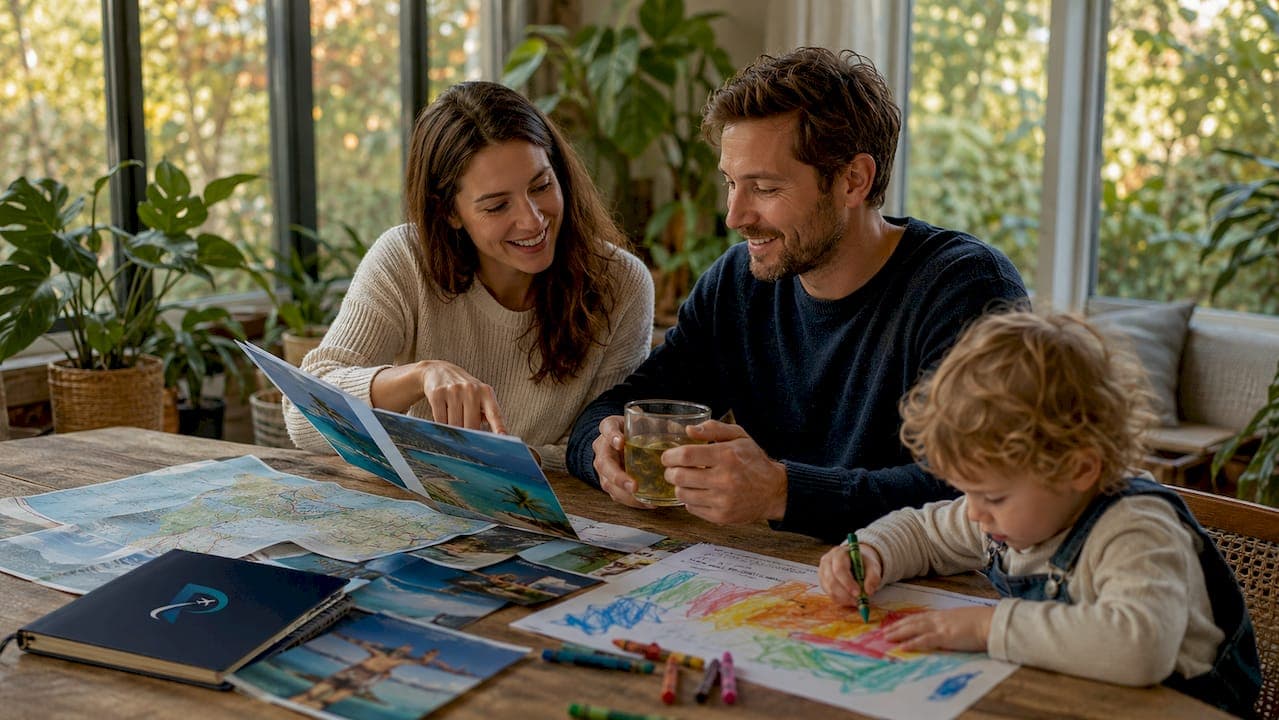
The payoff is real. Involving kids in travel planning leads to more cooperative behavior and better trip enjoyment, with 81% of families who consult children on plans reporting higher satisfaction. Children who feel heard before the trip starts are far less likely to resist activities once you arrive.
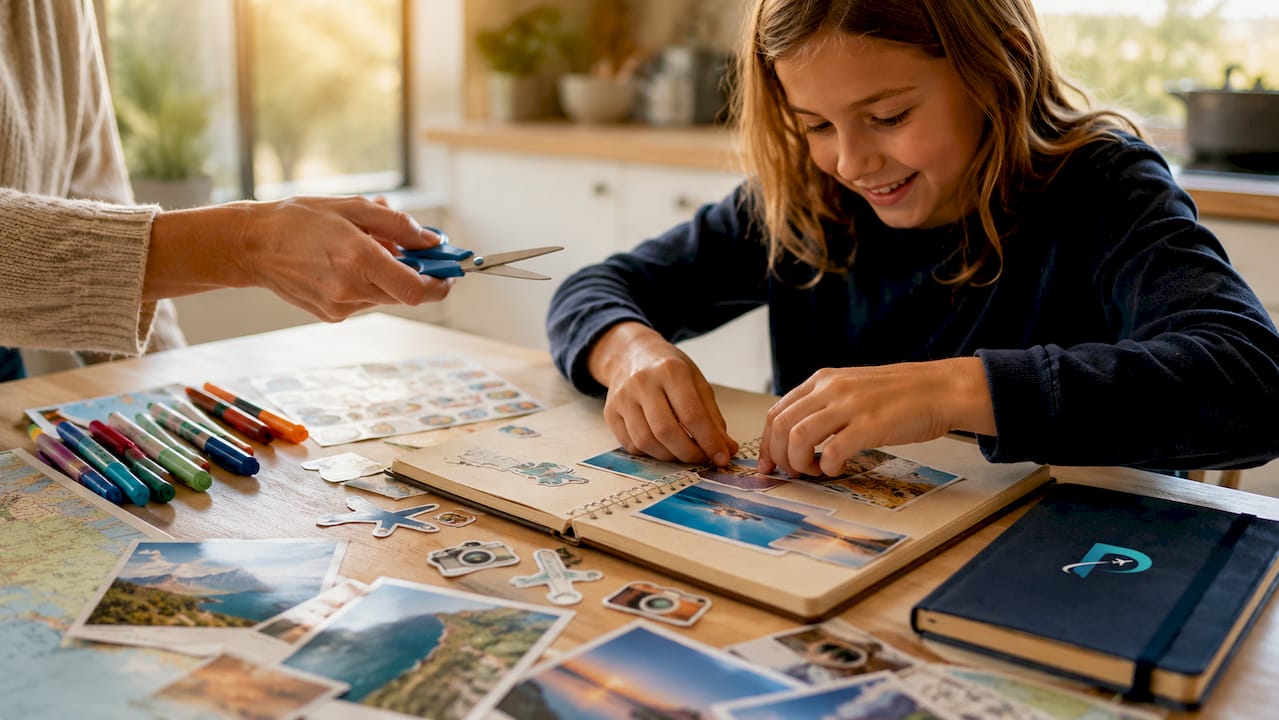
Family trips achieve the most enjoyment when the itinerary, lodging, budget, and packing all align to support each other. That integration is the difference between a trip that flows and one that constantly feels like you are putting out fires.
What are the essential components of a kid-friendly travel itinerary?
The structure of a child-friendly itinerary looks very different from a typical travel plan. The goal is sustainable pacing, not maximum coverage.
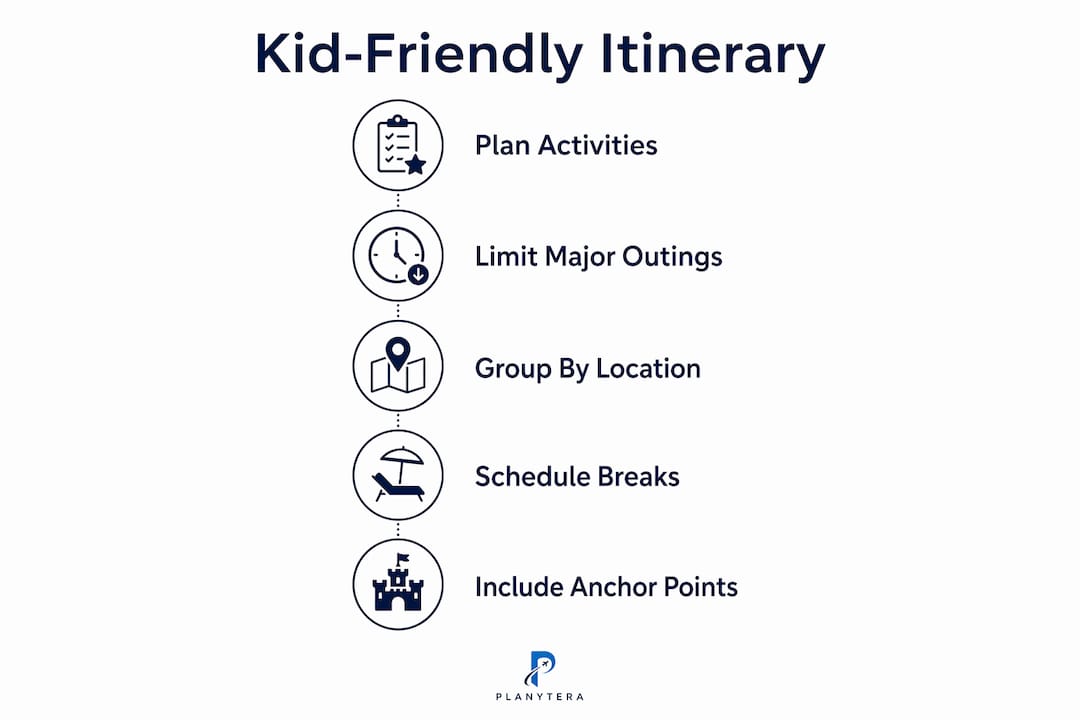
Limit major activities per day. Experts recommend capping daily major activities at two or fewer, with many family travel planners applying a one-activity rule for children under eight. One big outing per day prevents the overtiredness that turns a great afternoon into a meltdown by dinner.
Build the day around breaks, not attractions. A daily itinerary optimized by breaks rather than a checklist of sights supports toddler happiness and family harmony. The rhythm looks like this: major activity, food stop, free play, rest, then a lighter afternoon option.
Here are the core components every kid-friendly itinerary needs:
- One or two anchor activities per day, chosen for age appropriateness and location proximity
- Energy outlets like playgrounds, splash pads, or open green spaces built into the schedule
- Predictable mealtimes at roughly the same time each day to prevent hunger-driven crankiness
- A rest window in the early afternoon, especially for children under five
- One adult-interest stop per day, placed after a kid-friendly activity so children are still in good spirits
- Buffer time between transitions to avoid rushing, which spikes stress for everyone
Pro Tip: Plan activities by location, not by category. Grouping a museum and a nearby park in the same neighborhood cuts transit time and keeps energy levels stable.
Structure and predictable anchor points like mealtimes and rest give children the security they need to handle travel's natural unpredictability. A child who knows lunch is coming and a nap follows is far more willing to try something new before that happens.
How to choose destinations and accommodations for family travel
Destination choice is where many family trips succeed or fail before they even begin. The most photogenic location is not always the most family-friendly one.
Choosing "forgiving" destinations with reliable transport and accessible lodging matters more than tourist appeal for family trip success. A forgiving destination has simple dining options, short distances between attractions, and infrastructure that does not punish a slow-moving family with a stroller.
When evaluating destinations, prioritize these features:
- Reliable, simple transportation so you are not navigating complex transit with a tired toddler
- Pram-friendly and accessible environments, including flat sidewalks, elevators, and step-free museum entrances
- Predictable climate during your travel window to avoid weather disruptions that derail outdoor plans
- Proximity of key attractions to your accommodation so you can return quickly for naps or rest
Accommodation deserves as much attention as the destination itself. The right lodging functions as a home base that reduces daily friction.
| Feature | Why it matters for families |
|---|---|
| Kitchenette or kitchen | Lets you prepare simple meals and snacks, cutting costs and meltdowns |
| Separate sleeping areas | Children and adults sleep better with their own space |
| On-site play area | Gives kids a safe outlet without leaving the property |
| Laundry access | Reduces packing stress on longer trips |
| Flexible check-in | Accommodates travel delays without disrupting nap schedules |
For family budget travel planning, apartment-style rentals and family suite hotels consistently outperform standard hotel rooms because they offer more space and kitchen access at a comparable or lower nightly cost.
How to keep kids engaged during planning and on the trip
Engagement starts before you leave home. Children who contribute to trip decisions arrive with a sense of ownership over the experience.
- Ask kids what they want to see or do. Even young children can choose between two options. "Do you want to visit the aquarium or the nature park?" gives them real input without overwhelming them with choices.
- Assign each child a "pick" per day. One activity per day belongs entirely to them. This creates anticipation and reduces resistance to adult-led activities.
- Use the PAKD framework as a mental checklist: Plan Flow (does the day sequence make sense?), Adult Joy (is there something for grown-ups?), Kids Energy (is there a physical outlet?), Downtime (is rest built in?). Running through these four categories before finalizing each day catches gaps before they become problems on the ground.
- Create anchor points in the daily schedule. Children handle unpredictability better when they know certain things are fixed. "We always have lunch at noon and swim before dinner" gives kids a mental map of the day.
- Read the room and adapt. If a child is visibly tired or upset, cut the afternoon activity. One dropped plan saves the whole evening.
Pro Tip: Pack a small "activity kit" for each child with stickers, a travel journal, and a simple card game. These work as instant engagement tools during transit or slow restaurant waits.
Parents who prioritize breaks and routine anchors such as meals, parks, and hotel time consistently report fewer frustration incidents and more positive trip memories. The data supports what experienced family travelers already know: predictability is not boring for kids. It is reassuring.
For more on balancing activity and rest across different traveler types, the travel pace tips on the Planytera blog offer useful frameworks that translate directly to family trips.
Common pitfalls in kid-friendly travel planning
The biggest threats to a smooth family trip are not dramatic disasters. Small, incremental stresses are the main culprits, and thoughtful pre-planning is the most effective defense.
Watch out for these common mistakes:
- Overpacking the schedule. Three major attractions in one day feels ambitious at home and catastrophic by 2:00 PM with a four-year-old.
- Skipping nap or rest windows. One missed rest period compounds into two bad days. Protect downtime like a confirmed reservation.
- Choosing accommodation based on price alone. A cheap room with no kitchen and thin walls costs more in stress than it saves in dollars.
- Ignoring transit time. A 45-minute bus ride each way to a single attraction eats three hours of a child's tolerance. Factor travel time into every plan.
- Failing to plan for bad days. Weather changes, illness, and mood swings happen. Having one low-key backup option per day removes the panic when plans fall apart.
"Filtering travel options intelligently with family needs first simplifies planning and makes trips more enjoyable. Structure enables spontaneity by giving children the security to handle travel unpredictability."
The insight above captures the counterintuitive truth about traveling with kids. More planning does not mean less fun. It means you have the freedom to be flexible because the essentials are already handled.
Key Takeaways
Kid-friendly travel planning works because it matches the itinerary to children's actual capacity, not to an idealized version of what a family trip should look like.
| Point | Details |
|---|---|
| Limit daily activities | Cap major outings at one or two per day to prevent overtiredness and meltdowns. |
| Build in predictable breaks | Schedule mealtimes and rest windows at consistent times to give children security. |
| Choose forgiving destinations | Prioritize accessible, low-friction locations over tourist appeal for smoother trips. |
| Involve kids in planning | Consulting children on choices raises satisfaction and reduces resistance on the trip. |
| Plan for flexibility | Keep one backup option per day so unexpected changes do not derail the whole schedule. |
What I've learned from planning trips with kids
The conventional wisdom says family travel is about finding the right destination. I disagree. The destination is almost irrelevant compared to the structure of the days you spend there.
I have watched families spend a week in a dream location and come home exhausted and frustrated because every day was overscheduled. I have also seen families have genuinely wonderful trips to ordinary places because someone took the time to build in breathing room. The difference was never the destination. It was the planning method.
The hardest thing to accept as a parent is that your children will not remember the famous museum you dragged them through at 4:00 PM. They will remember the fountain they splashed in on the way back to the hotel. Protecting that unscheduled time is not laziness. It is the actual work of good family travel planning.
One more thing: involve your kids early and often. Not just in choosing activities, but in packing, in reading about the destination, in looking at photos. Children who feel like participants rather than passengers behave like participants. That shift alone changes the entire trip dynamic.
— Dom
How Planytera helps families plan kid-friendly trips
Planning a family trip that actually works for everyone takes real effort. Planytera's AI trip planner does the heavy lifting by generating personalized, day-by-day itineraries that factor in pace, dietary needs, budget, and the specific rhythms that families with children need.

You can build a full family itinerary in minutes, adjust it on the fly when plans change, and access it offline when you are in the middle of a busy travel day. Planytera lets you set activity limits per day, flag kid-friendly stops, and balance adult interests with children's energy levels automatically. Want to see what a real family itinerary looks like before you commit? Browse sample family trips to get a feel for how the plans are structured. For families who travel regularly, the AI group planning tools make coordinating multi-family or extended-family trips significantly easier.
FAQ
What is kid-friendly travel planning?
Kid-friendly travel planning is the practice of designing vacation itineraries around children's energy levels, routines, and interests. It prioritizes pacing, predictable breaks, and age-appropriate activities over maximizing sightseeing.
How many activities should you plan per day with young kids?
Experts recommend no more than one or two major activities per day, with a one-activity rule for children under eight. This prevents overtiredness and keeps the family in good spirits through the evening.
What makes a destination "family-friendly"?
A family-friendly destination offers reliable transportation, accessible environments for strollers, simple dining options, and attractions within close proximity to each other. These practical features matter more than a destination's tourist reputation.
How do you keep kids engaged during a family trip?
Give each child one activity pick per day, build predictable anchor points like mealtimes into the schedule, and carry a small activity kit for transit and waiting times. Children who have ownership over part of the day cooperate more readily with the rest of it.
Should you involve kids in travel planning before the trip?
Yes. Consulting children on destination and activity choices leads to more cooperative behavior and higher satisfaction for the whole family. Even simple choices, like picking between two activity options, give kids a meaningful sense of involvement.