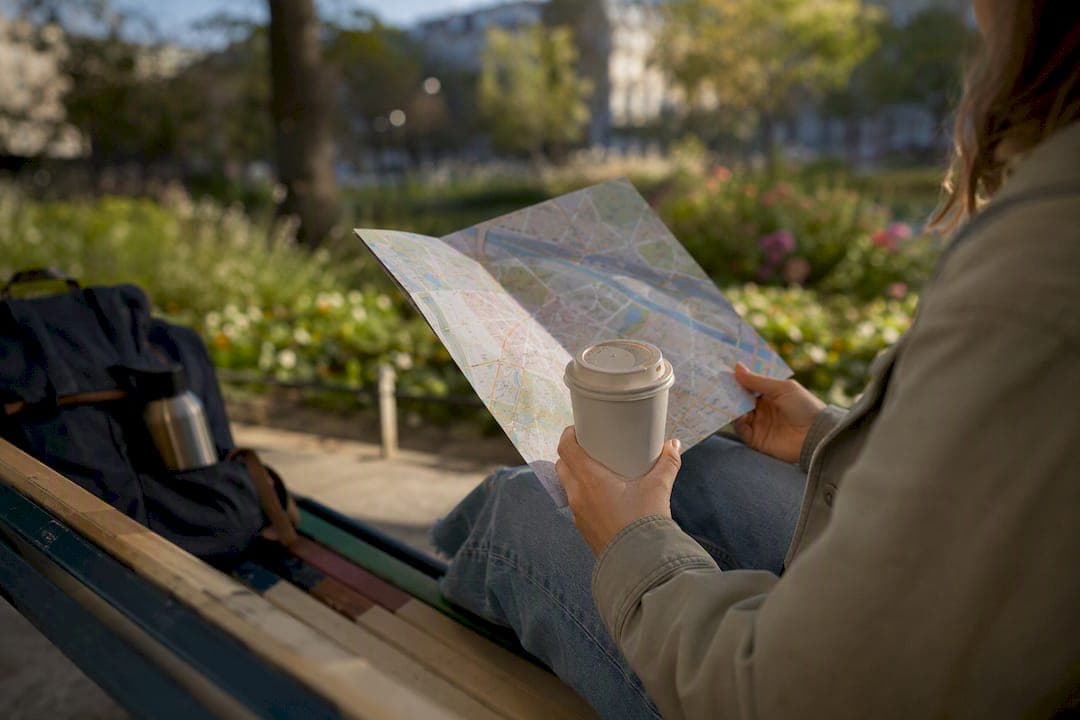
The simplest way to plan a solo city trip day schedule is this: pick one "day spine" (a single neighborhood or anchor activity), split your day into three time blocks (morning, afternoon, evening), then layer in buffer time and one or two ambient-social touchpoints so you never feel isolated by 3 p.m.
A one-line version looks like this: 8:00 breakfast near your hotel → 9:00–12:30 one neighborhood on foot → 1:00 counter-seat lunch → 2:00–5:00 single major sight with a timed ticket → 6:30 market or food hall for dinner → 8:00 evening walk or show. That's it. Everything else in this guide is variations on that skeleton.
Before you head out, lock down a short list of logistics so the day doesn't unravel:
- Confirm opening hours and closing days for your one "must-see" stop.
- Book any timed-entry ticket at least 24 hours ahead.
- Check the transit line or walking route between your morning and afternoon zones.
- Download an offline map for the neighborhood you're covering.
Pro Tip: Choose at least one activity with "ambient density," like a food hall or an open-air market. You get the energy of being around people without the pressure of small talk, which keeps solo days from feeling flat by early evening.
Key Takeaways
A solo city trip day schedule works best when it pairs one clear day spine with three flexible time blocks, built-in buffers, and at least one ambient-social touchpoint.
| Point | Details |
|---|---|
| Pick one day spine | Anchor your day to one neighborhood or major activity instead of scattering stops across the city. |
| Use three time blocks | Structure morning, afternoon, and evening around one anchor activity each, with buffer time between. |
| Add ambient density | Choose counter-service meals, markets, or small-group tours for low-pressure social contact. |
| Lock logistics the night before | Confirm tickets, transit routes, and emergency contacts so the day runs without surprises. |
| Stay flexible across multi-day trips | Alternate heavy and light days, and reserve a rest day when planning three or more days. |
| Personalize with Planytera | Planytera converts your pace, food preferences, and budget into an editable, time-stamped day plan with live guidance and offline access. |
Table of Contents
- Five Ready-to-Copy Solo City Trip Day Schedules
- How to Build Your Own Custom Solo Day Plan
- How Do You Stay Socially Comfortable Without a Group?
- What Safety and Logistics Should You Lock In Before You Head Out?
- Turning Single-Day Templates Into a Multi-Day Trip
- A Mini Case Study: Personalizing a Template With AI
- What I've Learned From Planning My Own Solo Days
- Let Planytera Build Your Solo Day Schedule for You
- Frequently Asked Questions
- Sources
Five Ready-to-Copy Solo City Trip Day Schedules
Every city is different, but solo travel days tend to fail or succeed based on the same three variables: how tightly you pace yourself, whether you eat somewhere that doesn't feel awkward alone, and whether you build in slack for when a museum is closed or your feet just give out. These five templates are built around traveler mood rather than any specific city, so you can drop in real venue names once you land.
1. The fast-paced landmark day
This one's for travelers who want to check off the big stuff in a single pass.
- 8:00–9:00 Breakfast at a café near your lodging. Order at the counter if you can. It's faster and more solo-friendly than a full sit-down.
- 9:00–11:30 Your city's top landmark, ideally with a timed ticket booked the day before.
- 11:30–13:00 Walk to a second, smaller sight within the same district. Don't hop across town yet.
- 13:00–14:00 Lunch at a food hall or market stall. Standing counters make solo lunches feel normal, not lonely.
- 14:00–17:00 A second major landmark, or a guided walking tour if your legs need a break from navigating.
- 18:00–19:30 Dinner at a small plates restaurant with bar seating.
- 20:00 Optional evening viewpoint or river walk to close the day on something calm.
Backup plan: if your morning landmark is closed or overrun, swap in a nearby museum or a rooftop bar for a slower reset. This template runs on tight timing, so build in a 20-minute buffer between each block for transit delays.
2. The slow neighborhood day
Some solo trips aren't about landmarks at all. This template stays inside one neighborhood the whole day, which cuts your transit time to almost nothing, a tactic echoed in a solo-friendly itinerary template that recommends clustering activities to reduce time lost in transit.
- 9:00–10:00 Coffee and pastry at a neighborhood bakery, no rush.
- 10:00–12:30 Wander without a fixed route. Pop into shops, courtyards, or a small local museum.
- 12:30–13:30 Lunch at a spot with communal or counter seating.
- 13:30–15:30 A single planned activity: a class, a gallery, or a park.
- 15:30–17:00 Café stop for journaling or people watching.
- 18:00–20:00 Dinner reservation at a mid-range restaurant, booked in advance so you're not standing outside deciding.
Backup plan: rain moves everything indoors. Swap the wander block for a covered market or an indoor arcade of small shops.
3. The food-focused day
Built for travelers who plan their trips around meals rather than sights.
- 8:30–9:30 Light breakfast, saving your appetite.
- 10:00–12:00 A food market tour or self-guided tasting crawl through a market district.
- 12:30–14:00 A booked food tour or cooking class, which gives you built-in social contact without the pressure of making plans yourself.
- 14:00–16:00 Walk off lunch through a park or waterfront.
- 16:30–17:30 Coffee or dessert stop.
- 19:00–21:00 Dinner at a tasting-counter restaurant where solo seating is standard.
Backup plan: if the food tour is sold out, book a single-seat tasting menu instead, and keep the market crawl self-guided so it's weather-flexible.
4. The culture-and-relaxed-evening day
This template front-loads mental effort, then eases off.
- 9:00–12:00 Your city's flagship museum or historic site, timed entry recommended.
- 12:00–13:00 Lunch inside or near the museum, often the easiest solo meal of the day since museum cafés expect single diners.
- 13:30–15:30 A second, smaller cultural stop, like a smaller gallery or a historic church.
- 15:30–17:00 Downtime: a park bench, a café, or a short nap back at your lodging.
- 18:00–19:30 Dinner, walk-in casual, nothing that requires a reservation.
- 20:00–21:30 A low-key evening activity, live music, or a scenic walk.
Backup plan: swap the second cultural stop for a scenic overlook if you're museum-fatigued by early afternoon. Two heavy cultural stops in one day burns people out faster than they expect.
5. The active-and-outdoor day
For travelers who'd rather move than stand in gallery lines.
- 7:30–8:30 Quick breakfast, something portable.
- 8:30–11:30 A hike, bike rental, or long waterfront walk.
- 11:30–12:30 Recovery coffee or juice stop.
- 13:00–14:00 Casual lunch, ideally outdoors.
- 14:30–16:30 A second, lighter outdoor activity: a park, botanical garden, or open-air market.
- 17:30–19:00 Rest period back at your lodging before dinner.
- 19:30–21:00 Dinner somewhere with outdoor seating if the weather allows.
Backup plan: swap the outdoor activities for an indoor climbing gym, a spa afternoon, or a covered market if the forecast turns.
How to Build Your Own Custom Solo Day Plan
Templates are a starting point, not a script. Once you know the shape of a good day, building your own version takes about fifteen minutes with a map open in front of you.
Start by collecting five inputs before you touch a schedule:
- Your top three priorities for the day (one landmark, one food experience, one "just for me" activity).
- Walking tolerance. Be honest. Four miles feels different on day one than on day seven.
- Must-see hours. Note which sights close early or require advance booking.
- Meal preferences. Do you want a real sit-down dinner, or are you happy grazing all day?
- Rest tolerance. Some people need a midday reset. Others push through.
Once you have those, build the day in blocks rather than a fixed clock. Assign one anchor per time block (morning, afternoon, evening), leave one flex block for wandering or backup plans, and pad every transition with buffer time. As a rough rule: 15 minutes between activities in the same neighborhood, 30 minutes if you're crossing districts by transit, and 45 minutes if you're relying on a rideshare during peak hours.
The last step is validation: pull up a map and check whether your chosen activities actually cluster. If your morning sight and afternoon sight are 40 minutes apart by transit, you've built in a hidden tax on your day that eats into actual sightseeing time. Regrouping activities by neighborhood, rather than by importance, is the single biggest fix most people miss, a method also recommended in Sojournies' guide to solo trip planning, which suggests locking in one or two anchor bookings and leaving everything else flexible.
Pro Tip: Never schedule two "must concentrate" activities back to back, like a museum followed immediately by a walking tour. Alternate a high-focus block with a low-focus one (a park, a café, a market) so your energy doesn't crash by 3 p.m.
How Do You Stay Socially Comfortable Without a Group?
Solo doesn't have to mean isolated. The trick is what you might call "ambient density": choosing places that feel busy and social without requiring you to make conversation. A counter seat at a ramen bar, a bench in an open-plan museum courtyard, or a stall at a farmers market all put you around people without any pressure to perform small talk.
A few formats consistently deliver this kind of low-effort connection:
- Counter-service restaurants and tasting bars, where solo seating is the default, not the exception.
- Open-air markets and food halls, which double as a meal and a people-watching activity.
- Small-group walking tours or food tours, capped at 8 to 12 people, where conversation is optional but available.
- Single-seat cooking or craft classes, which give you a shared task with strangers instead of forced chitchat.
- Community events, like a local market day, live music in a park, or a museum's evening open hours.
The booking decision matters more than people think. Book ahead for anything with limited capacity, a popular food tour, a tasting menu, a cooking class, since those slots fill fast and solo travelers often get squeezed out last. Walk in for anything low-stakes, like a casual lunch spot or a neighborhood café, so you keep the freedom to follow your mood.
Pro Tip: If a restaurant's website shows bar or counter seating in photos, that's usually your best solo dinner bet. Full dining rooms tend to seat solo diners at the worst tables in the house.
What Safety and Logistics Should You Lock In Before You Head Out?
A great schedule falls apart fast if you haven't handled the basics. None of this takes more than twenty minutes, but skipping it is where most solo day-trip stress actually comes from.
Run through this list the night before:
- Save a digital and paper copy of your ID and hotel address.
- Note the local emergency number and your embassy's contact information.
- Charge a power bank; solo travelers rely on their phones for maps, translation, and check-ins far more than group travelers do.
- Download offline maps for the day's neighborhoods in case data coverage drops.
- Split your money: one card and a small amount of local cash, kept in separate places.
- Text someone your rough plan, including your evening return time.
The U.S. Department of State's travel advisory page is worth checking before you finalize any day that involves late-night transit, remote areas, or activities outside typical tourist zones. It's free, it's specific to your destination, and it updates faster than most blog posts you'll find on the topic.
For transport, match the tool to the timing. Public transit is usually cheaper and just as fast for daytime moves between neighborhoods, but rideshare makes more sense late at night or when you're carrying anything valuable. If your evening plan depends on a last train or ferry, check the final departure time before you commit to dinner, and build in a 30-minute buffer so a slow meal doesn't strand you.
Quick fact: Solo travelers who keep a "mostly planned" itinerary, rather than an entirely open one, report lower anxiety and better daily structure, according to an experienced solo traveler's account in Business Insider. A loose skeleton beats total improvisation almost every time.
Turning Single-Day Templates Into a Multi-Day Trip
Stringing together several solo days works best when you treat each day's "spine" as a deliberate choice, not a random pick. The core rule: alternate a heavy day (lots of walking, multiple sights) with a lighter one (slow neighborhood, food-focused, or partial rest), and expand your radius from the city center outward as the trip goes on.
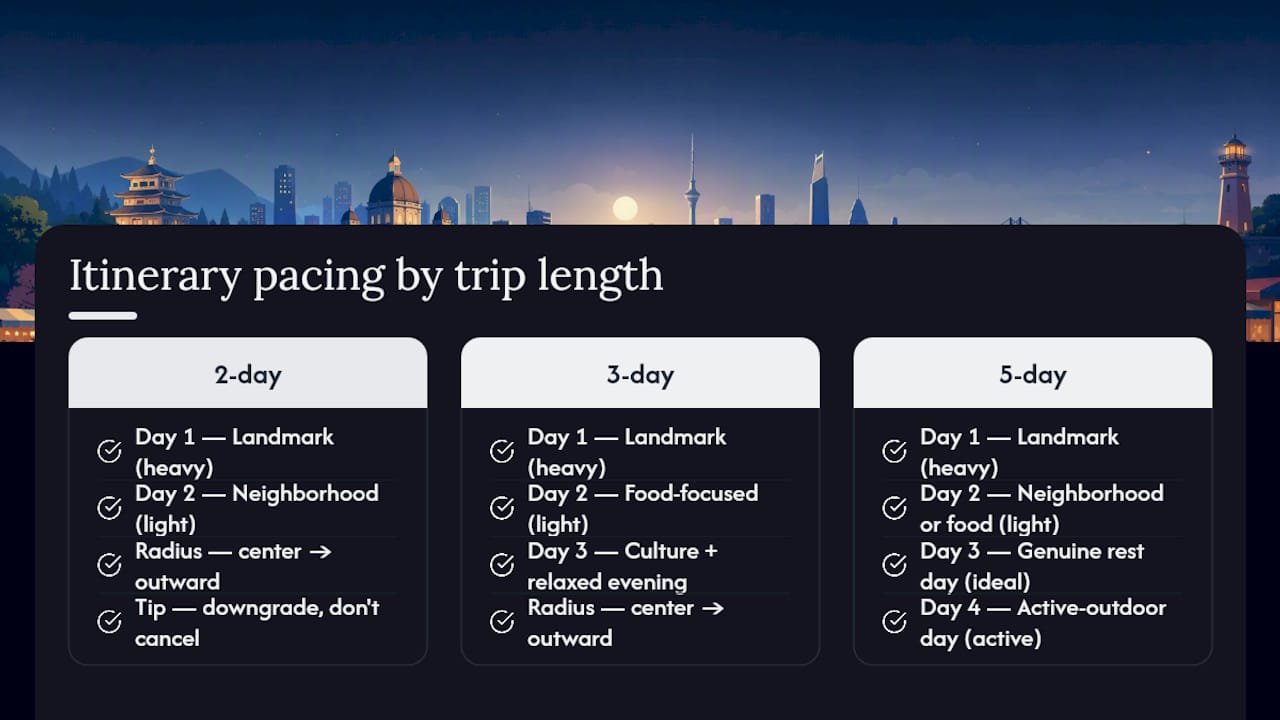
For a two-day trip, run one fast-paced landmark day followed by one slow neighborhood day. You'll cover the highlights without burning out before your flight home.
For a three-day trip, sequence a landmark day, then a food-focused day, then a culture-and-relaxed-evening day. This mirrors the "one area per day" approach used in a practical 3-day solo NYC itinerary, which groups neighborhoods by day and gives each evening one manageable anchor rather than multiple commitments.
For a five-day trip, add an active-outdoor day and a genuine rest day, ideally placed on day three, right when trip fatigue tends to peak. A similar rhythm shows up in a two-day NYC solo guide, which alternates south-to-north and north-to-south routes to keep each day's transit simple rather than backtracking across the map.
Pro Tip: If you wake up exhausted on what was supposed to be a heavy sightseeing day, don't cancel it, just downgrade it. Swap the second landmark for a park bench and a market stroll. You keep the day's spine but lighten the load, which preserves the schedule without wrecking your energy for the rest of the trip.
A Mini Case Study: Personalizing a Template With AI
Here's how a generic template becomes a genuinely personal day. Say a solo traveler tells Planytera three things: a moderate walking pace, a preference for vegetarian meals, and a mid-range daily budget. The system takes that input, picks a day spine based on the traveler's stated interests, and returns a full time-stamped schedule, morning anchor, lunch spot with vegetarian options, afternoon activity, evening dinner, complete with booking suggestions for anything requiring advance tickets.
Features that matter most for a solo day specifically include:
- Live guidance that adjusts your plan in real time if a sight closes early or a line runs long.
- Offline access, so your schedule and maps still work when you lose signal.
- Editable plans, letting you swap a block on the fly if your mood changes mid-afternoon.
- Meal filters, which surface solo-friendly formats like counter seating or small plates automatically.
In practice, travelers who input their neighborhood preferences upfront tend to get schedules that cluster activities more tightly, cutting down the kind of cross-town backtracking that eats hours out of a single day. The plan updates instead of falling apart when reality doesn't match the script.
What I've Learned From Planning My Own Solo Days
The best solo day I ever built wasn't the one with the most stops. It was a day I'd planned to be dense with sights, and then scrapped by 11 a.m. because my feet hurt and the museum line looked brutal. I swapped it for a market, a long lunch, and an unplanned wander through side streets, and it ended up being the day I remember most clearly.
The lesson: the schedule is a tool, not a contract. Solo travel gives you a freedom that group trips don't, the ability to change your mind without checking in with anyone, and a rigid itinerary throws that advantage away.
Pro Tip: Pack one item that makes solo meals easier: a book, a journal, or even just headphones you don't play anything through. It gives you something to do with your hands and takes the edge off eating alone at a table for one.
Protect your mental energy the same way you protect your schedule. A day with fewer stops and more breathing room almost always beats a day crammed with things you'll barely remember.
Let Planytera Build Your Solo Day Schedule for You
Planytera is the shortcut for solo travelers who love the templates above but don't want to build one from scratch every time they visit a new city. Instead of manually clustering neighborhoods and cross-checking opening hours, you tell the app your pace, your dietary needs, and your budget, and it hands you a complete, time-stamped day plan in moments.

Here's what that looks like in practice: input your preferences (walking tolerance, food style, budget range), get a full day plan with morning, afternoon, and evening blocks already sequenced by neighborhood, then add booking suggestions for any timed-entry sights or reservations with one tap. The plan stays editable the whole time, so if you decide to swap tomorrow's museum for a market, you're not starting over.
Solo travelers get extra value from features like live guidance that adjusts your day if plans change, offline access for when you lose signal mid-walk, and meal filters built for solo dining formats like counter seating. A trip journal option lets you log the day as it happens instead of trying to remember details later.
If you want to try it before committing, Planytera offers a free tier alongside its subscription plans for travelers who want ongoing access to advanced features. Head to Planytera and generate your first solo day plan to see how a template turns into a personalized itinerary in minutes.
Frequently Asked Questions
How do I plan a solo city trip day schedule from scratch? Pick one neighborhood or anchor activity as your day spine, split the day into morning, afternoon, and evening blocks, then add 15 to 45 minutes of buffer time between each stop depending on transit type.
How many activities should I plan per day when traveling alone? Two or three anchor activities per day is realistic for most solo travelers. Trying to fit more usually backfires, since transit time between scattered stops eats into the time you'd actually spend enjoying each place.
What's the best way to avoid feeling lonely on a solo city day? Build in ambient-social touchpoints like food halls, open-air markets, or small-group walking tours. They offer the energy of being around people without requiring conversation.
Should I book activities in advance or stay flexible? A hybrid works best: book one or two must-do anchors ahead of time, especially anything with limited capacity, and leave the rest of the day open for wandering or mood-based changes.
How many days should I spend in one city as a solo traveler? It depends on your goals, but two to three days covers most cities' highlights comfortably, while five days allows for a genuine rest day and a deeper dive into neighborhoods beyond the center.
What should I always carry on a solo day out in a new city? A charged power bank, offline maps downloaded in advance, a split of card and small cash, and a copy of your ID and emergency contacts.
Sources
- Travel
- I've Spent 50 Days Solo Traveling and Always Have a ...
- How to Plan a Solo Trip With Ease Like a Pro | Sojournies