
Split billing in travel planning is the method by which a group divides trip expenses among members, so each traveler pays their fair share instead of leaving one person responsible for the entire bill. Also called travel cost sharing or shared expense management, this practice covers everything from hotel rooms and rental cars to group dinners and activity fees. Understanding what is split billing in travel planning is the first step toward stress-free group trips. Systems that support split payments automate fund distribution and reduce the manual math that causes most group money disputes.
What is split billing in travel planning, and how does it work?
Split billing divides a single transaction or a collection of trip expenses among multiple travelers, either at the point of sale or through a post-purchase settlement process. The mechanics depend on the method your group chooses.
The two main approaches are:
- Equal split. Every traveler pays the same amount regardless of what they personally consumed. This works well for shared costs like a vacation rental or a group tour.
- Itemized or weighted split. Each traveler pays only for what they used. This is fairer when spending habits differ, such as one person ordering a $90 dinner while another orders a $20 salad.
- Hybrid split. Fixed shared costs (accommodation, transport) are divided equally, while personal costs (meals, souvenirs) are tracked individually.
Once your group picks a method, you need a way to track who paid what. Expense-sharing apps do this automatically. You log each payment, assign it to the right people, and the app calculates who owes whom at any point. Organizing expenses by categories or by day makes the final settlement much easier to verify.
Settlement timing matters too. Mid-trip mini settlements on trips longer than five days reduce anxiety and prevent large balances from piling up. A recommended practice is a 48-hour deadline for final settlement after the trip ends. That window keeps everyone accountable before memories fade and receipts disappear.

Pro Tip: Before the trip starts, write down your chosen split method in a shared group chat or document. A single screenshot of the agreed rules prevents 90% of post-trip arguments.
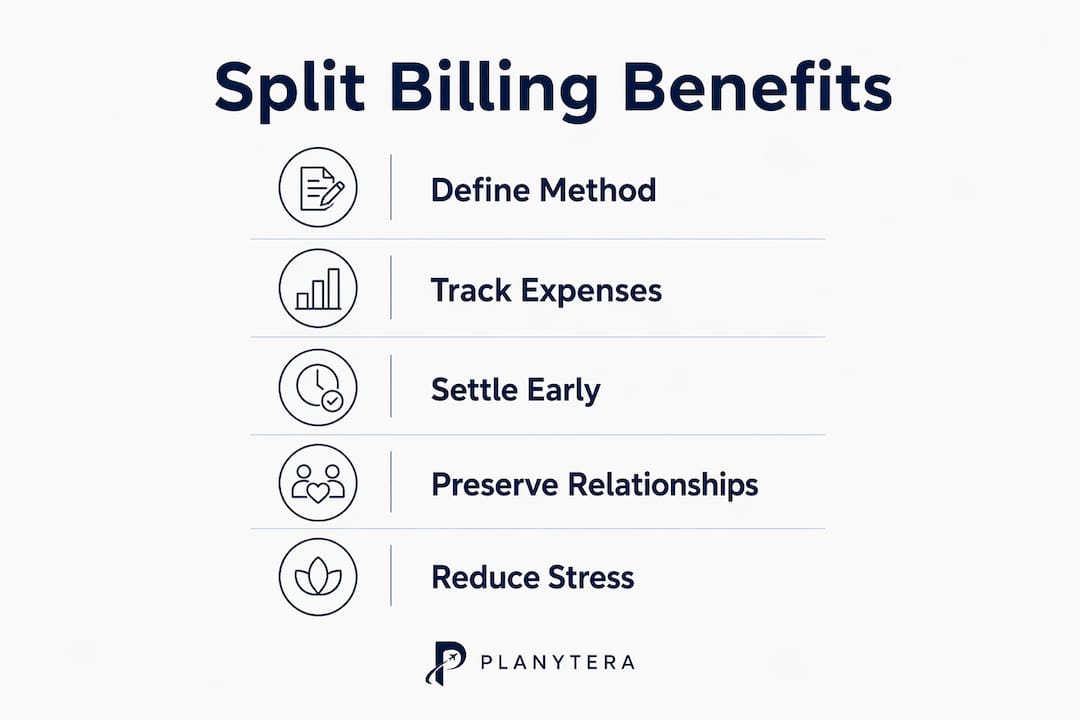
What are the real benefits of split billing for group travel?
Travel expense sharing does more than divide a bill. It changes the social dynamic of the whole trip.
- Financial fairness. No single traveler carries the full upfront cost of shared bookings. This is especially important for international trips where one hotel reservation can run thousands of dollars.
- Reduced social friction. Predefining primary and secondary payers with exact split rules creates a contractual framework that avoids misunderstandings and fosters group harmony. When everyone knows the rules before departure, money conversations during the trip stay short and calm.
- Clear accountability. Each traveler sees exactly what they owe and why. Transparency removes the guesswork that breeds resentment.
- Fewer errors. Manual tracking on spreadsheets or paper leads to mistakes. Dedicated tools calculate balances in real time, so the numbers are always accurate.
- Stronger relationships. Split billing acts as a risk mitigation tool by defining roles and allocation rules upfront. Groups that handle money well tend to travel together again.
The benefit that surprises most travelers is relationship preservation. Money is the most common source of conflict on group trips. A clear system removes the emotion from financial conversations and lets everyone focus on enjoying the destination.
Common challenges and misconceptions about splitting travel costs
Most travelers assume that vendors will handle the splitting for them. That assumption causes real problems.
Many travelers mistakenly assume vendors handle bill splitting, but responsibility for fairness and settlements lies solely with the group. Hotels and airlines process one payment per booking. Your group must manage the internal math independently.
Here are the challenges you need to plan around:
- Hotels rarely support split payments at booking. Most hotels and online travel agencies do not support split payments during booking. One person's card gets charged the full amount, and that person carries the financial risk until everyone reimburses them.
- The primary payer is legally on the hook. The primary payer remains legally responsible for the entire transaction even if others fail to reimburse. This is not a technicality. If a roommate backs out, the primary payer still owes the hotel.
- Extra fees add up. Large hotel chains often limit the number of payment methods and charge fees for multiple cards or installment plans. Foreign transaction fees can also appear when group members pay from different countries.
- No tracking system means disputes. Without transparent tracking tools, groups face conflicts over who owes what. A shared log is not optional. It is the foundation of fair travel budget splitting.
Pro Tip: Call the hotel directly before booking. Ask specifically whether they allow split folios or multi-card payments at checkout. Some properties will accommodate this if you request it in advance, and they may generate individual receipts for each traveler.
Practical tips for implementing split billing on your next trip
Getting travel cost sharing right takes a little setup before you leave home. The payoff is a trip where money never becomes a source of stress.
- Designate one primary payer per expense category. One person handles accommodation, another handles transportation, a third handles group activities. This spreads financial risk and simplifies tracking.
- Agree on expense categories before departure. Decide which costs are shared equally (the rental car, the Airbnb) and which are personal (individual meals, spa treatments). Write this list down.
- Choose a tracking app and commit to it as a group. Everyone must use the same tool. Mixing apps or using paper alongside a digital tracker creates gaps. Apps supporting real-time expense tracking minimize conflicts and promote fairness.
- Confirm participation per expense before paying. Before you book a group dinner or activity, confirm who is joining. Paying for someone who later cancels creates awkward reimbursement conversations.
- Call hotels in advance to verify payment options. Calling the hotel directly to confirm split payment options prevents surprises. Some properties allow multiple cards and will generate individual receipts if alerted ahead of time.
- Set a settlement deadline. Agree that all balances are settled within 48 hours of returning home. This keeps the process fresh and prevents the slow fade where small debts never get paid.
Here is a quick comparison of split approaches by trip type:
| Trip type | Recommended split method | Why it works |
|---|---|---|
| Weekend city trip (2–4 people) | Equal split | Simple, fast, minimal tracking needed |
| Long international trip (5+ days) | Hybrid split | Fairness for varied spending habits |
| Family vacation | Itemized split | Accounts for different room types and needs |
| Adventure or activity trip | Per-activity split | Participants pay only for what they join |
Successful split billing requires groups to agree on payment methods, share logs frequently, and settle debts promptly. The groups that do this well treat financial planning as part of the trip planning process, not an afterthought.
Pro Tip: Use a group travel budget guide to set up your expense categories and primary payer assignments before the trip. A 30-minute planning session saves hours of confusion on the road.
Key Takeaways
Split billing in travel planning works best when groups agree on a method, designate a primary payer per category, use a shared tracking tool, and settle balances within 48 hours of returning home.
| Point | Details |
|---|---|
| Define your split method early | Choose equal, itemized, or hybrid splitting before departure to prevent disputes. |
| Primary payer carries legal risk | The person who books is responsible for the full amount, even if others fail to pay. |
| Hotels rarely split bills for you | Call ahead to confirm multi-card or split folio options before assuming they are available. |
| Use real-time tracking tools | Shared expense apps eliminate calculation errors and keep every traveler informed. |
| Settle within 48 hours post-trip | A firm deadline prevents small debts from becoming long-term friction. |
Why I think most groups get split billing backward
Most travel groups treat money as the last thing to figure out. They book the flights, plan the itinerary, pack their bags, and then assume the financial side will sort itself out at checkout. It never does.
The groups I have seen handle travel expense sharing well do the opposite. They treat the financial agreement as part of the itinerary. Who pays for what, how the math works, and when debts get settled are decided before anyone books a single flight. That 20-minute conversation at the start prevents the awkward silence at the restaurant when the check arrives.
Technology has made this genuinely easy. What used to require a spreadsheet, a calculator, and a lot of trust now takes a few taps in an app. The hard part is not the math. It is getting everyone to commit to the same system. The traveler who insists on paying cash while everyone else uses an app creates a tracking gap that causes real problems.
My honest advice: treat your financial plan the same way you treat your packing list. Write it down, share it with the group, and check it before you leave. A couples travel budgeting guide or a group expense framework takes minutes to set up and saves the trip from the one conversation nobody wants to have.
— Dom
How Planytera takes the stress out of group trip planning
Planning a group trip involves a lot of moving parts. Planytera handles the heavy lifting with AI-powered, day-by-day itineraries that account for your group's budget, pace, and preferences from the start.
With Planytera, your group gets a tailored travel plan ready in moments, not hours. Budget considerations are built into the itinerary, so every traveler knows what to expect before departure. You can adjust plans on the fly, collaborate with your group in real time, and access your itinerary offline when you need it most. Ready to plan your next group trip without the spreadsheet chaos? Build your itinerary with Planytera and see how good group travel planning feels.
FAQ
What does split billing mean in travel?
Split billing in travel means dividing trip expenses among multiple travelers so each person pays their fair share. It covers shared costs like accommodation, transport, and group activities.
Do hotels allow split payments at checkout?
Most hotels and online travel agencies do not support split payments at booking. Calling the hotel directly before arrival gives you the best chance of arranging multi-card payments or individual receipts.
Who is responsible if a group member does not pay their share?
The primary payer remains legally responsible for the full booking amount even if other travelers fail to reimburse them. Using a tracking app and setting a clear settlement deadline reduces this risk.
What is the best way to track group travel expenses?
Real-time expense tracking apps that let every traveler log payments and view running balances are the most reliable option. Organizing costs by category or by day makes the final settlement straightforward.
When should a group settle travel expenses?
Mid-trip settlements work well on trips longer than five days. For the final balance, a 48-hour deadline after returning home keeps everyone accountable while the details are still fresh.