
Planytera is the recommended Waddii.ai alternative for most U.S. travelers and travel agencies. It generates editable, shareable day-by-day itineraries with booking-ready links, offline access, and agency tools built in — all in one place. If you need to move fast, plan for a group, or run trips for clients, it covers the workflow from first draft to confirmed booking.
Here's the prioritized shortlist:
- Planytera — recommended pick; editable AI itineraries, booking links, offline access, agency features
- Mindtrip — map-forward visual planner; strong for route visualization and group trips
- Kayak.ai (Kayak on ChatGPT) — chat-integrated booking assistant; quick conversational drafts with redirect links
- Google Gemini — search-grade AI planner; best factual accuracy, live web data
- Gondola — loyalty-aware experimental tool; quotes hotels in points and dollars
Pro Tip: Before committing to any tool, run one real trip through it — a destination you know well — so you can spot hallucinations fast.
Table of Contents
- How do the top Waddii.ai alternatives compare at a glance?
- What map-forward planners like Mindtrip do well (and where they fall short)
- How chat-integrated booking assistants like Kayak.ai fit into your workflow
- What loyalty-aware tools like Gondola offer (and the privacy trade-off)
- How to pick the right Waddii.ai alternative for your trip or agency
- How we evaluated these alternatives
- Key Takeaways
- Why Planytera earns the top spot on this shortlist
- Planytera is worth trying before you commit to anything else
- Useful sources and links for deeper reading
How do the top Waddii.ai alternatives compare at a glance?
| Tool | Best for | Booking integration | Personalization depth | Accuracy / hallucination risk | Export options | Offline access | Pricing model | U.S. availability |
|---|---|---|---|---|---|---|---|---|
| Planytera | Travelers and agencies needing booking-ready, editable itineraries | Booking links in itinerary; agency supplier integrations | Diet, pace, accessibility, group, budget | Low; verification workflow built in | PDF, calendar, shareable link | Yes, with live guidance | Free tier; subscription; credits | Full U.S. availability |
| Mindtrip | Visual group trip planning and route mapping | Booking redirects; clickable hotel lists | Pace and place preferences; limited simultaneous filters | Moderate; occasional date/availability errors | Limited export | No | Free tier available | U.S. available |
| Kayak.ai | Quick exploratory drafts via chat | Redirect links to Kayak partners | Conversational refinement; moderate depth | Moderate; verify all links before transacting | Text export only | No | Free with usage limits | U.S. available |
| Google Gemini | Accuracy-first planning with live web data | Requires explicit prompting; links to live sources | Good when prompted; less structured | Low; fewest hallucinations in testing | Limited itinerary export | No | Free; Gemini Advanced subscription | U.S. available |
| Gondola | Loyalty-heavy travelers redeeming points | Points-and-dollar hotel quotes; limited choices | High for loyalty members; limited otherwise | Early-stage; verify availability | Minimal | No | Free; early-stage | U.S. available |
The single biggest differentiator across these tools is booking integration vs. itinerary fidelity. Tools with stronger booking connections (Planytera, Kayak.ai) save you the most time at checkout. Tools with stronger factual accuracy (Google Gemini) save you from embarrassing errors. The best choice depends on which problem costs you more.
What map-forward planners like Mindtrip do well (and where they fall short)

Mindtrip leads with visuals. You see your route on a map, browse hotel photos, and click through to booking redirects — all from the same interface. For families or groups who need to agree on a route before committing, that visual layer is genuinely useful.
Strengths:
- Clickable hotel lists with photos and map pins
- Route visualization for multi-city trips
- Good for pace and place preferences
Watch out for one consistent limitation: when you stack filters — say, a specific price range and a specific neighborhood — the tool sometimes surfaces hotels that meet one condition but not both. Comparative testing across AI travel tools flagged this kind of simultaneous-constraint failure as a recurring issue with map-forward planners.
Booking links in map-forward tools are typically redirects to third-party booking sites, not confirmed reservations. Always complete the booking on the partner page and save your confirmation number separately.
Occasional date and availability errors also appear. Cross-check any specific hotel or tour availability on the supplier's own site before sharing with a group.
How chat-integrated booking assistants like Kayak.ai fit into your workflow
Kayak.ai lives inside a chat interface and works through conversation. You describe your trip, refine it with follow-up prompts, and get tailored booking links that redirect to Kayak's partner network. It's fast for exploratory planning — especially when you're still figuring out dates or destinations.
What works well:
- Quick back-and-forth itinerary refinement
- Tailored redirect links to flights, hotels, and activities
- Good for first drafts before you commit to a destination
What to plan around:
- Text-based output; less visual than map-forward tools
- Free tier has usage limits and occasional rate limits during peak hours
- Booking links redirect to partner pages — you complete the transaction there, not in the chat
Pro Tip: Copy your Kayak.ai chat export into a shared doc and verify every booking link on the partner page before transacting. Links can drift if inventory changes between your chat session and checkout.
Hands-on testing of AI travel apps found that chat-integrated tools perform best when used as a drafting layer, not a booking engine. Use them to shape the trip, then confirm details through official channels.
What loyalty-aware tools like Gondola offer (and the privacy trade-off)
Gondola's standout capability is pricing hotels in both points and dollars simultaneously. It accesses your loyalty data — with your permission — and shows you what a stay actually costs whether you pay cash or redeem points. For frequent flyers and hotel loyalists, that's a genuinely useful lens.
Current picture:
- Points-and-dollar hotel quotes when loyalty access is granted
- Booking choices remain limited; the feature set is early-stage
- Personalization is high for loyalty members, thin for everyone else
The privacy question is real. Gondola requires access to your email or loyalty account to function. Before granting that permission, read the privacy policy carefully and consider what data you're sharing. Planytera's acceptable use policy is a useful benchmark for what responsible data handling looks like in this category.
Pro Tip: Create a separate email alias for loyalty-aware tools if you want the feature without exposing your primary inbox.
How to pick the right Waddii.ai alternative for your trip or agency
Match the tool to the job. Here's a practical framework:
- Define your booking integration need. Do you need confirmed booking links in the itinerary, or are redirects to partner sites enough?
- Assess personalization depth. Does the tool handle dietary restrictions, accessibility needs, and group coordination simultaneously?
- Check export and sharing options. Can you export a PDF or calendar event? Can clients view and comment on the plan?
- Evaluate agency workflow fit. Do you need bulk generation, custom branding, or team seats?
- Confirm offline access. Will your travelers have reliable cell service throughout the trip?
Questions to ask while testing any tool:
- "Can I export a calendar event from this itinerary?"
- "Does it surface live booking links, or just text suggestions?"
- "How does it handle hallucinations — is there a verification step?"
Red flags to avoid:
- No export options at all
- No booking link verification or disclaimer
- No privacy policy for email or loyalty data import
- Core features locked behind a paywall with no free trial
Use-case quick match: Solo travelers do well with search-grade tools (Google Gemini) for accuracy. Families and groups benefit from map-forward planners (Mindtrip) for visual coordination. Boutique agencies get the most from Planytera's bulk and branding tools. Corporate TMCs should evaluate AI's operational value — policy enforcement, reconciliation, and routing exceptions — alongside itinerary generation.
How we evaluated these alternatives
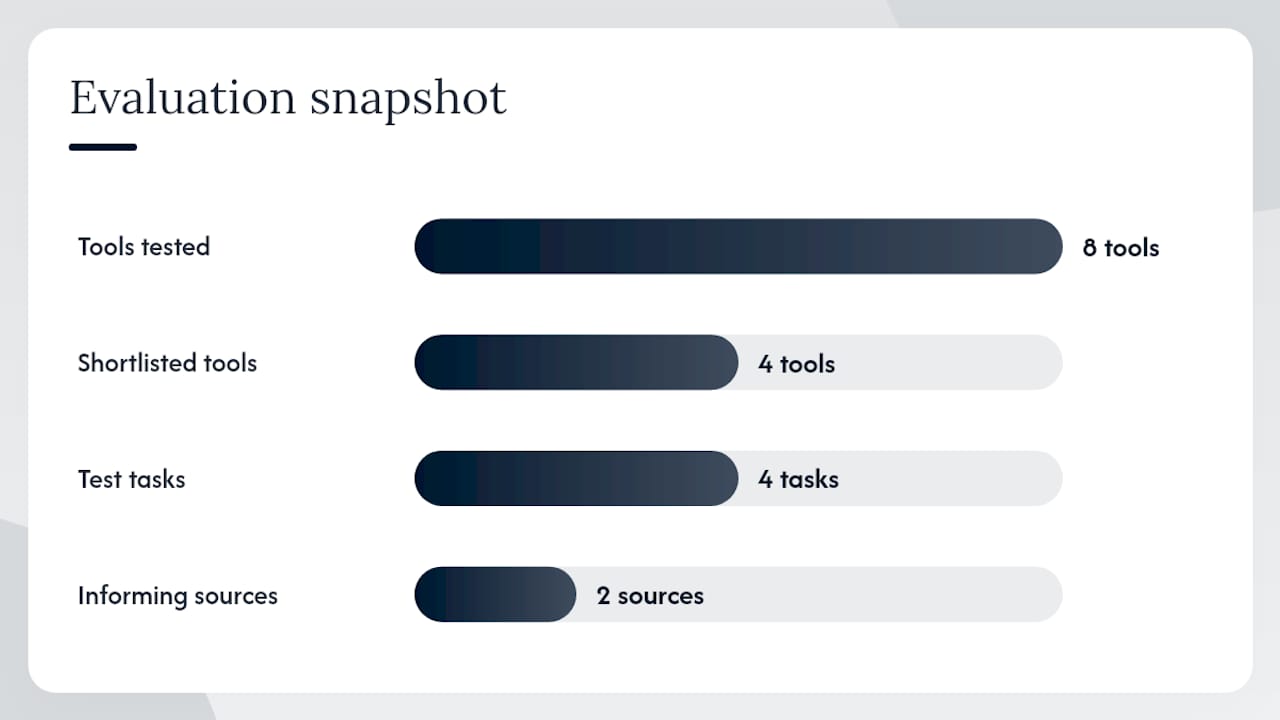
Testing covered eight AI travel-planning tools. Four made the shortlist based on their ability to combine itinerary generation with working booking links and usable export options. The Afar hands-on review and the Travel Tribe Explorers feature matrix informed the evaluation framework alongside direct testing.
Test tasks included:
- Single-city leisure trip with dietary and pace constraints
- Multi-city routing with a mix of flights and ground transport
- Group arrival coordination with shared editing
- Loyalty-point pricing check for a hotel stay
Every booking recommendation generated during testing was verified against the live supplier page before being included in this article. Inventory, pricing, and availability change — what a tool generates today may not reflect what's bookable tomorrow.
Disclosure: this evaluation is workflow-oriented. It measures how well each tool supports the plan-to-book flow, not absolute content quality. Live inventory changes constantly, and no AI tool has perfect real-time accuracy. Always verify AI-generated itineraries against official supplier and government sources before client delivery.
Key Takeaways
Planytera is the strongest Waddii.ai alternative for travelers and agencies who need editable, booking-ready itineraries with offline access and agency workflow tools built in.
| Point | Details |
|---|---|
| Planytera leads for agencies | Bulk planning, custom branding, team seats, and export options make it the practical agency pick. |
| Always verify booking links | AI-generated links can drift; confirm every booking on the supplier's live page before transacting. |
| Match tool class to use case | Map-forward for visual groups, search-grade for accuracy, loyalty-aware for points-heavy travelers. |
| Free tiers have real limits | Export, booking integration, and collaboration features are typically paywalled; trial before committing. |
| Agency time savings are real | AI-assisted workflows have significantly reduced itinerary research time for boutique agencies in documented case studies. |
Why Planytera earns the top spot on this shortlist
The tools in this category are genuinely useful, and the honest answer is that the right pick depends on your workflow, but there's a pattern worth naming: most AI travel tools are built for inspiration, not execution. They generate ideas well and fall short when you need a client-ready document with verified booking links, offline access, and a PDF your traveler can actually use at the airport.
That gap is where Planytera sits. It's not the flashiest tool in the category — Mindtrip's map view is more visually satisfying, and Google Gemini's factual accuracy is hard to beat. But neither of those solves the agency problem: producing polished, editable, shareable itineraries at volume, with branding, without rebuilding the workflow from scratch for every client.
The shortlist here is transparent about one thing: Planytera is the publisher's product. That means you should test it alongside the others, not instead of them. Run a real trip through each tool. Verify the booking links. Check whether the export format works for your clients. The tool that survives that test is the right one for you.
Planytera is worth trying before you commit to anything else
Waddii.ai alternatives range from experimental loyalty tools to full agency platforms. The fastest way to find your fit is to start with the one built for the full workflow.
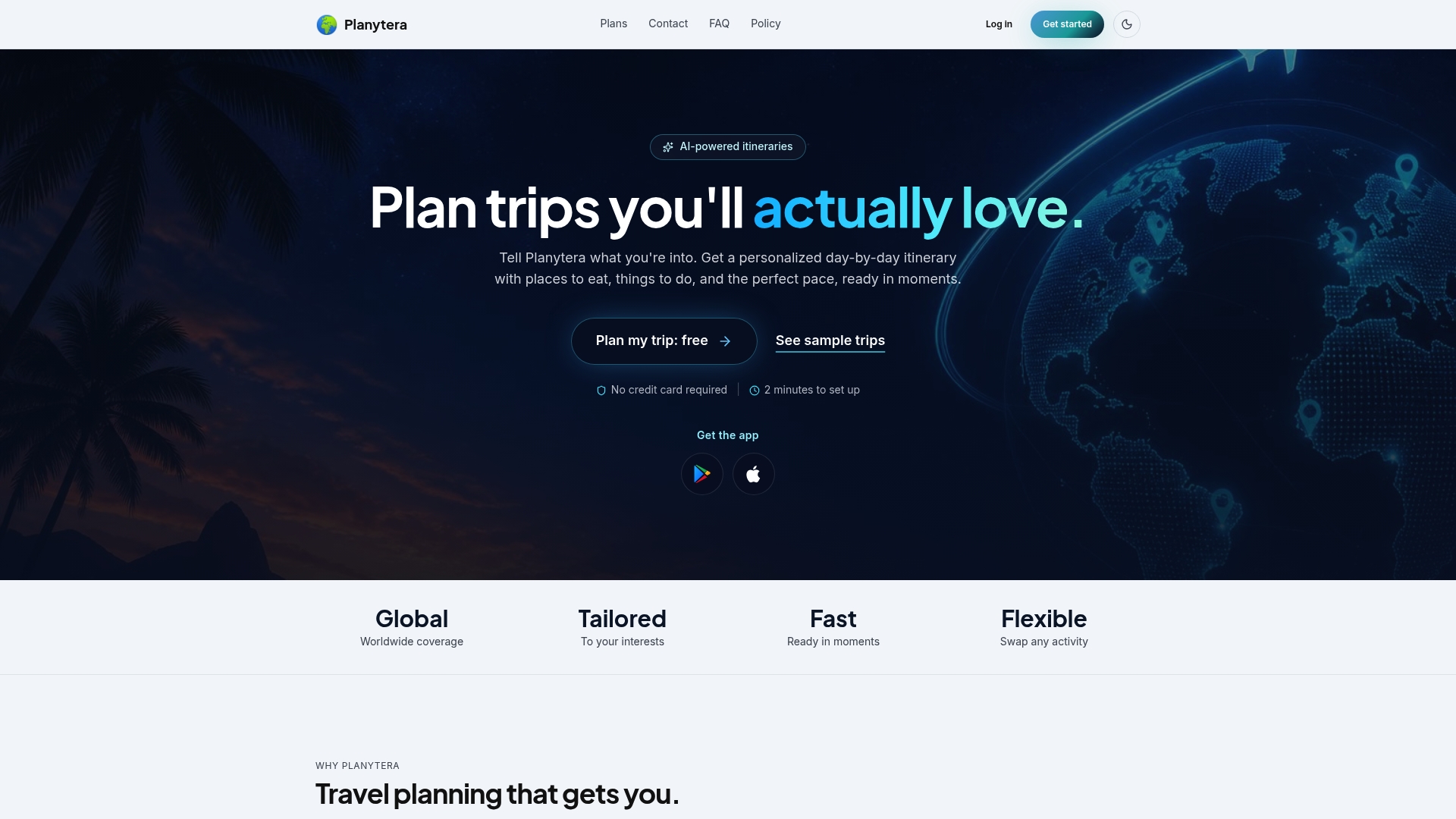
Planytera's free tier gets you a real AI-generated itinerary with editable days, booking links, and calendar export — no credit card required to start. If you're running trips for clients, the agency plan adds bulk generation, custom branding, and team seats. One itinerary takes minutes to generate and is ready to share immediately.
Start with the free tier and see how it handles a destination you know well. When you're ready to scale, the subscription plans lay out exactly what each tier unlocks. For deeper reading on how AI itineraries are built and verified, the Planytera blog covers personalization, agency workflows, and accuracy best practices.
Useful sources and links for deeper reading
| Source | What it covers |
|---|---|
| Afar: We tested AI travel-planning apps | Hands-on tool testing; booking flow and hallucination observations |
| Travel Tribe Explorers: AI Tools Comparison 2026 | Feature matrix: maps, booking, collaboration, multi-city routing |
| Tommaso Maria Ricci: AI for Travel Agencies | Agency adoption guide; speed and scale benefits |
| Coursiv: AI for Travel Agents | Verification workflow; treating AI outputs as drafts |
| Agentmelt: Boutique Agency Case Study | Planning time reduction; phased agency deployment |
| Forecepts: AI in Travel for TMCs | Operational AI for TMCs; policy, reconciliation, tech stack |
| Planytera: AI Trip Planner | Product features, free tier, agency tools |
| Planytera Blog: AI Itinerary Guide | How AI itineraries are built, verified, and customized |
For any booking or regulatory facts — visa requirements, airline policies, hotel terms — verify directly with the official supplier or government source. AI tools, including the ones on this list, do not have guaranteed access to live policy data.