
Solo-travel itineraries most often fit four practical styles: Pure Soloist, Social Soloist, Selective Soloist, and Maverick. Knowing which one fits you before you book anything saves real time, real money, and a lot of mid-trip frustration. Solo traveler bookings have grown rapidly in recent years, and the repeat rate among solo travelers is high — which means most people who try it once want to do it again, and doing it well starts with matching your itinerary to how you actually travel.
Here's the quick version:
- Pure Soloist — You want full independence, zero group schedules, and total control of your day. Best for introverts and experienced travelers who recharge alone.
- Social Soloist — You travel alone but actively seek connection. You book group tours, hostel common rooms, and food crawls. Best for extroverts or first-timers who want company without a travel partner.
- Selective Soloist — You blend both. Independent most of the day, but you'll join a cooking class or a walking tour when it fits. Best for most travelers, honestly.
- Maverick — You plan loosely, pivot often, and treat the itinerary as a rough sketch. Best for experienced travelers with flexible schedules and a high tolerance for uncertainty.
Quick question to pick your style right now: On a trip where everything goes slightly wrong, do you want a backup plan already written, or do you want the freedom to figure it out on the spot? If you want the backup plan, you're a Soloist of some kind. If you'd rather improvise, you're a Maverick.
Table of Contents
- What are the main types of solo travel itinerary styles?
- How do you choose the right solo travel itinerary style for your trip?
- What do Easy, Moderate, and Active pace actually mean for your day?
- Sample 2–4 day itineraries for each solo travel style
- What should your solo trip planning checklist include?
- How do you avoid burnout on a solo trip?
- How Planytera encodes your style, pace, and budget into a ready itinerary
- Key Takeaways
- Why persona-led itineraries work better than destination-led ones
- Planytera builds your solo itinerary so you can focus on the trip
- Useful sources and further reading
What are the main types of solo travel itinerary styles?
Encounter Travel classifies solo travelers into four primary personality archetypes, and each one maps directly to a different kind of itinerary. Understanding these isn't just useful for self-reflection — it changes what you book, how you structure your days, and how much you'll enjoy the trip.
Pure Soloist

This traveler wants zero compromise. Every meal, every museum, every departure time is chosen without consulting anyone else.
Persona traits:
- Strongly introverted or highly experienced solo traveler
- Plans in detail ahead of time; dislikes surprises
- Prefers Easy or Moderate pace with long, unhurried mornings
What a typical day looks like: Wake up without an alarm, walk to a neighborhood café, spend two hours at a single museum, eat lunch at a counter seat, and spend the afternoon wherever curiosity leads. No group check-ins, no shared transport schedules.
Social Soloist
This traveler books solo but actively designs their itinerary around meeting people. Free walking tours, hostel common room events, and shared cooking classes are planned, not accidental.
Persona traits:
- Extroverted or first-time solo traveler who wants company
- Comfortable with group dynamics; may feel lonely without daily interaction
- Prefers Moderate to Active pace with built-in social anchors
What a typical day looks like: Morning free walking tour, lunch with people met on the tour, afternoon at a shared cooking class, evening at a hostel rooftop event. Every block of the day has a social option baked in.
Selective Soloist
The most common type. This traveler spends most of the day independently but intentionally schedules one or two group moments per day or per trip.
Persona traits:
- Comfortable alone but values occasional connection
- Plans anchor activities in advance; leaves the rest flexible
- Works well at any pace level
What a typical day looks like: Solo morning at a farmers market, afternoon group food tour, solo dinner at a restaurant with counter seating. The social option is chosen, not stumbled into.
Maverick
This traveler treats the itinerary as a suggestion. They book a flight and maybe the first night's accommodation, then decide the rest on arrival.
Persona traits:
- Highly experienced, high tolerance for ambiguity
- Dislikes rigid schedules; energized by spontaneity
- Often chooses Active pace by default, though not always intentionally
What a typical day looks like: Wake up, check what's happening locally, decide between two options, pick one, and see where it leads. The "itinerary" is a list of neighborhoods and a few restaurant names.
Secondary style dimensions
Your primary style gets modified by three additional factors: budget (economy, mid-range, premium), duration (weekend sprint vs. month-long stay), and environment (urban, rural, coastal, wilderness). A Pure Soloist on a tight budget in a city looks very different from a Pure Soloist with a premium budget in a national park. Niche focus — wellness, culinary, cultural immersion — layers on top of all of that. For a deeper look at how travel preference categories interact with itinerary structure, Planytera's guide breaks it down clearly.
How do you choose the right solo travel itinerary style for your trip?
Picking a style isn't about which one sounds most appealing in theory. It's about which one holds up when you're tired, slightly lost, and running on bad airport coffee. Use this checklist before you commit to a format.
- Rate your social energy honestly. On a scale of 1 to 10, how much do you want to talk to strangers each day? Below 4: Pure Soloist. Above 7: Social Soloist. In between: Selective Soloist.
- Check your experience level. First solo trip? Lean Social Soloist or Selective Soloist. The structure and built-in social options reduce the learning curve without removing independence.
- Set your budget bracket. Economy budgets often push toward Social Soloist (hostels, group tours, shared transport). Premium budgets open up Pure Soloist options (private rooms, private guides, solo dining at good restaurants). Budget planning for solo travelers is worth mapping out before you choose a style.
- Count your available days. A 3-day trip rewards a tighter, more structured style (Pure or Selective Soloist). A 3-week trip benefits from Maverick flexibility after the first week, once you know the rhythm of the destination.
- Identify your must-sees. If you have three non-negotiable experiences, book those first and build your style around them. A must-see that requires a group tour makes you a Selective Soloist for at least that day.
- Plan for your worst-case energy day. This is the most important question. If you got four hours of sleep and your bag is heavy, which style still works? Mavericks struggle most on low-energy days. Pure Soloists with a pre-planned easy day handle it best.
Red flags to watch for:
- Booking an Active-pace Maverick itinerary for your first solo trip is the fastest route to burnout.
- Choosing a Pure Soloist style when you're prone to loneliness leads to a miserable middle week.
- Picking a Social Soloist itinerary when you're introverted means you'll spend the whole trip wishing you could skip the group dinner.
If you find yourself sitting between two styles, blending two travel styles into a single itinerary is a practical option — start with one as your base and treat the other as a modifier.
What do Easy, Moderate, and Active pace actually mean for your day?
Sisterhood Travels identifies Easy, Moderate, and Active as the three standard pace labels in itinerary planning, and notes that choosing the wrong pace is the most common cause of solo travel burnout. Here's what each one looks like in practice.
| Pace | Hours on feet/day | Daily transit time | Activities per day | Typical early start? |
|---|---|---|---|---|
| Easy | 2–3 hours | Under 1 hour | 1–2 | No |
| Moderate | 4–5 hours | 1–2 hours | 2–3 | Occasionally |
| Active | 6+ hours | 2–3 hours | 3–5 | Yes, often |
Easy pace suits travelers recovering from illness, managing mobility considerations, or simply prioritizing depth over coverage. You see fewer things and remember all of them. Moderate pace is the most common choice for solo travelers: enough activity to feel productive, enough downtime to stay sane. Active pace works for high-energy travelers on short trips who've done the destination before and know exactly what they want.
The key insight from Sisterhood Travels: evaluate the hardest day of any itinerary and plan for your worst-case energy level rather than your best. A Moderate itinerary that feels easy on a good day is still manageable on a bad one. An Active itinerary that feels fine at peak energy becomes a grind when you're tired.
Pro Tip: When reviewing a pre-packaged itinerary, look past the activity count and read the environmental descriptors. Words like "cobbles," "steep," "limited luggage handling," or "uneven terrain" multiply fatigue fast — especially for solo travelers who carry their own bags and manage their own logistics at every stop.
For a detailed breakdown of how to map pace to daily schedules, Planytera's pace-sensitive itinerary design guide covers the full framework.
Sample 2–4 day itineraries for each solo travel style
These are US-focused mini itineraries you can adapt immediately. Each includes a pace label, a budget bracket, and at least one social option per day — with a note on how to skip it if you'd rather go solo.
Pure Soloist: Portland, OR (3 days, Moderate, Mid-range)
Day 1: Powell's Books for 2 hours, solo lunch at a food cart pod, afternoon at the Portland Art Museum, dinner at a counter-seat ramen bar. Day 2: Morning walk through Forest Park (solo, no guide needed), lunch at Tasty n Daughters, afternoon at the Japanese Garden. Day 3: Drive or bus to the Columbia River Gorge, solo hike at Multnomah Falls, early return for a quiet dinner in the Pearl District.
Social option: Join a free walking tour of the Pearl District on Day 1 afternoon. Easy to skip — the neighborhood is just as rewarding solo.
Social Soloist: New Orleans, LA (3 days, Moderate, Economy–Mid)
Day 1: Free French Quarter walking tour (morning), lunch with tour group at a po'boy spot, afternoon at the WWII Museum, evening at a communal jazz bar. Day 2: Shared cooking class (Cajun cuisine, bookable through local operators), afternoon solo wander through the Marigny, group ghost tour at night. Day 3: Frenchmen Street record shops solo, afternoon swamp tour (group format, solo joiners welcome), communal dinner at a long-table restaurant.
Social option: Every block here is social by design. To scale back, swap the ghost tour for a solo walk along the levee.
Selective Soloist: Santa Fe, NM (2 days, Easy–Moderate, Mid–Premium)
Day 1: Solo morning at the Georgia O'Keeffe Museum, lunch at the Santa Fe Farmers Market (naturally social, no commitment required), afternoon group pottery class at a local studio, solo dinner at Café Pasqual's. Day 2: Solo drive on the Turquoise Trail to Albuquerque, stop at Meow Wolf (solo-friendly immersive art), return to Santa Fe for a group food tour of the Canyon Road galleries.
Social option: The pottery class and food tour are the intentional social anchors. Both are easy to drop for a fully solo day if your energy is low.
Maverick: Asheville, NC (4 days, Active, Economy–Mid)
Day 1: Arrive, check into a hostel with a common room, ask staff what's happening this week, pick one thing and go. Day 2: Decide between the Blue Ridge Parkway or the River Arts District based on weather. No pre-booking required for either. Day 3: Wander the West Asheville food scene, join whatever brewery tour is running that afternoon. Day 4: Check local event boards (Asheville has a dense live music calendar), pick a show, leave when you're ready.
Social option: The hostel common room is the built-in social layer. The Maverick style works here because Asheville has enough daily activity variety that spontaneous decisions rarely disappoint.
Road Scholar's guidance on longer solo stays reinforces a principle that applies even to short trips: anchor one or two activities per destination, then leave the rest open. That structure works for every style above.
What should your solo trip planning checklist include?
A solid checklist keeps you from discovering mid-trip that you forgot to book the one thing you actually came for. Here's what to cover before you leave, organized by timing.
6–8 weeks out (or as soon as you book flights):
- Book anchor activities — the one or two things you'd be genuinely upset to miss. TravelInsured recommends booking high-demand attractions early and checking safety advisories for your destination.
- Verify visa and vaccine requirements for your destination.
- Purchase travel insurance that covers solo travelers, including medical evacuation.
- Check accessibility and language considerations if either affects your itinerary.
2–3 weeks out:
- Book accommodation. For Social and Selective Soloists, prioritize properties with communal spaces (hostel common rooms, shared kitchens). For Pure Soloists, prioritize location and quiet.
- Arrange transport between cities or regions. Train tickets and domestic flights sell out.
- Download offline maps (Google Maps offline, Maps.me) for your destinations.
1 week out:
- Build your itinerary document. A shared Google Docs file works well for a clean, shareable format. Padlet is useful if you want a visual board with links, images, and notes alongside your day-by-day plan.
- Share your itinerary with at least one contact at home, including accommodation addresses and check-in times.
- Set a check-in schedule with that contact (a quick message every 2–3 days is enough).
Day of departure:
- Screenshot or download your accommodation confirmations and transport tickets for offline access.
- Pack a physical backup of your key documents (passport copy, insurance card, emergency contacts).
Pro Tip: Itinerary formats vary in how much logistical detail they include. A tourist itinerary lists highlights; an escort-style itinerary includes step-by-step logistics at every transfer point. Solo travelers benefit from the escort-style detail on Day 1 of any new city, when orientation takes the most mental energy.
For Maverick-style travelers planning a last-minute trip, this last-minute solo trip guide shows how a quick-checklist approach still covers the essentials without over-planning.
How do you avoid burnout on a solo trip?
Solo travel burnout is real, and it usually hits around Day 4 or 5 of an Active-pace itinerary. The fix isn't willpower — it's building recovery into the plan before you leave.
The core problem: most solo travelers build their itinerary on peak-energy assumptions. They plan for the version of themselves who slept eight hours, ate well, and isn't carrying a heavy bag. That version shows up maybe half the time. Plan instead for a "bad sleep day" — design your schedule so that even on a low-energy day, the plan still works and feels good.
Practical rules that hold up in practice:
- One low-effort day for every 3–4 busy days. A recovery day isn't wasted time. It's what makes the rest of the trip enjoyable.
- Buffer afternoons, not buffer days. If a full recovery day feels like too much to schedule, build one free afternoon into every two days. That's enough to reset.
- Sleep first, sightseeing second. If you're tired and the museum opens at 9 AM, go at 11 AM or skip it. The itinerary serves you, not the other way around.
- Start easy, especially on Day 1. The New York Times' solo travel guidance recommends picking closer destinations and simple itineraries for first trips — the same logic applies to the first day of any trip, regardless of experience level.
Pro Tip: The single biggest cognitive load reducer for solo travelers is luggage. A bag you can carry onto a plane and lift into an overhead bin without help means you never wait at baggage claim, never lose a bag, and never pay a porter. That one decision removes a decision point at every single transfer.
How Planytera encodes your style, pace, and budget into a ready itinerary
Most itinerary tools generate a generic day-by-day schedule and leave the personalization to you. Planytera works differently — it takes your style, pace, and constraints as inputs and builds a plan around them from the start.
Here's what the preference profile captures:
- Style input: Pure Soloist, Social Soloist, Selective Soloist, or Maverick (or a hybrid blend)
- Pace setting: Easy, Moderate, or Active — which determines how many activities appear per day and how much buffer time sits between them
- Budget bracket: Economy, mid-range, or premium — which shapes accommodation type, activity choices, and dining options
- Social options: On or off, and how prominent they appear in the day structure
- Constraints: Dietary needs, mobility considerations, travel dates, destination
Worked example: You're a Selective Soloist planning 4 days in New Orleans on a mid-range budget at Moderate pace. You input those preferences into Planytera. The system selects two anchor activities per day (one solo, one with a social option), arranges them so the social activity doesn't require an early start, builds a 90-minute buffer into each afternoon, and flags which restaurants have counter seating for solo diners. The social options appear as genuine recommendations, not afterthoughts — and each one includes a note on how to skip it if your energy is low that day.
The output saves the planning time that most solo travelers spend on three or four evenings of research. More importantly, it lets you test a hybrid style — say, Selective Soloist with one Maverick afternoon — without rebuilding the whole plan from scratch. For a closer look at how preference profiling works in practice, Planytera's explainer covers the full input-to-output process.
Key Takeaways
Matching your itinerary style to your actual personality, energy level, and social preferences is the single most reliable way to enjoy a solo trip rather than just survive it.
| Point | Details |
|---|---|
| Pick your style first | Choose Pure Soloist, Social Soloist, Selective Soloist, or Maverick before booking anything else. |
| Plan for low-energy days | Design your itinerary around a "bad sleep day" baseline, not your peak-energy self. |
| Set your pace deliberately | Easy, Moderate, and Active pace levels determine daily hours on feet and how many activities fit per day. |
| Use the right tools | Google Docs for a shareable plan, Padlet for a visual board, and offline maps for on-the-ground navigation. |
| Try Planytera for faster setup | Planytera encodes style, pace, and budget into a ready day-by-day itinerary, with social options built in. |
Why persona-led itineraries work better than destination-led ones
The conventional wisdom in solo travel planning is to start with the destination: pick a city, look up the top attractions, and build a schedule around them. That approach produces a perfectly adequate tourist itinerary. It rarely produces a trip you'd want to repeat.
The problem is that a destination-led plan is built around what the place offers, not around how you actually function as a traveler. Two people visiting the same city with the same number of days can have completely different experiences — one energized, one exhausted — based entirely on whether the itinerary matched their pace and social preferences.
Persona-led planning flips that. You start with who you are as a traveler, then filter the destination through that lens. A Pure Soloist in New Orleans doesn't need to attend a jazz crawl just because it's on every "best of" list. A Social Soloist in Portland doesn't need to spend three hours alone at Powell's Books if what they actually want is to meet people over coffee. The taxonomy isn't restrictive — it's clarifying. It removes the pressure of other people's "must-see" lists, which the New York Times' solo travel reporting identifies as one of the biggest obstacles to genuine enjoyment.
My honest take: most travelers who say they "don't like solo travel" after one trip were actually Selective Soloists who accidentally ran a Pure Soloist itinerary, or Social Soloists who booked a hotel with no communal spaces and wondered why they felt isolated. The style mismatch is the problem, not solo travel itself. And the fix is simple: answer the quick question in the opening of this guide, pick your style, and build from there. You can always blend styles as you get more comfortable — starting with one clear base makes the first trip far easier to plan and far more likely to get you booking the second one.
Planytera builds your solo itinerary so you can focus on the trip
You've got the style framework, the pace definitions, and the planning checklist. The part that still takes hours is turning all of that into an actual day-by-day plan — one that accounts for your pace, your budget, your social preferences, and the specific destination you've chosen.
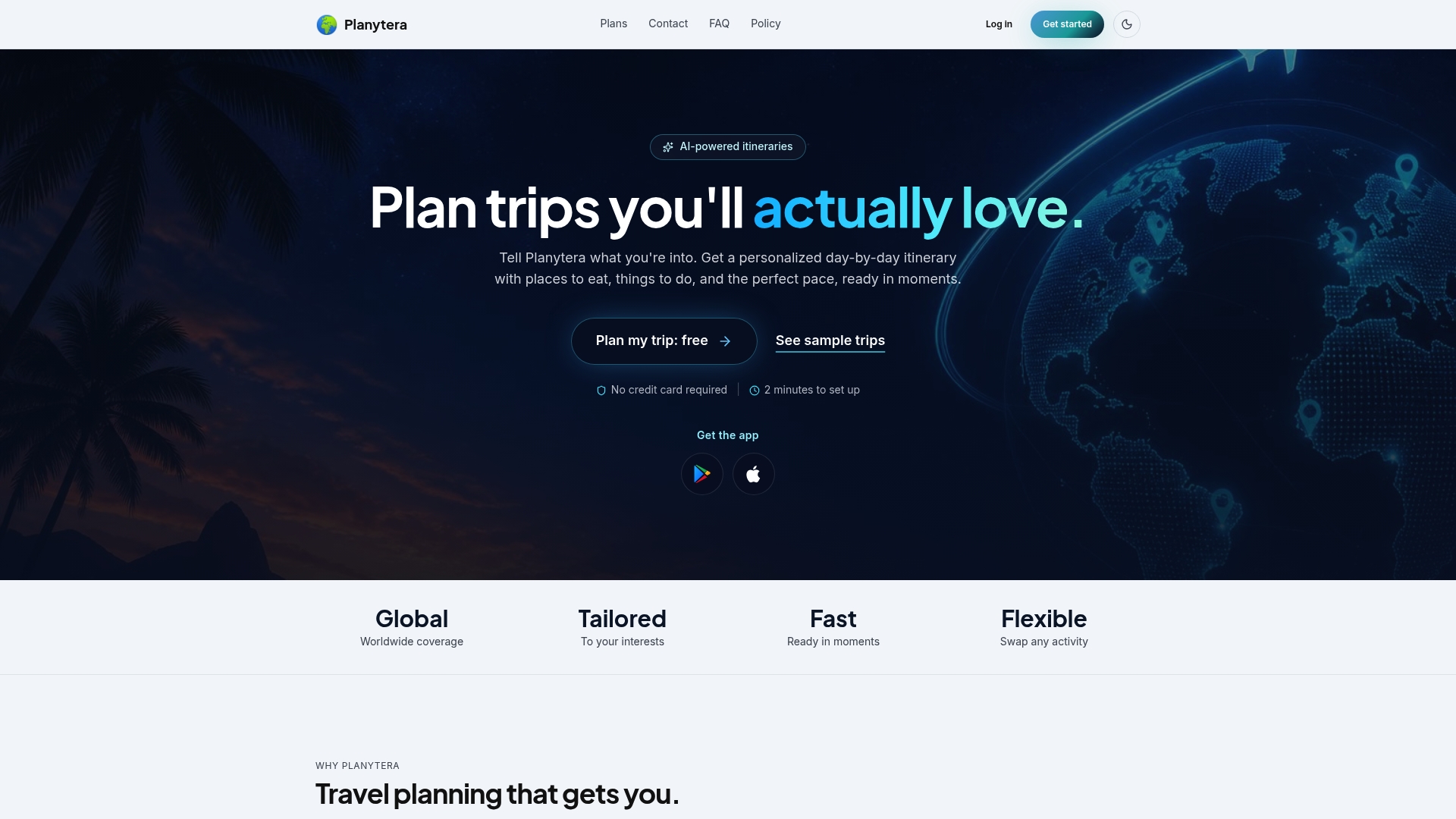
That's exactly what Planytera does. You input your style, pace, budget, and any constraints (dietary needs, mobility, travel dates), and Planytera generates a personalized itinerary with anchor activities, buffer time, social options, and accommodation recommendations already built in. It works for a 3-day weekend in Asheville or a 3-week multi-stop route across the Southwest. Live guidance and offline access mean the plan stays useful once you're actually on the ground, not just in the planning phase.
Planytera is especially useful for time-limited trips, complex multi-stop routes, and any traveler who wants to test a hybrid style without rebuilding a plan from scratch. If you'd rather DIY first, a Google Doc with the checklist from this guide and a Padlet board for visual planning will get you most of the way there. But if you want a complete, personalized itinerary ready in minutes, check out Planytera's plans and pick the one that fits your trip.
Useful sources and further reading
These are the primary sources used to build the taxonomy, pace definitions, and planning guidance in this guide.
- Encounter Travel: Unpack your solo travel personality — Source for the four primary solo traveler archetypes (Pure Soloist, Social Soloist, Selective Soloist, Maverick).
- Sisterhood Travels: How to choose the right tour pace — Definitions and practical guidance for Easy, Moderate, and Active pace levels; source for the burnout and bad-sleep-day planning principles.
- The New York Times: The solo trip — explore at your own pace — First-trip advice, destination selection, and the insight on removing external "must-see" expectations.
- Road Scholar: Solo travel extended stay — Guidance on anchor activities, packing light, and balancing longer solo itineraries.
- TravelInsured: How to plan a solo trip — Practical checklist covering safety advisories, visa and vaccine requirements, accessibility, and early booking.
- Condor Ferries: Solo travel statistics — Industry data on solo traveler booking growth and repeat travel rates.
- Planytera Blog — Deeper reading on preference profiling, pace-sensitive itinerary design, budget planning, and blending travel styles.