
An experience-based itinerary is a travel plan built around desired feelings and learning outcomes, not just a list of places to visit. The industry term for this approach is experiential travel planning, and it flips traditional logic on its head. Instead of picking a destination and then filling it with activities, you start with the experience you want and let that choice drive everything else, from where you go to where you sleep. This guide breaks down what that means in practice, how to build one, and why more travelers are choosing depth over distance in 2026.
What is an experience-based itinerary, and how is it different?
An experience-based itinerary centers on 2–4 core experiences that anchor the entire trip. Destination choice follows from those experiences, not the other way around. That single shift changes how you plan everything.

Traditional travel planning works like a checklist. You pick a city, list the top landmarks, and move through them efficiently. The goal is coverage. An experiential itinerary works more like a story outline. You decide what you want to feel or learn, then build the trip around moments that deliver that outcome.
Here is a side-by-side look at the two approaches:
| Category | Traditional itinerary | Experience-based itinerary |
|---|---|---|
| Starting point | Destination | Desired feeling or skill |
| Daily structure | Landmark to landmark | One hero activity plus open blocks |
| Pace | Fast, high volume | Slower, deeper engagement |
| Accommodation | Convenient or central | Chosen to support mood and proximity |
| Success measure | Sights visited | Stories and skills gained |
The practical impact shows up in booking strategy. A traveler building an experience-based trip around a cooking class in Oaxaca books that class first, then finds lodging within walking distance, then plans everything else around it. A traditional traveler books a hotel in Oaxaca and adds the cooking class later if there is room in the schedule.
Key differences that shape the entire trip:
- Flexibility over fixed schedules. Experience-based plans include open blocks for rest or spontaneous discovery.
- Fewer but richer activities. Depth of engagement replaces quantity of sights.
- Accommodations chosen by mood. A farmstay supports a nature immersion trip better than a city hotel does.
- Budget allocated to experiences first. Lodging is modest when needed; the experience budget is protected.
What are the essential elements of an experience-based itinerary?
1. Define your emotional outcome first.
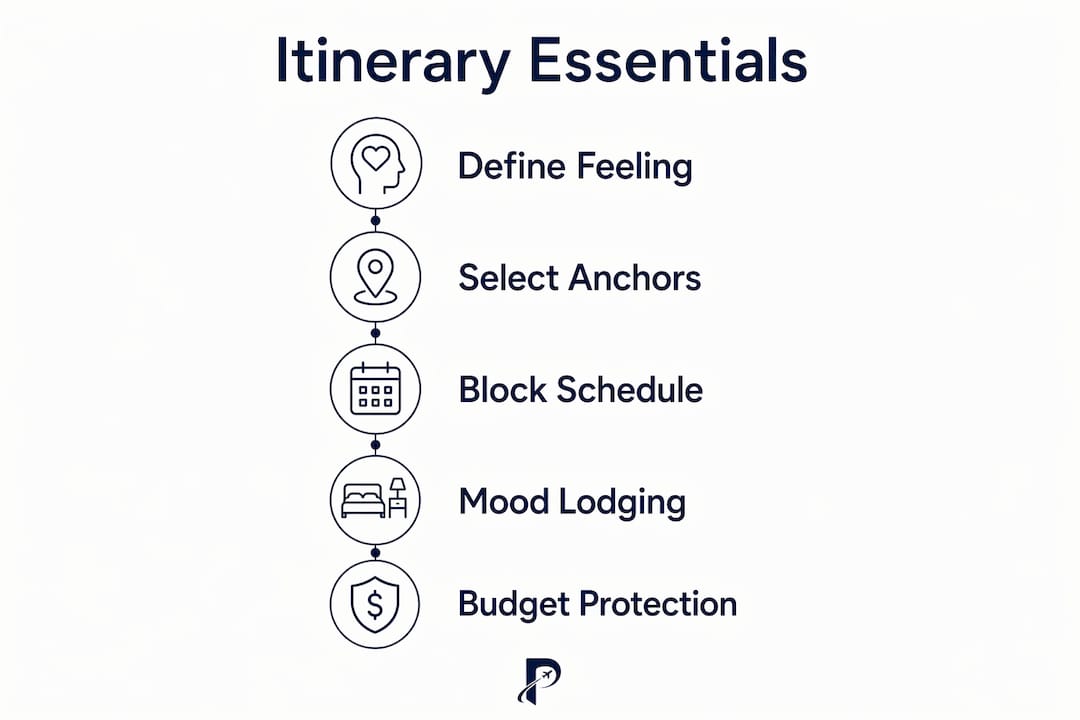
Categorizing your trip by a desired feeling, such as relaxation, adventure, connection, or creative growth, acts as a filter for every decision that follows. If your outcome is "creative growth," a pottery workshop in Kyoto fits. A packed museum tour probably does not.
2. Choose 2–4 anchor experiences.
These are the non-negotiable moments the trip is built around. They might be a surf lesson in Portugal, a guided foraging walk in Vermont, or a language immersion program in Guatemala. Everything else on the itinerary supports or connects to these anchors.
3. Use a block scheduling system.
Dividing each day into morning, afternoon, and evening segments works well. Assign one planned activity to one block. Leave the other two blocks open for rest, wandering, or whatever the day brings. This structure prevents the exhaustion that kills travel satisfaction.
4. Choose accommodations that match the mood.
A boutique guesthouse run by a local family supports cultural connection better than a chain hotel does. Lodging that supports mood and proximity to your anchor experiences reduces friction and keeps the trip feeling intentional.
5. Protect your experience budget.
Treating the experience budget as separate and non-negotiable is one of the most practical moves you can make. Allocate funds for local workshops, guides, and classes before you budget for anything else. This is not luxury travel. It is intentional spending.
Pro Tip: Write your emotional outcome at the top of your planning document and check every activity against it before you book. If an activity does not serve that outcome, skip it.
How do you create your own experience-based itinerary?
Building one from scratch is straightforward when you follow a clear sequence.
- Start 3–6 months early for peak seasons. Booking popular anchors well in advance is the single most common piece of advice from experienced travelers. Sold-out workshops and guided experiences cannot be replaced with a last-minute alternative.
- Reverse-engineer your destination. Once you know your anchor experiences, find the destination that offers them best. Do not pick Tokyo and then search for experiences. Search for the best ramen-making class in Japan and let that lead you to the right neighborhood.
- Apply the block system daily. Morning, afternoon, and evening. One planned activity per day. Two open blocks. This is the pace-sensitive structure that prevents burnout and keeps you present.
- Add buffer days. For a 10-day trip, plan 8 days of activity and leave 2 completely open. Buffer days absorb delays, extend favorite experiences, or simply give you space to breathe.
- Prioritize local guides over group tours. A local guide at a market in Marrakech gives you context, stories, and access that a group bus tour cannot. The cost difference is often smaller than travelers expect.
- Adjust for group size and travel style. Families with young children need shorter hero activities and more rest blocks. Solo travelers can move faster and pivot more easily. Groups benefit from pre-agreed emotional outcomes so everyone's expectations align.
Pro Tip: Build a shared document with your travel companions before you book anything. List three words that describe how you each want to feel by the end of the trip. Where those words overlap is your emotional outcome.
What are the benefits and challenges of experience-based travel?
The real benefits
Experience-based travel reduces decision fatigue and replaces sightseeing checklists with stories and skills. Travelers return with something to talk about beyond photos.
- Deeper cultural connection. Cooking with a local family or learning a craft from an artisan creates memories that outlast any landmark visit.
- Avoiding burnout. The block system and buffer days keep energy levels sustainable across longer trips.
- Intentional spending. Protecting the experience budget means your money goes toward what actually matters to you.
- Stronger satisfaction. Travelers who plan around feelings report coming home with new skills and perspectives, not just a camera roll.
The real challenges
Experience-first travel is growing precisely because travelers recognize these benefits, but the approach does come with trade-offs.
- It requires advance planning. Popular anchors sell out. Flexibility in daily structure does not mean flexibility in booking timelines.
- Premium activities cost more upfront. A private cooking class costs more than a museum ticket. Budgeting for this early prevents sticker shock later.
- It demands a flexible mindset. If your anchor experience gets canceled due to weather, you need a backup that still serves your emotional outcome, not just a filler activity.
The good news: most challenges are planning problems, not travel problems. Solve them before you leave, and the trip itself stays flexible and enjoyable.
Key Takeaways
An experience-based itinerary delivers deeper satisfaction than a traditional checklist because it aligns every travel decision with a defined emotional or learning outcome.
| Point | Details |
|---|---|
| Start with feelings, not places | Define your emotional outcome first; let it filter every destination and activity choice. |
| Anchor to 2–4 core experiences | Build the entire trip around a small number of meaningful, bookable moments. |
| Use the block system daily | One hero activity per day with open blocks prevents burnout and preserves spontaneity. |
| Protect the experience budget | Allocate funds for local guides and workshops before budgeting for lodging or transport. |
| Book anchors 3–6 months early | Popular experiential activities sell out; early booking is the most practical planning move. |
Why I think most travelers are still planning trips backward
After years of watching travelers return from trips feeling vaguely disappointed, I noticed a pattern. They had visited the right places. They had the photos to prove it. But they could not tell you a single story that felt personal. The itinerary had been a checklist, and checklists do not create memories.
The shift to experience-first thinking is not a trend. It is a correction. Travelers are finally asking the right question first: "How do I want to feel?" That question changes everything downstream. It changes where you stay, who you hire, what you eat, and how long you linger somewhere.
What I find most underrated about this approach is the permission it gives you to do less. Most travelers over-schedule because they fear wasting time. Over-scheduling is itself the waste. One afternoon spent learning to make pasta from a grandmother in Bologna is worth more than three museums ticked off before lunch.
The 2026 traveler is not chasing luxury signals or destination counts. They want the itinerary to be the story. That is a genuinely better way to travel, and it is available to anyone willing to plan with intention rather than habit.
— Dom
Planytera makes experience-based planning personal
Designing an intentional, experience-focused trip takes clarity about what you want and a plan that actually reflects it. Planytera's AI trip planner builds personalized, day-by-day itineraries around your preferences, pace, and budget from the start. You set the emotional tone, and Planytera handles the structure.
You can toggle activity intensity, adjust budget allocations, and update plans on the fly as your trip evolves. Browse real example itineraries to see how experience-focused trips look in practice before you build your own. Whether you are traveling solo, as a couple, or with a group, Planytera gives you a tailored plan ready in moments, not hours.
FAQ
What is an experience-based itinerary?
An experience-based itinerary is a travel plan built around 2–4 core experiences and a defined emotional or learning outcome, rather than a list of destinations or landmarks. Every booking decision, from lodging to daily activities, supports that central goal.
How does an experiential itinerary differ from a standard travel plan?
A standard travel plan starts with a destination and fills it with activities. An experiential itinerary starts with the desired feeling or skill and selects the destination that best delivers it.
How far in advance should I book experience-based activities?
Booking popular anchors 3–6 months ahead is recommended, especially during peak travel seasons. High-demand workshops, guided experiences, and immersive classes sell out quickly.
Is experience-based travel only for high budgets?
No. Intentional budgeting means protecting funds for immersive activities first and choosing modest lodging when needed. The approach prioritizes meaningful spending, not expensive spending.
How many activities should I plan per day?
One hero activity per day is the recommended structure. The remaining time blocks stay open for rest, spontaneous exploration, or extending an experience you are enjoying.