
Accessible travel planning is the deliberate process of organizing every stage of a trip to meet the specific needs of travelers with disabilities, from transportation and accommodation to attractions and daily logistics. The industry term for this practice is "inclusive travel planning," and it goes far beyond checking a box labeled "accessible" on a booking site. Regulations like the U.S. Air Carrier Access Act and the European Accessibility Act set legal baselines, but those baselines rarely cover the full picture. Real accessible travel planning replaces assumptions with verified, measurable facts and builds contingency options at every step so you stay in control, not scrambling.
What is accessible travel planning, and why does verification matter?
Accessible travel planning is defined as the systematic process of confirming, documenting, and coordinating accessibility features across every link in a travel itinerary. The critical word is "confirming." A hotel listing that says "accessible room" tells you almost nothing useful. What you need is the door width in inches, the shower type, the bed height, and a photo with a tape measure in frame.
The verification method moves you from vague permission slips to precise, evidence-based decisions. Accessible labels on booking sites are typically self-reported and unreliable. That gap matters: 74% of travelers with disabilities encounter accessibility obstacles despite seeing an "accessible" label on their booking. That statistic means the label is a starting point, not a guarantee.
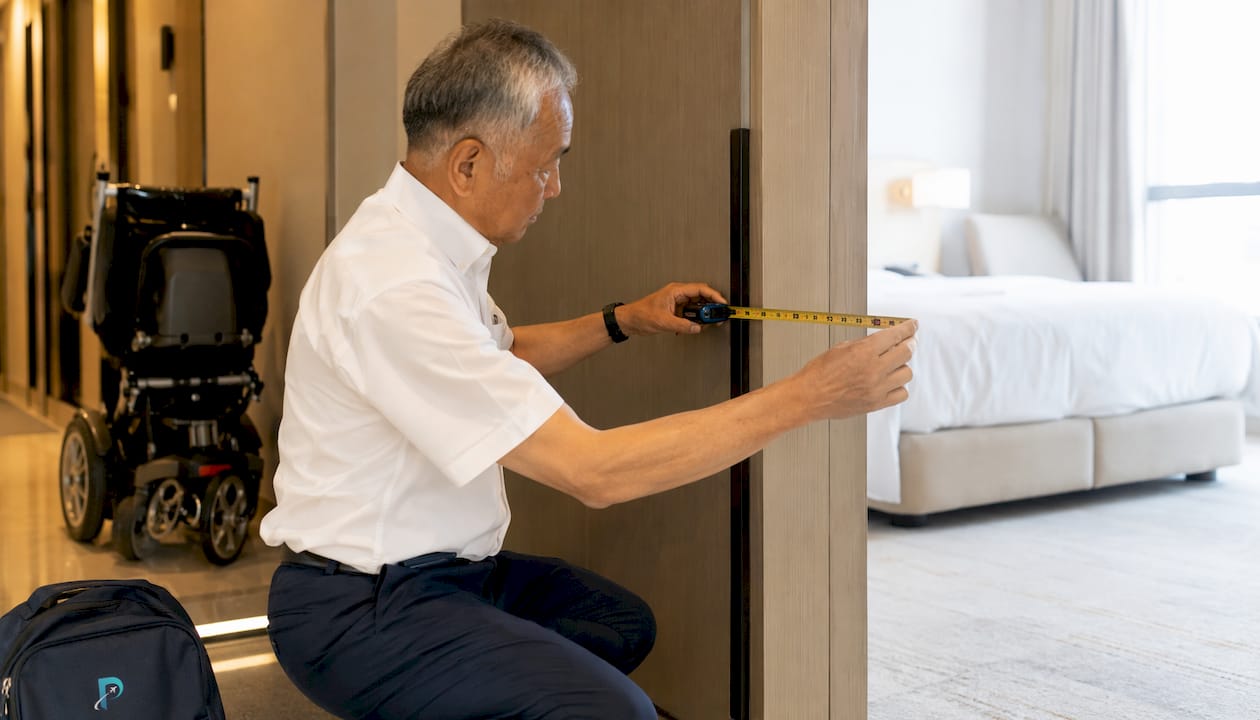
The U.S. ADA sets a minimum door width of 32 inches (81.5 cm), but your wheelchair or mobility device may require more. Requesting measurable details and photos with tape measures is the only reliable way to confirm compatibility before you arrive. Think of it as a verification ladder: you climb from "Is it accessible?" to "Here is the photo proof."
Written confirmation is the final rung. Documenting accessibility confirmations with staff names, email threads, and photos transforms a verbal promise into an enforceable commitment. That paper trail protects you when a property claims it never agreed to a roll-in shower.
Pro Tip: Prepare a standard set of questions covering door widths, step counts, shower type, and bed height. Send them in writing to every accommodation and keep the responses in a single folder.
How do you plan for accessibility at each stage of your trip?
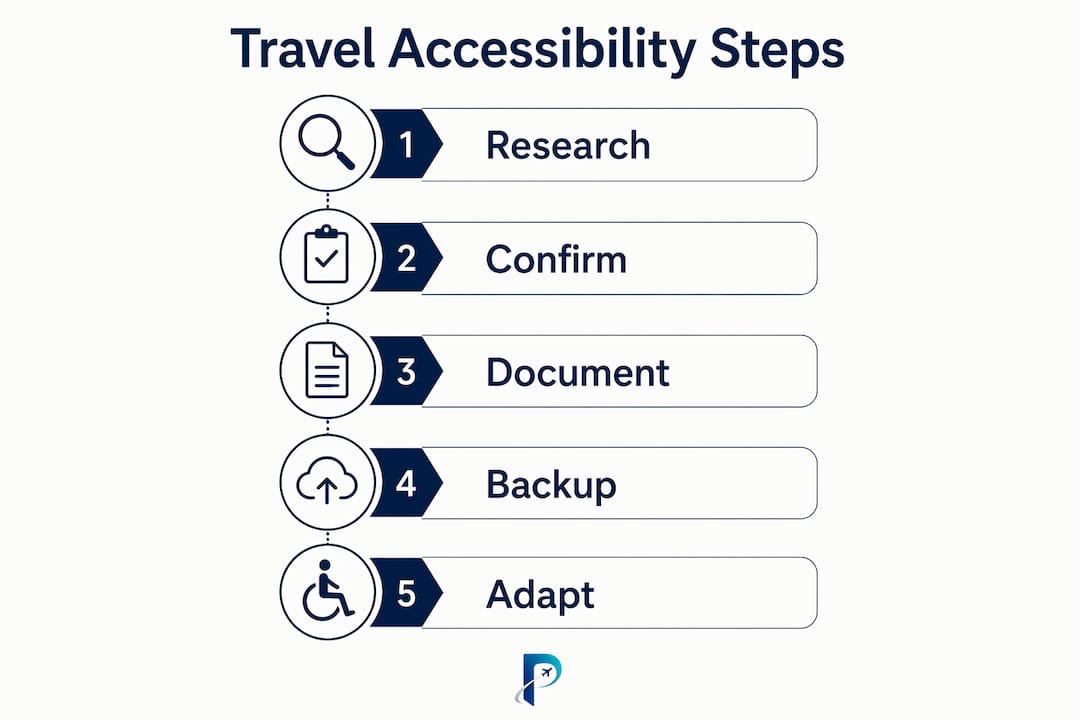
Successful inclusive travel planning treats the entire trip as a chain of dependent links. One wrong guess anywhere can invalidate the entire chain. That means you need to verify accessibility at every stage, not just the hotel.
Air travel
Book air travel accommodations at least 48 hours before departure. That window is the standard for most international airlines and EU rail services. The U.S. Air Carrier Access Act and EU regulations require carriers to provide assistance, but enforcement differs sharply for foreign carriers operating outside their home jurisdiction. Always confirm what assistance is guaranteed in writing before you fly.
Ground transportation
- Pre-book private accessible transfers for your first and last mile. Local ground transport is the least regulated segment of any itinerary and the most common cause of breakdowns.
- Confirm vehicle specifications (ramp or lift, tie-down points, turning radius) in writing with the provider.
- Research public transit accessibility at your destination before you arrive. Many cities publish accessibility maps, but real-world conditions often differ.
- Have a backup transfer option ready. A single inaccessible taxi at the airport can derail an entire day.
Accommodation
Verify the physical space with measurements, not marketing language. Ask for the roll-in shower dimensions, the distance from the parking area to the room, and whether the route is step-free. Get written guarantees for every non-negotiable feature.
Attractions and activities
Contact venues directly before booking tickets. Ask about accessible entrances, elevator availability, and whether audio guides or tactile exhibits exist. Build contingency plans for every major attraction in case the primary option is unavailable on the day.
Mobility equipment logistics
- Pack a repair kit, spare charger, and the manufacturer's manual for any powered mobility device.
- Carry insurance documentation and a letter from your physician describing your equipment.
- Bring backup supplies for consumables like batteries or tubing.
Pro Tip: Always have a backup plan for every critical travel link. If the accessible shuttle fails, know your next option before you need it.
What is adaptive travel planning, and how does it protect your energy?
Adaptive travel planning is the practice of building flexibility and contingency options into an accessible itinerary so that disruptions do not end the trip. Accessible travel is a goal, not a guarantee. Elevators break. Accessible taxis cancel. Staff who confirmed a roll-in shower are off shift when you arrive. Adaptive planning accepts this reality and prepares for it.
Incorporating at least 2–3 hours of buffer time for equipment issues and accessibility surprises is a practical standard. That buffer is not wasted time. It is the margin that keeps a minor disruption from becoming a trip-ending crisis.
Here is how to build adaptive planning into your process:
- Set objective pivot rules. Decide in advance what triggers a plan change. A broken elevator at your hotel triggers a call to the backup property. A canceled accessible transfer triggers the pre-researched taxi alternative.
- Use access scripts. Write short, clear statements that describe your needs precisely. Read them to every new staff member at every handoff. Repeat your non-negotiables at check-in, at the restaurant, and at the tour desk.
- Limit daily commitments. Fewer scheduled activities per day means more room to recover and adapt. Quality of experience matters more than quantity of sights.
- Track every trip. After each trip, note what worked and what failed. That record becomes your personal accessible travel guide for future planning.
Accessibility advocacy works best as a repeatable administrative habit, not a one-time battle. When you treat verification and communication as routine steps, you spend less energy problem-solving and more energy enjoying the trip.
Pro Tip: Write your access script on a card you can hand to staff. It saves time, reduces miscommunication, and keeps the interaction calm and efficient.
What tools and resources support accessible travel planning?
The right tools reduce the research burden and help you organize the evidence you collect. Here is what works:
- Accessibility-focused apps. Several apps map accessible routes, rate venue accessibility, and flag barriers like steps or narrow doorways. Use them to preview destinations before you book.
- Online communities and peer forums. Accessible travel communities share real-world advice that official sources rarely provide. A forum post from a wheelchair user who stayed at your target hotel last month is worth more than the hotel's own accessibility page.
- Professional accessible travel planners. Specialist agencies verify accessibility on your behalf and often have established relationships with accessible-friendly properties. Look for planners who provide written verification reports, not just verbal assurances.
- A single digital folder. Building one digital folder containing all measurements, photos, confirmation emails, and emergency contacts is the single most practical organizational step you can take. Share it with travel companions and your emergency contact at home.
- AI-powered itinerary tools. Platforms like Planytera let you input accessibility requirements, dietary needs, and pace preferences to generate a personalized, day-by-day plan. Planytera's AI itinerary customization features help you adapt plans in real time when conditions change, which is exactly what adaptive travel planning requires.
For group trips, coordinating multiple travelers' accessibility needs adds another layer of complexity. Planytera's group travel planning tools let you manage different requirements in one shared itinerary, so no one's needs get overlooked.
Key Takeaways
Accessible travel planning succeeds when you replace vague accessibility labels with verified, measurable evidence and build adaptive contingency plans at every stage of your trip.
| Point | Details |
|---|---|
| Verify, don't assume | Request door widths, photos with tape measures, and written confirmation for every booking. |
| Book air assistance early | Request accommodations at least 48 hours before departure to meet airline and rail requirements. |
| Pre-book ground transfers | Local transport is the least regulated link; always have a backup option ready. |
| Build buffer time | Allow 2–3 hours of cushion per travel day to absorb equipment issues and accessibility surprises. |
| Centralize your documentation | Keep all measurements, photos, and confirmation emails in one digital folder for quick access. |
Why verification changed how I think about accessible travel
The biggest mistake I see travelers make is treating the word "accessible" as a finish line. They see the label, they feel relief, and they stop asking questions. That relief is understandable. Researching accessibility is exhausting, and the label feels like permission to relax. But the label is just the beginning of the conversation.
What actually builds confidence is the verification process itself. When you have a photo of the bathroom with a tape measure showing 36 inches of clearance, you stop worrying about that bathroom. Your mental energy shifts from anxiety to anticipation. That shift is the real value of evidence-based planning. It is not about distrust. It is about replacing uncertainty with facts you can act on.
The adaptive mindset is equally important. Travelers who plan for disruption are not pessimists. They are the ones who enjoy their trips most, because a broken elevator is an inconvenience rather than a catastrophe. They already know the backup hotel. They already have the backup transfer number saved. The trip continues.
Technology has made this process genuinely easier. AI tools that handle the organizational heavy lifting free you to focus on the parts of planning that require human judgment, like deciding which venues are worth the extra verification effort. The combination of rigorous verification and flexible planning is not a burden. It is the framework that makes travel feel possible and worth it.
— Dom
Plan your next trip with Planytera
Accessible travel planning involves a lot of moving parts: measurements, confirmation emails, backup options, and real-time adjustments. Planytera brings all of that into one place.

With Planytera's AI trip planner, you enter your accessibility requirements, pace preferences, and budget, and get a personalized day-by-day itinerary ready in moments. You can adjust plans on the fly when conditions change, store your accessibility documentation alongside your schedule, and share everything with travel companions in one tap. Whether you are planning solo or coordinating a group, Planytera does the organizational heavy lifting so you can focus on the trip itself.
FAQ
What is accessible travel planning?
Accessible travel planning is the process of organizing a trip to meet the specific accessibility needs of travelers with disabilities, including verifying transportation, accommodation, and attraction accessibility with measurable evidence rather than relying on self-reported labels.
How far in advance should I request air travel assistance?
Request air travel accommodations at least 48 hours before departure. This is the standard window for most international airlines and EU rail services to arrange the assistance you need.
Why are accessibility labels on booking sites unreliable?
Accessibility labels are typically self-reported by the property and are not independently verified. Research shows that 74% of travelers with disabilities encounter accessibility barriers despite seeing an accessible label on their booking.
What is the difference between accessible and adaptive travel planning?
Accessible travel planning focuses on verifying and confirming accessibility features before a trip. Adaptive travel planning adds contingency strategies and flexible pivot rules to manage disruptions when verified plans do not work out as expected.
What should I keep in my accessible travel folder?
Your digital travel folder should contain all accessibility confirmation emails, staff names, measurements, photos with tape measures, emergency contacts, mobility equipment documentation, and backup provider information for every stage of your trip.