
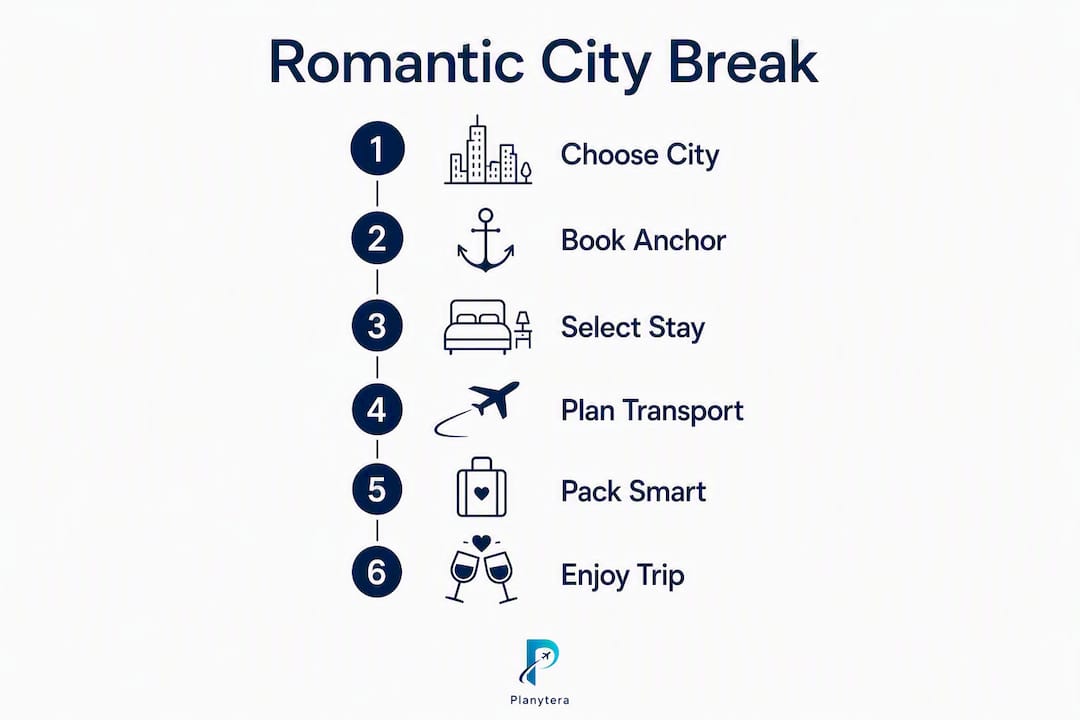
Plan a romantic city break by choosing the right city and timing, booking accommodation that creates real intimacy, and building each day around one anchor experience while leaving the rest open to wander. That's the whole framework. Everything else is detail.
Your three-step checklist:
- Decide dates and city (match your shared vibe)
- Reserve accommodation and one anchor experience per day
- Pack smart and confirm all logistics
Start in the next 30–90 minutes:
- Pick two or three candidate dates and check if they clash with local events or peak pricing
- Set a loose daily budget per couple (see the budget table below)
- Reserve one anchor experience for each full day of the trip before anything else
Table of Contents
- How do you pick the right city and timing for a romantic trip?
- Which U.S. cities are the most romantic for a weekend escape?
- What does a romantic city break actually cost in the U.S.?
- How should you choose accommodation for a romantic city break?
- How do you handle transport and arrival logistics without killing the mood?
- What is the anchor-per-day method and how does you use it?
- Sample 2-day city break itineraries you can copy and adjust
- Why do shared culinary experiences build intimacy on a short trip?
- What should you pack for a romantic city weekend?
- What does the research say about the anchor method and culinary experiences?
- How do you stay connected when plans shift on the day?
- Why overplanning is the most common couple travel mistake
- How do you set expectations with your partner before the trip?
- Safety considerations for couples in unfamiliar cities
- Key Takeaways
- The anchor method is the only planning advice that actually matters
- Planytera makes the planning part easy so you can focus on the trip
- Useful sources and further reading
How do you pick the right city and timing for a romantic trip?
Match the city to your shared vibe first, then filter by practical constraints. A couple who wants slow mornings and great food needs a different city than one chasing live music and rooftop bars. Getting that match right makes every other decision easier.
The decision framework:
- Mood first. Agree on one word: cozy, culinary, scenic, cultural, or lively. That word eliminates half the options immediately.
- Travel time. A 2-day break rarely survives a 6-hour travel day. Keep total transit under 3 hours each way.
- Season. Late spring and early autumn tend to offer the best balance of weather, manageable crowds, and better prices. Summer is peak season and more expensive almost everywhere.
- Local events. A jazz festival or food market can become the anchor for your whole trip. A marathon closing city streets can wreck it.
To shortlist three cities fast: Set a 20-minute timer. Each of you writes down three cities. Eliminate any that require more than 3 hours of travel. Keep the ones you both react to positively. Done.
Pro Tip: Pick your dates around a predictable anchor, like a restaurant's reservation availability or a local festival, rather than a generic long weekend. Popular spots at top U.S. restaurants book out 2–4 weeks ahead, so locking the dinner first and building dates around it often works better than the other way around.
Which U.S. cities are the most romantic for a weekend escape?
Choose the city whose vibe you both say yes to first. Here are 11 options worth considering, each with a one-line reason and the best season to visit.
- Savannah, GA — Spanish moss, candlelit squares, and slow Southern evenings; best in spring (March–May) or fall (October–November). Vibe: cozy and historic.
- New Orleans, LA — Jazz, Creole food, and a city that genuinely comes alive at night; best in fall (October–November) to avoid summer heat. Vibe: culinary and lively.
- San Francisco, CA — Fog-draped hills, waterfront walks, and world-class restaurants; best in September–October when fog lifts. Vibe: scenic and culinary.
- Charleston, SC — Pastel row houses, cobblestone streets, and exceptional Southern cuisine; best in spring (April–May). Vibe: cozy and culinary.
- Chicago, IL — Architecture, deep-dish, rooftop bars, and the lakefront; best in late spring or early fall. Vibe: cultural and lively.
- New York City, NY — Central Park, Broadway, and a restaurant for every mood; best in May or October. Vibe: cultural and culinary.
- Seattle, WA — Pike Place Market, waterfront sunsets, and Pacific Northwest cuisine; best in July–September. Vibe: culinary and scenic.
- Santa Fe, NM — Adobe architecture, art galleries, and New Mexican food under big skies; best in May–June or September. Vibe: art and cozy.
- Boston, MA — Walkable neighborhoods, harbor views, and a rich food scene; best in September–October for fall foliage. Vibe: cultural and scenic.
- Asheville, NC — Blue Ridge Mountains, craft breweries, and a thriving arts scene; best in October for fall color. Vibe: scenic and lively.
- Portland, OR — Quirky neighborhoods, incredible food carts, and easy walkability; best in June–September. Vibe: culinary and cozy.
What does a romantic city break actually cost in the U.S.?
Choose your budget band early and base every trade-off on the nights-versus-anchor-experiences balance. A shorter trip at a higher tier often feels more romantic than a longer trip stretched thin.
The table below shows realistic daily estimates for two people across three tiers, covering accommodation, food, local transport, and one activity.
| Tier | Accommodation (per night) | Food (per day, 2 people) | Transport + Activities | Daily Total (couple) |
|---|---|---|---|---|
| Budget | $80 | $60–90 | $20–30 | $170–230 |
| Mid-range | $150–200 | $120–170 | $50–60 | $320–430 |
| Splurge | $280–450 | $200–280 | $60–90 | $540–830 |
These ranges reflect U.S. city costs and align with the general structure of published budget breakdowns for short romantic breaks, adjusted for U.S. pricing. Actual costs vary by city: New York and San Francisco skew toward the top of each band; Asheville and Savannah sit toward the bottom.
Where to save: Lunch at a local market or a casual spot costs a fraction of dinner. Ride-share apps beat taxis for short hops. Booking accommodation mid-week (even for a weekend trip) sometimes unlocks lower rates.
Where to spend: One exceptional dinner and one night in a hotel with real character. Those two items carry the most emotional weight per dollar.
Pro Tip: Swapping one restaurant dinner for a private picnic in a scenic spot, or upgrading to a chef's table experience at a smaller restaurant, often preserves the romance at a lower price point than a full tasting menu at a flagship restaurant. For couples who love wine, a luxury wine tour with private transport can serve as both the anchor and the evening activity in one.
For more detailed budgeting tactics, the budget romantic trip planning guide on Planytera's blog covers trade-offs by city tier and trip length.
How should you choose accommodation for a romantic city break?
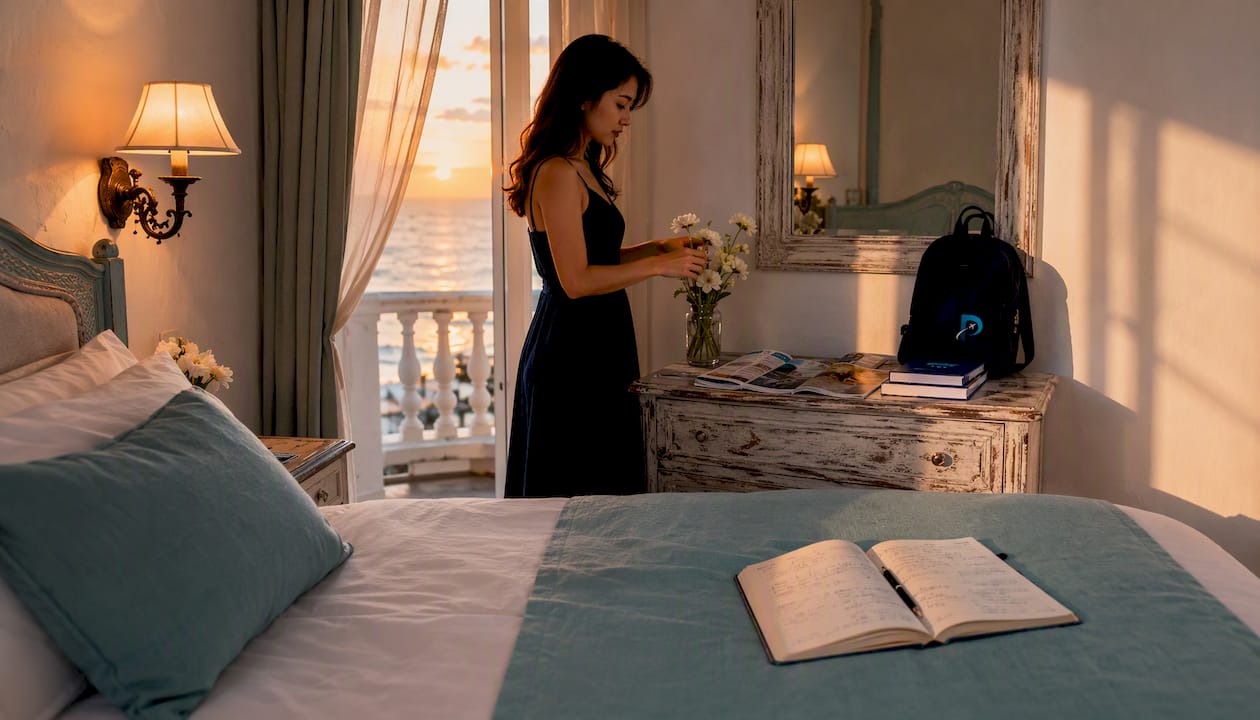
Prioritize location and character over square footage. A smaller, well-located room in a boutique hotel beats a large room in a chain property 20 minutes from the action. The room is where you end the day, not where you spend it, so proximity to your evening plans matters more than a bathtub.
Booking checklist:
- Privacy features: private balcony, soundproofing, or a room away from elevators and ice machines
- Late check-in flexibility: confirm this in writing if you're arriving after 9:00 PM
- Proximity: walking distance to your dinner reservation and at least one morning coffee spot
- Cancellation policy: flexible cancellation matters more on a short trip where plans can shift
Boutique hotels offer the most character and often the most attentive service, but they sell out faster. Short-term rentals give you a kitchen and more space, which suits couples who want a slow morning with coffee at home. B&Bs sit in the middle: personal touches, often great breakfast, but less privacy in shared common areas.
Staying one or two streets off the main tourist center often yields a quieter, more intimate local feel without sacrificing proximity to everything you want to do.
Pro Tip: After booking, email the property directly and ask for one small upgrade: a corner table for breakfast, a room on a higher floor, or a bottle of wine on arrival. Most boutique properties will accommodate at least one request, and it costs nothing to ask.
The accommodation and romantic itineraries guide on Planytera's blog goes deeper on how room choice affects pacing and intimacy.
How do you handle transport and arrival logistics without killing the mood?
Secure the least-stressful arrival option first, then plan the last mile. The arrival experience sets the emotional tone for the whole trip. A chaotic transfer after a delayed flight is recoverable; a chaotic first hour in the city is harder to shake.
Transport checklist:
- Flight or drive: choose the earliest practical arrival to maximize your first day; a late-night arrival means you lose the evening
- Airport to hotel: pre-book a car service or confirm ride-share availability at your destination airport; don't assume surge pricing won't apply
- Local transit: download the city's transit app before you leave (Google Maps offline works for most U.S. cities)
- Parking (if driving): book a garage near your hotel in advance; street parking in most U.S. cities is unreliable on weekends
- Luggage plan: if you arrive before check-in, confirm the hotel will store bags so you can start exploring immediately
Arrival day timeline: Plan a buffer and a calm first hour near your hotel. Drop bags, take a slow loop through the nearest neighborhood, find a coffee or a drink, and let the city settle around you before sprinting into sightseeing. An easy dinner close to the hotel on night one beats an ambitious reservation you're too tired to enjoy.
Money note: Use a fee-free debit or credit card (Charles Schwab and Visa travel cards are popular options) for any transactions and download offline maps before departure. Small friction points like ATM fees and dead-phone navigation are predictable and easy to eliminate in advance.

What is the anchor-per-day method and how does you use it?
Choose one booked, high-value anchor experience each day and leave the rest of the time open. Experienced planners consistently recommend this approach: one centerpiece per day reduces decision fatigue and keeps the trip emotionally satisfying even if weather or energy levels cancel everything else.
Anchor ideas worth booking in advance:
- Private harbor or sunset boat cruise
- Couples cooking class or wine tasting
- Rooftop dinner at golden hour
- Guided private night tour of a historic neighborhood
- Couples spa or massage session
- Chef's table dinner at a small restaurant
Flexible fillers that pair well with anchors:
- A slow morning at a local coffee shop
- A 45-minute museum visit (not a full day)
- A food market walk with no agenda
- A scenic stroll through a neighborhood you haven't mapped out
The Copenhagen approach is a useful model: two or three anchors across a whole trip is plenty. More than that and the trip starts to feel like a checklist rather than a shared experience.
Pro Tip: Schedule your anchor around golden hour or an emotional peak in the day, not around convenience. A sunset boat cruise at 7:30 PM beats the same cruise at 2:00 PM. Book the anchor first, then build the rest of the day around it.
For more anchor ideas organized by trip theme, the 12 romantic travel itinerary themes guide on Planytera's blog is a practical starting point.
Sample 2-day city break itineraries you can copy and adjust
Two templates below. Copy the one that fits your energy, then swap in your city's specific anchors.
Template A: Slow and scenic
| Time block | Day 1 | Day 2 |
|---|---|---|
| Morning | Arrive, drop bags, slow neighborhood walk | Late breakfast at a local café |
| Midday | Light lunch near hotel, check in properly | Market walk or short gallery visit |
| Afternoon | Explore one neighborhood at your own pace | Scenic stroll, souvenir stop |
| Golden hour | Anchor: sunset rooftop or harbor cruise | Pack, check out, final coffee |
| Evening | Easy dinner close to hotel | Travel home |
Template B: Culinary and energetic
| Time block | Day 1 | Day 2 |
|---|---|---|
| Morning | Arrive, drop bags, food market visit | Early breakfast, visit a landmark at 7:00 AM (before crowds) |
| Midday | Lunch at a chef-recommended local spot | Cooking class or wine tasting (anchor) |
| Afternoon | Neighborhood walk, coffee shop stop | Light afternoon snack, pack |
| Golden hour | Anchor: chef's table or tasting menu dinner | Depart |
| Evening | After-dinner walk, late-night dessert spot | — |
Customization notes:
- Late arrival: shift Day 1's anchor to Day 2 and use the first evening purely for settling in
- Anniversary or proposal: upgrade the anchor to a private experience (private dining room, private boat) and contact the venue in advance to arrange a small personal touch
- Low energy day: swap the afternoon activity for a nap and a coffee; the anchor still holds the day together
Visiting a major landmark around 7:00 AM dramatically reduces crowds and improves the emotional impact of the moment. Build that into Template B's Day 2 morning if your city has an iconic spot worth experiencing quietly.
For real-world examples of how couples have adapted these structures, the intimate day-by-day trip plans on Planytera's blog shows what flexible itineraries look like in practice.
Why do shared culinary experiences build intimacy on a short trip?
Shared culinary experiences create conversation and shared memories faster than adding more sightseeing. Industry experts recommend culinary activities as high-yield intimacy builders precisely because they require participation, not just observation. A cooking class gives you something to talk about, laugh about, and remember together. A passive museum visit rarely does the same.
Practical dining steps:
- Book one special dinner in advance (1–4 weeks ahead for popular U.S. restaurants, longer for destination spots)
- Use lunch for exploratory eating: food halls, local markets, or a neighborhood spot you find by walking
- Plan a light late-night option after your anchor dinner, a dessert bar or a gelato walk, so the evening doesn't end abruptly
Dining checklist:
- Confirm reservation details (time, party size, dietary needs) 48 hours before
- Check dress code and transit time from your hotel
- Have a backup restaurant in mind for the same neighborhood
- Note the restaurant's policy on late arrivals
Alternating a big dinner night with a quieter one keeps the trip from feeling relentlessly formal. One exceptional dinner, one casual market meal, one spontaneous find. That rhythm tends to feel more romantic than three consecutive tasting menus.
Pro Tip: A short shared food activity, a 45-minute wine tasting or a market stall crawl, often builds more connection than a long formal dinner when time or energy is limited. It's participatory, low-pressure, and gives you something to talk about for the rest of the day. For a wine-focused culinary anchor, luxury wine experiences show what a well-curated tasting can look like as a trip centerpiece.
What should you pack for a romantic city weekend?
Pack smart and light. Two evening outfits, one smart-casual daytime outfit per day, one pair of comfortable walking shoes, and a small first-aid kit with any medications you need. That's the core. Everything else is optional.
Packing checklist:
- 2 evening outfits (one per anchor dinner)
- 1–2 smart-casual daytime outfits
- Comfortable walking shoes (you will walk more than you expect)
- Chargers and a portable power bank
- Toiletries in travel sizes
- One small romantic surprise: a printed note, a local snack you picked up before the trip, or a small gift
- Backup payment method (a second card stored separately from your wallet)
- Travel insurance confirmation and ID copies stored in your phone's photos
Pre-trip confirmations (do these 48 hours before departure):
- All reservations confirmed (hotel, restaurants, anchors)
- Mobile tickets downloaded or printed
- Offline maps downloaded for your destination city
- Travel insurance active and policy number saved
- Emergency contact info in a shared note or document
Pro Tip: Pack one small romantic surprise that requires zero logistics: a handwritten note tucked into your partner's bag, a local chocolate bar from a shop near home, or a printed photo from a previous trip. It costs almost nothing and lands better than most planned gestures.
What does the research say about the anchor method and culinary experiences?
The anchor-per-day method and shared culinary activities are the two highest-yield approaches for creating memorable moments on a short couple's break. Both are well-supported by experienced travel planners and destination guides.
The anchor method works for a specific reason: it reduces decision fatigue. When you have one booked, high-value experience locked in, the rest of the day can stay loose without anyone feeling like the trip is drifting. Experienced planners note that the anchor approach keeps the trip emotionally satisfying even when weather or energy levels force cancellations elsewhere. The anchor holds.
Culinary experiences work because they're participatory. A cooking class or a wine tasting requires both people to engage, which creates natural conversation and shared memory formation in a way that walking past a landmark rarely does.
Pro Tip: If one of you tends to overplan and the other tends to underplan, the anchor method is the compromise. The planner gets one confirmed, high-quality experience per day. The free spirit gets the rest of the day unscheduled. Both feel satisfied.
How do you stay connected when plans shift on the day?
Set a shared "three priorities" plan for each day before you leave the hotel: one anchor, one other experience, and one block of relaxed time. Agree in advance how you'll handle small snags, a closed restaurant, a rain shower, a tired afternoon. That conversation takes five minutes and prevents most in-trip friction.
Practical pacing tips:
- Alternate who picks the morning and evening activity; it distributes ownership and reduces resentment
- Build in a nap or a quiet hour after lunch on a full day; fatigue is the most common cause of small arguments on trips
- If plans fall apart, default to the nearest coffee shop and regroup from there rather than debating on a street corner
For real-time adjustments, keep a shared editable itinerary on your phone. Planytera's app lets both of you edit and view the same plan in real time, which removes the "what are we doing next?" friction entirely. Agree on one fallback activity for bad weather before you leave home.
Safety note: Keep your ID, a small emergency fund in cash, and a simple check-in plan if you split up for any activities. Share your hotel address in a text thread both of you can access offline.
Why overplanning is the most common couple travel mistake
The anchor method exists because overplanning is the default mistake. Most couples try to fill every hour of a short trip, then arrive home exhausted and slightly disappointed. The trip looked great on paper. The reality was a series of rushed transitions between things neither person had time to actually enjoy.
The fix is structural. One anchor per day, booked in advance, gives the trip its emotional spine. Everything else stays flexible. That flexibility isn't laziness; it's the space where the best moments happen: the coffee shop you found by accident, the neighborhood you wandered into, the conversation you had because you weren't rushing to the next thing.
Two or three anchors across a whole trip is genuinely enough. The Copenhagen model makes this explicit: book a couple of fine-dining nights, stay central, and let the city fill the rest. That advice applies equally well to Savannah, Charleston, or Santa Fe.
For couples with different travel styles, the how to blend two travel styles guide offers practical ways to build a single itinerary that works for both of you without either person feeling like they compromised everything.
How do you set expectations with your partner before the trip?
Have one short conversation before you book anything. Cover three things: what each of you most wants from the trip (one thing each), what you're willing to skip, and how you'll handle a day when energy is low. That's it. You don't need a full planning session; you need enough shared understanding to avoid surprises.
Common mismatches that derail trips:
- One person wants a packed schedule; the other wants to wander
- One person expects a luxury experience; the other booked budget accommodation
- One person assumes the trip is a special occasion; the other treats it as a regular weekend
The anchor method helps here too. Agreeing on one anchor per day gives both partners something concrete to look forward to, which reduces the anxiety that drives overplanning. The couples travel pace preferences guide on Planytera's blog covers how to navigate pace differences practically.
A shared, editable itinerary that both partners can see and adjust before and during the trip removes most of the "but I thought we were doing X" friction. Transparency about the plan is one of the simplest ways to protect the mood.
Safety considerations for couples in unfamiliar cities
Most U.S. cities are safe for couples traveling in well-trafficked areas. A few practical habits make the difference between a relaxed trip and an anxious one.
- Stay in well-reviewed, central neighborhoods. Read recent reviews specifically mentioning safety, not just overall ratings.
- Share your itinerary. Keep a copy of your hotel address, reservation confirmations, and emergency contacts in a note both of you can access offline.
- Carry a small cash reserve. Card readers fail. ATMs in tourist areas charge high fees. $60–80 in cash covers most emergencies.
- Know the local emergency number. In the U.S., that's 911, but if you're in a city you don't know, also note the non-emergency police line for minor incidents.
- Move off the main tourist routes. Quieter streets one or two blocks from the main drag are often safer and more pleasant than the crowded center, and they're where the better local restaurants tend to be.
- Trust your instincts. If a neighborhood or situation feels off, leave. No anchor experience is worth ignoring a clear signal.
Key Takeaways
A romantic city break works best when you lock in one anchor experience per day, choose accommodation with real character and a central location, and leave the rest of the schedule deliberately open.
| Point | Details |
|---|---|
| Anchor method first | Book one high-value experience per day before anything else; it holds the trip together if plans change. |
| Budget by tier | Daily couple costs range from about $170–230 (budget) to $540–830 (splurge); decide your tier before booking. |
| Location over size | A smaller, well-located room beats a large room far from your evening plans every time. |
| Culinary experiences build connection | A shared cooking class or wine tasting creates more intimacy than adding extra sightseeing stops. |
| Planytera for shared planning | Planytera builds a shareable, editable itinerary that keeps both partners aligned before and during the trip. |
The anchor method is the only planning advice that actually matters
Most romantic trip advice focuses on destinations. The real variable is structure. A couple in the most beautiful city in the world will still have a mediocre trip if they spend half of it deciding what to do next.
The anchor method solves that. One booked, meaningful experience per day gives the trip its emotional shape. Everything else, the wandering, the accidental finds, the slow mornings, fills in around it naturally. That's not a planning shortcut; it's the actual goal.
The most common mistake I see couples make is treating the itinerary as a checklist of sights rather than a container for shared time. The sights are just context. The shared time is the point. Build the plan around that, and the city almost doesn't matter.
Planytera makes the planning part easy so you can focus on the trip
Planning a romantic city break involves a lot of moving parts: coordinating dates, comparing accommodation, booking anchors, managing a shared budget, and keeping both partners in the loop. Planytera handles the heavy lifting.

You give Planytera your destination, travel dates, budget, and preferences, and it generates a personalized day-by-day itinerary in moments. Both of you can view and edit the same plan in real time, so there's no back-and-forth over a spreadsheet. The budget estimator shows you what each day will cost before you commit. Offline access means the plan works even when your phone signal doesn't.
What Planytera does for couples specifically:
- Builds anchor-first itinerary templates tailored to your pace and interests
- Includes dining and activity suggestions with booking links
- Supports collaborative editing so both partners shape the plan
- Works offline, so you always have your itinerary available
- Tracks a trip journal so you can document memories as you go
Start planning your trip on Planytera for free, or check out the subscription plans if you want unlimited trip generations and full access to all features.
Useful sources and further reading
| Source | What it covers |
|---|---|
| How to Plan the Perfect Romantic Weekend Getaway | Culinary experiences as intimacy builders; accommodation with character |
| Romantic Weekend in Lisbon (2–3 Day Itinerary) | Anchor-per-day method; arrival-day pacing; decision fatigue reduction |
| Romantic Weekend Getaways in Europe for Couples | Season timing; budget tiers; crowd-avoidance tactics |
| Copenhagen for Couples: Romantic Guide & Itinerary | Staying central; booking ahead for special dinners; limiting scheduled items |
| Intimate Day-by-Day Trip Plans: Real Couple Examples | Real-world couple itineraries and flexible planning examples |
| Budget Romantic Trip Planning Guide | Detailed budgeting tactics and trade-offs by city tier |
| 12 Romantic Travel Itinerary Themes for Couples | Anchor ideas and trip themes for tailoring itineraries |